How To Arrange Furniture in a Narrow Living Room: 16 Ideas That Make the Room Work
Learn how to arrange furniture in a narrow living room with 16 practical layout ideas that improve flow, seating, storage, and style without making the room feel cramped.
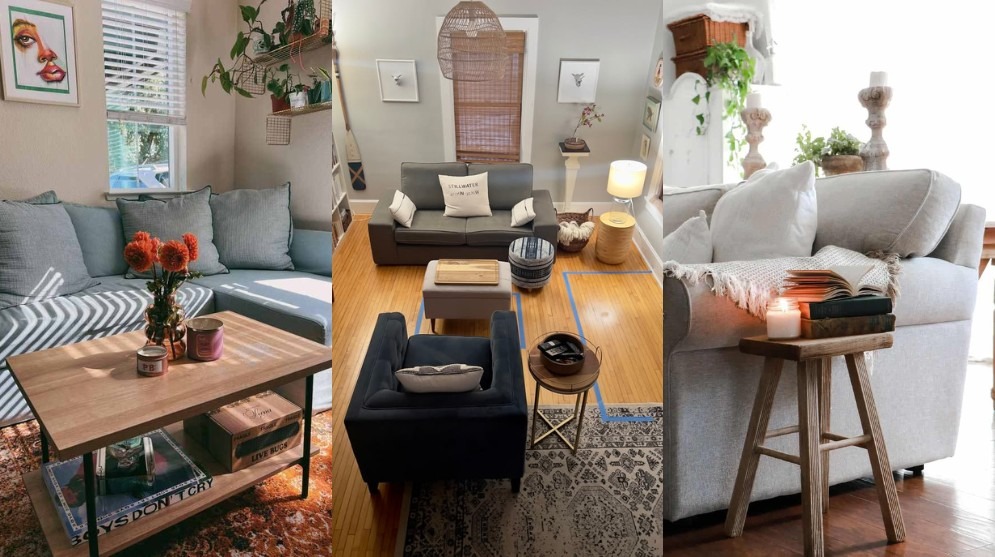
A narrow living room can make perfectly sensible furniture decisions feel strangely difficult. The sofa fits, but now there’s barely room to walk past it. The coffee table looks great, but every trip across the room ends with a bruised shin. Add a chair and suddenly the whole arrangement feels like a game of Tetris.
The trick is to stop thinking of the room as one long rectangle that needs to be filled from end to end. Instead, think about where you want people to sit, where they need to walk, what you want them to see first, and which pieces actually earn their space.
Here are the furniture-arranging tricks I’d use first if I were standing in your living room with a tape measure in one hand and a slightly questionable furniture plan in the other.
How To Arrange Furniture in a Narrow Living Room
1. Map Out the Walking Path First
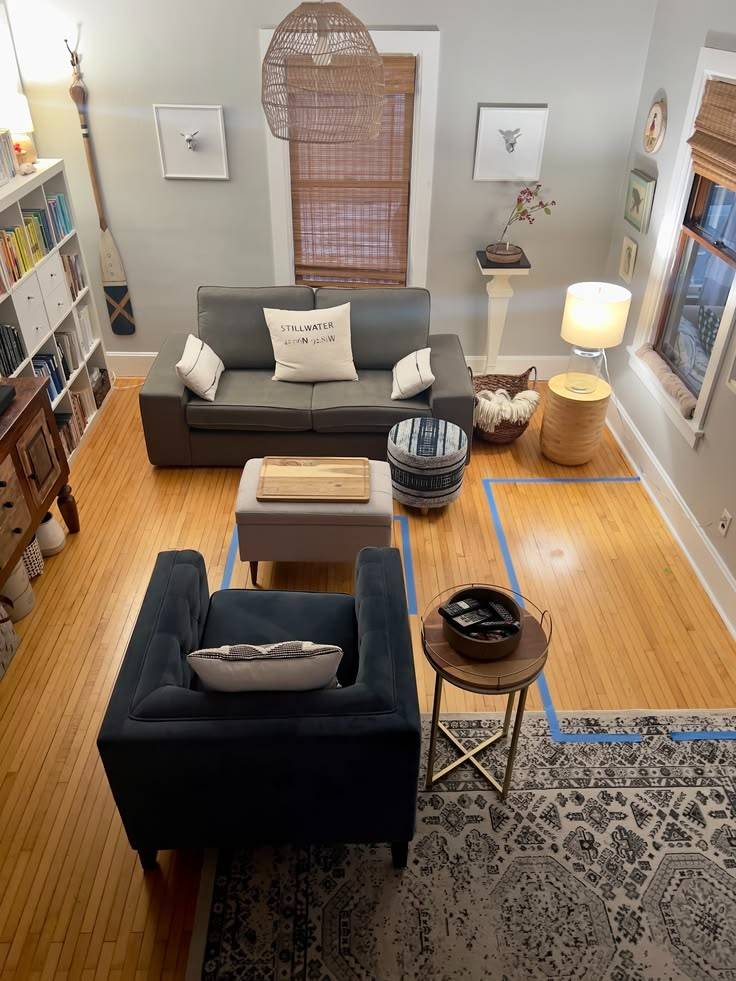
Before moving a single piece of furniture, decide how people are supposed to move through the room.
If the living room connects the front door to another part of the house, that route needs to remain obvious. You don’t want guests navigating around the coffee table or squeezing between the sofa and wall every time they walk through.
Use painter’s tape to mark the furniture footprints on the floor. Then walk through the room several times. It sounds almost too simple, but you’ll notice problems on your feet that you won’t see from above.
The best layout usually reveals itself once you stop treating the floor plan like a puzzle and start treating it like a pathway.
2. Put the Largest Piece in Place First
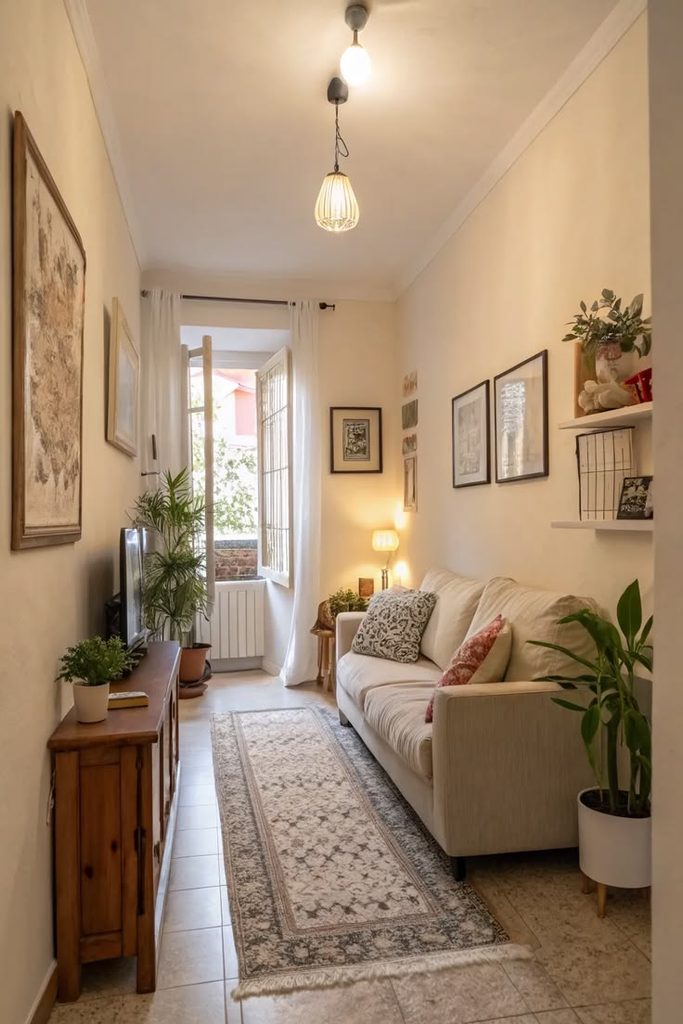
Your sofa will have the biggest influence on everything else, so start there.
In many narrow living rooms, placing the sofa along the longest wall is the easiest solution because it preserves a clear passage through the room. But don’t assume that’s automatically the best arrangement. If the room has a fireplace, television, large window, or another strong focal point, the sofa may work better facing it.
The important thing is to establish the main seating position before introducing smaller pieces.
3. Don’t Choose a Sofa That’s Deep Just Because It Looks Comfortable
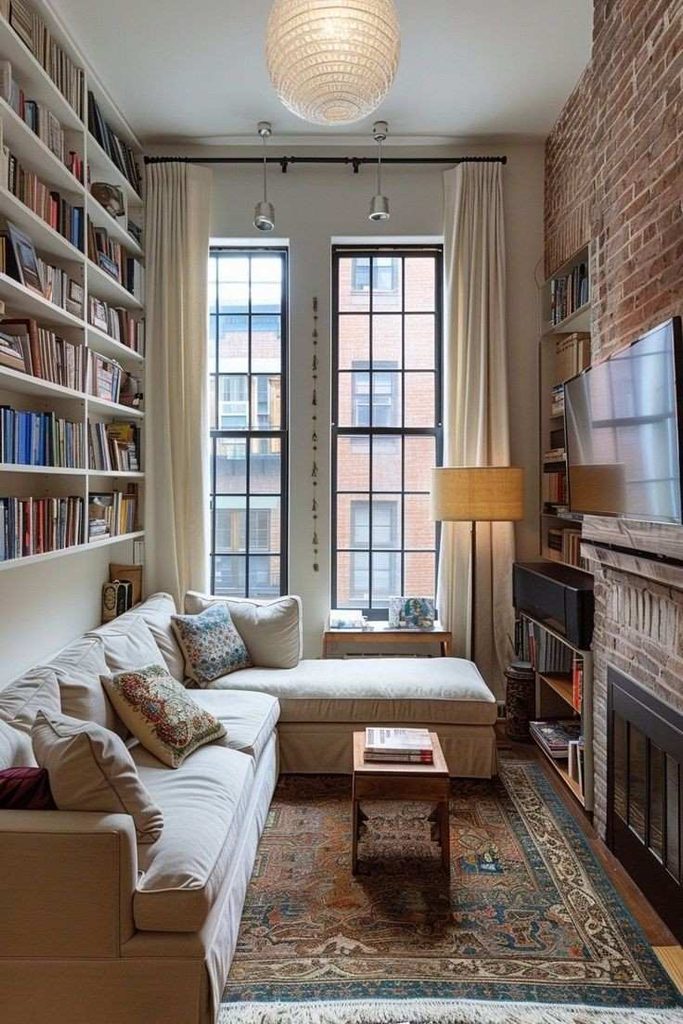
Sofa depth matters enormously in a narrow room.
A deep sofa can take up surprisingly large amounts of floor space, even when its overall width seems reasonable. Before buying one, measure from the very front edge to the back, not just the dimensions listed as length.
I’d rather have a sofa with slightly less depth and a useful walkway than a huge, sink-in sofa that turns the entire room into a corridor.
If lounging is important to you, look for a sofa with a supportive seat and comfortable cushions rather than assuming more inches automatically mean more comfort.
4. Let the Short Wall Become Your Focal Point

Here’s one of my favorite tricks for a long, narrow room: use one of the short walls to create a visual destination.
That could mean placing the television there, arranging the sofa toward a fireplace, or using a large piece of artwork to give the end of the room some importance.
Why does this work? It gives the eye somewhere to go instead of allowing the room’s length to dominate everything.
A long rectangle suddenly starts reading as a living space rather than a hallway with a sofa in it.
5. Create a Conversation Area Instead of Filling the Room
A narrow living room doesn’t need furniture along every wall.
Give yourself one clear seating zone. Position the sofa and chairs so that people can comfortably talk to one another rather than arranging every seat around the television.
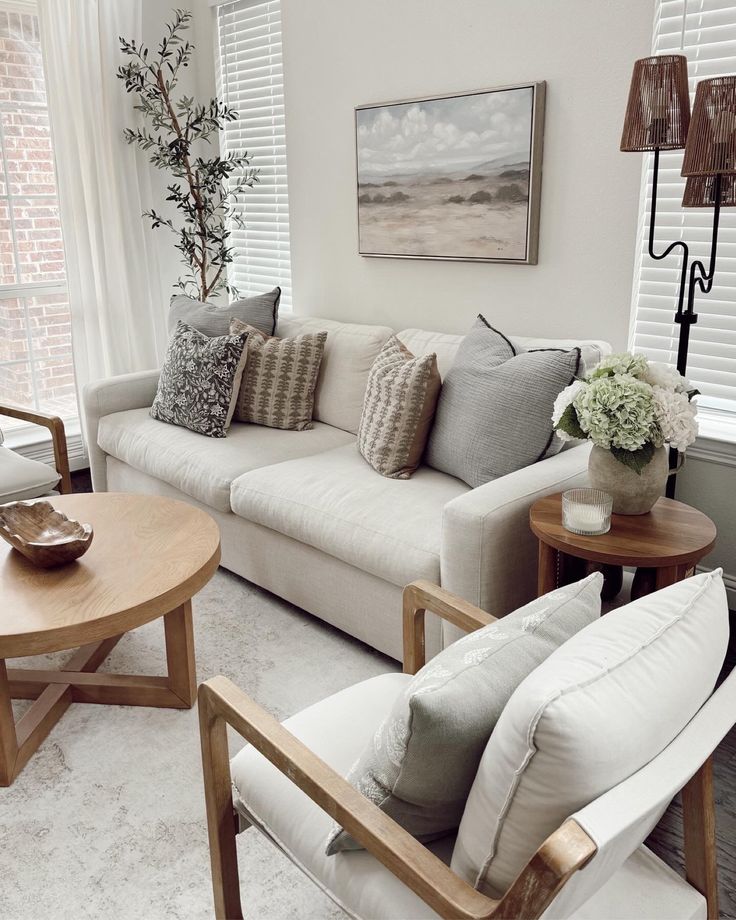
If your sofa faces the TV, angle an accent chair slightly toward it and toward the sofa. That tiny adjustment can make the room feel much more social.
Furniture should encourage people to interact, not simply point everyone in the same direction.
6. Consider Chairs Instead of a Second Sofa
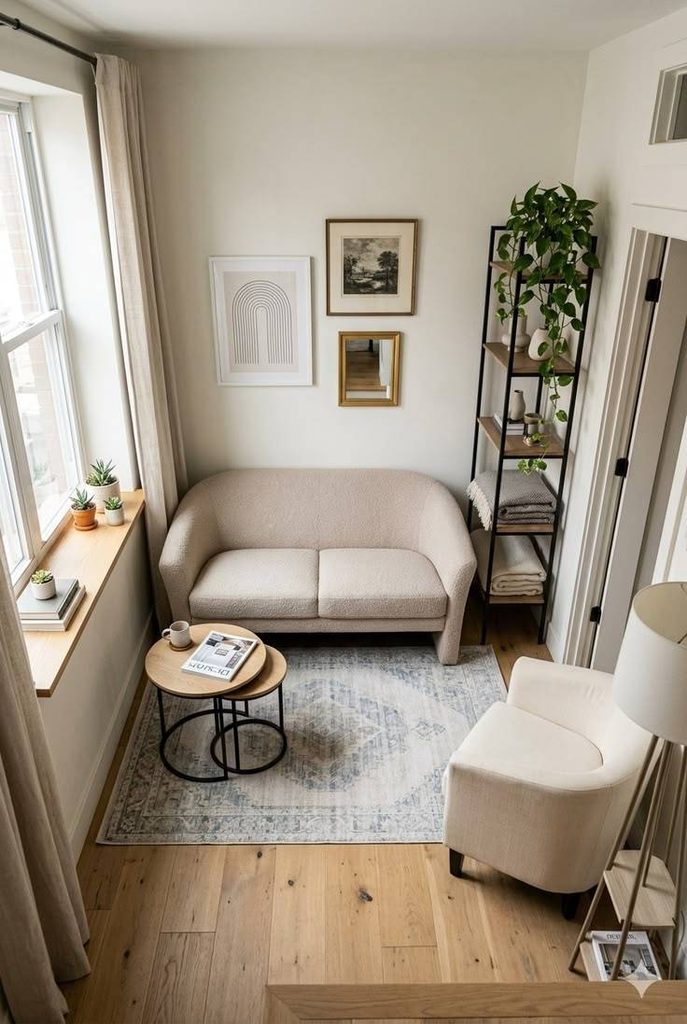
If you need more seating, two chairs can be a much better solution than adding another sofa.
Chairs have a smaller visual footprint and can be angled, separated, or moved when you need more room. They also let you introduce a different shape or texture without making the entire seating arrangement feel heavy.
I’d especially consider this option if your living room is narrow but reasonably long. The sofa handles the main seating, while the chairs finish the conversation area without creating another large horizontal block.
7. Float the Sofa If the Room Gives You Enough Width
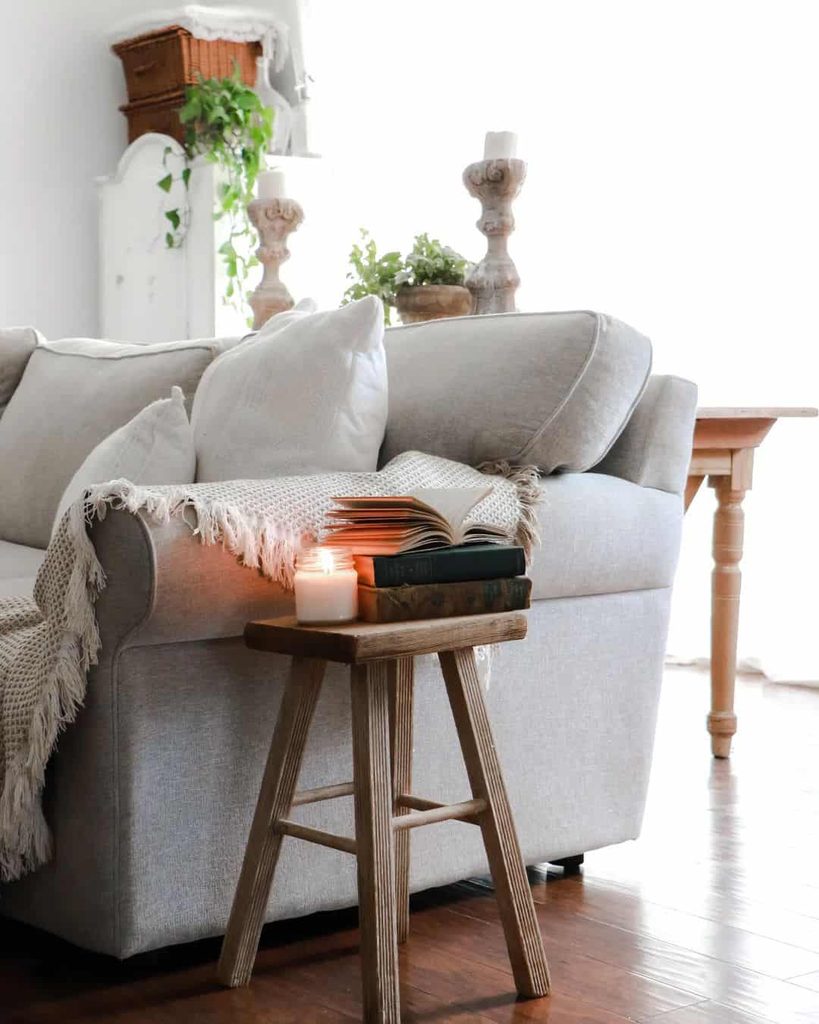
Everyone knows the sofa against the wall arrangement, but it isn’t your only option.
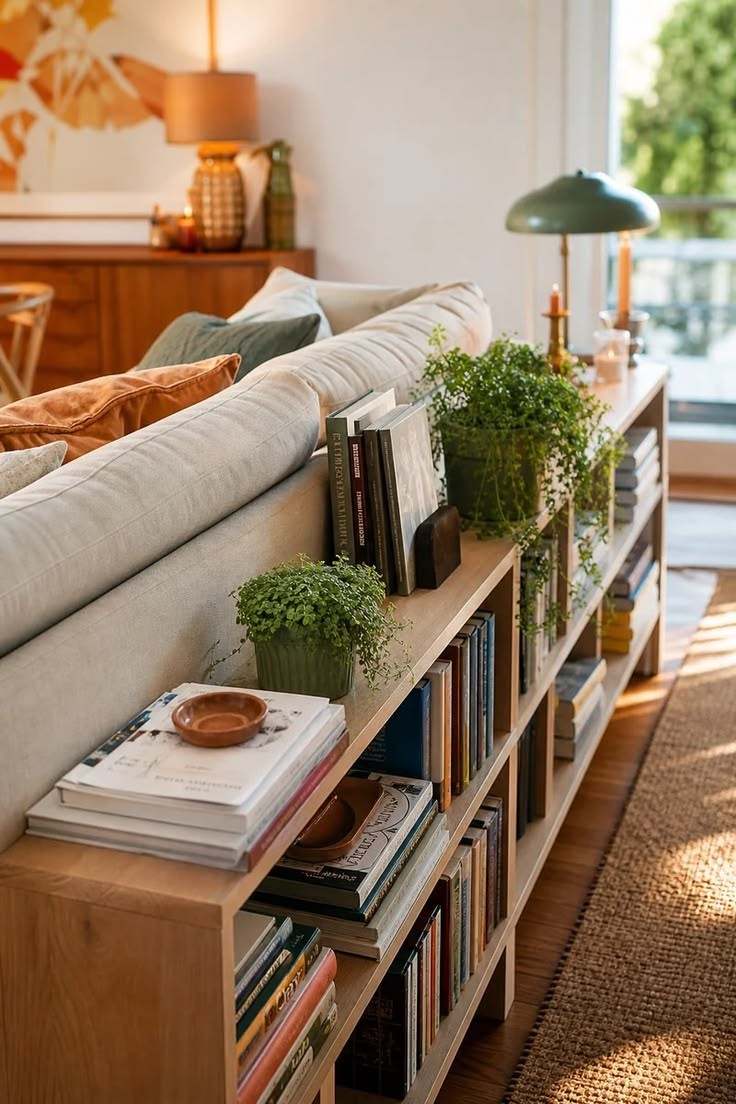
If your room has enough space, pull the sofa slightly away from the wall and create a walkway behind it. This can divide a long room into more purposeful zones.
You might use the space behind the sofa for a slim console, a lamp, or simply leave it open.
But here’s the important part: don’t float the sofa just because designers do it. If the remaining walkway is too narrow, you’ve created a problem instead of solving one.
8. Choose a Coffee Table That Follows the Room
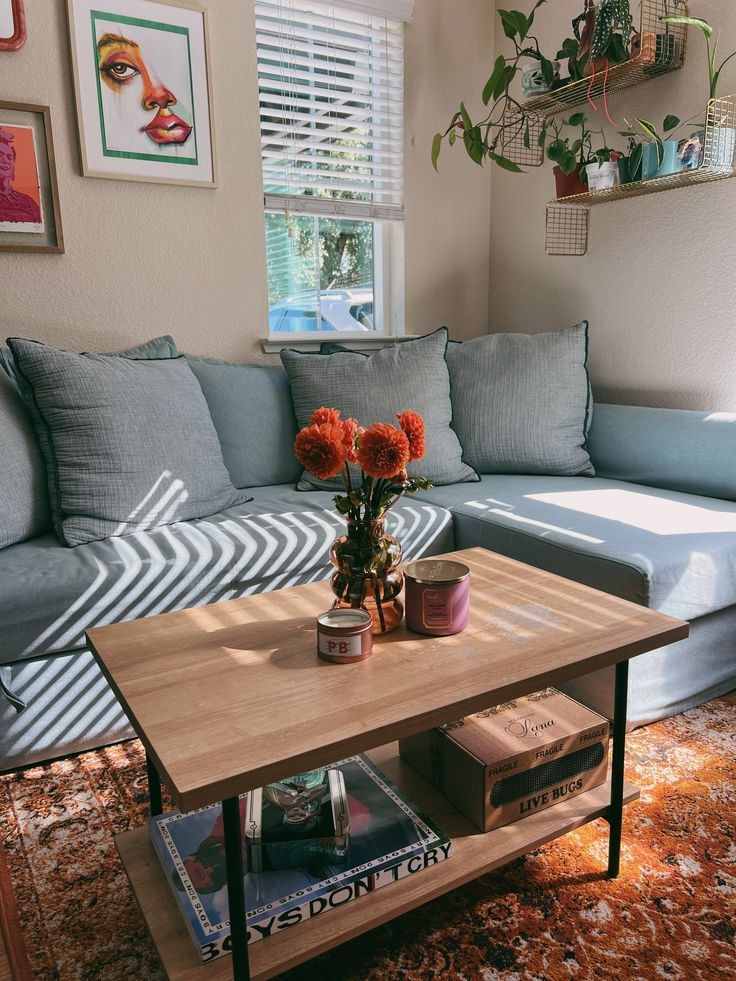
A narrow rectangular room often works naturally with a rectangular coffee table because the proportions echo one another.
But that doesn’t mean you need to use one.
A round or oval table can be surprisingly effective if corners are causing traffic problems. The lack of sharp edges makes it easier to move around, particularly when the coffee table sits close to a walkway.
Before deciding, tape the table dimensions onto the floor. Walk around it. Sit on the sofa. Reach forward as though you’re picking up your coffee.
Your knees are excellent interior designers. Listen to them.
9. Use a Narrow Console Behind the Sofa
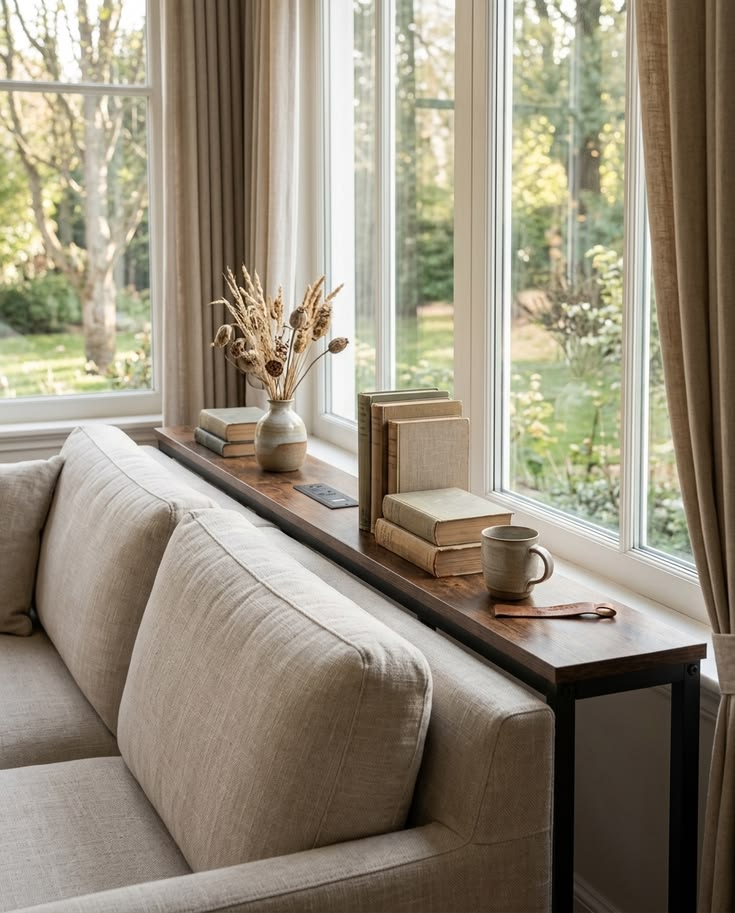
If you’ve floated your sofa, the empty space behind it can become useful.
A slim console gives you a place for a lamp, books, a few decorative objects, or even storage baskets underneath. More importantly, it makes the back of the sofa feel like a deliberate part of the room.
Keep the console shallow. You don’t want to replace one floor-space problem with another.
10. Use the Walls for Storage Instead of Adding More Floor Furniture
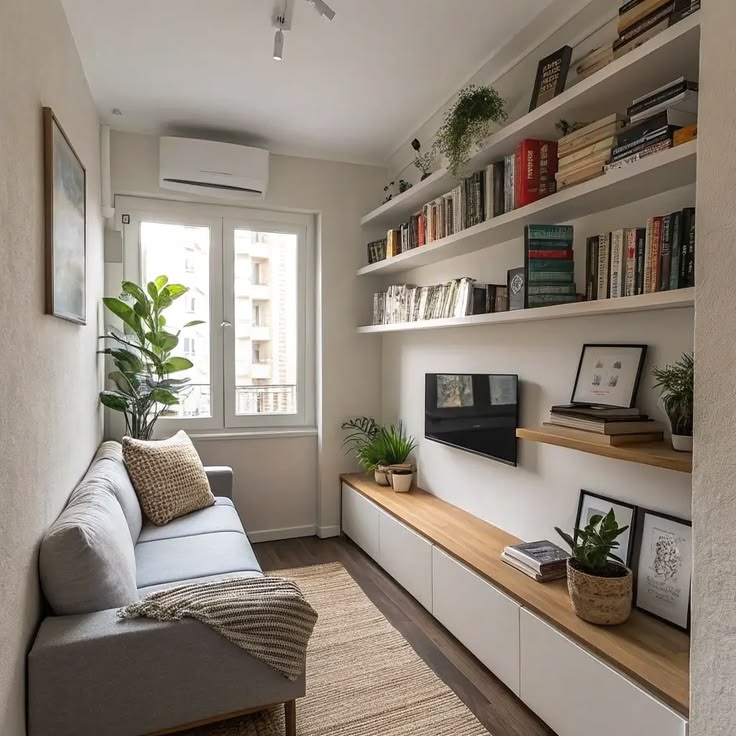
When floor space is precious, look upward.
Wall-mounted shelving can hold books and decorative pieces without taking up the footprint of a large bookcase. Tall, narrow shelving can also make better use of vertical space than a wide cabinet.
Choose one area for storage and let the rest remain relatively open. A narrow room benefits from having some visual pauses between furniture pieces.
11. Keep Side Tables Small and Useful
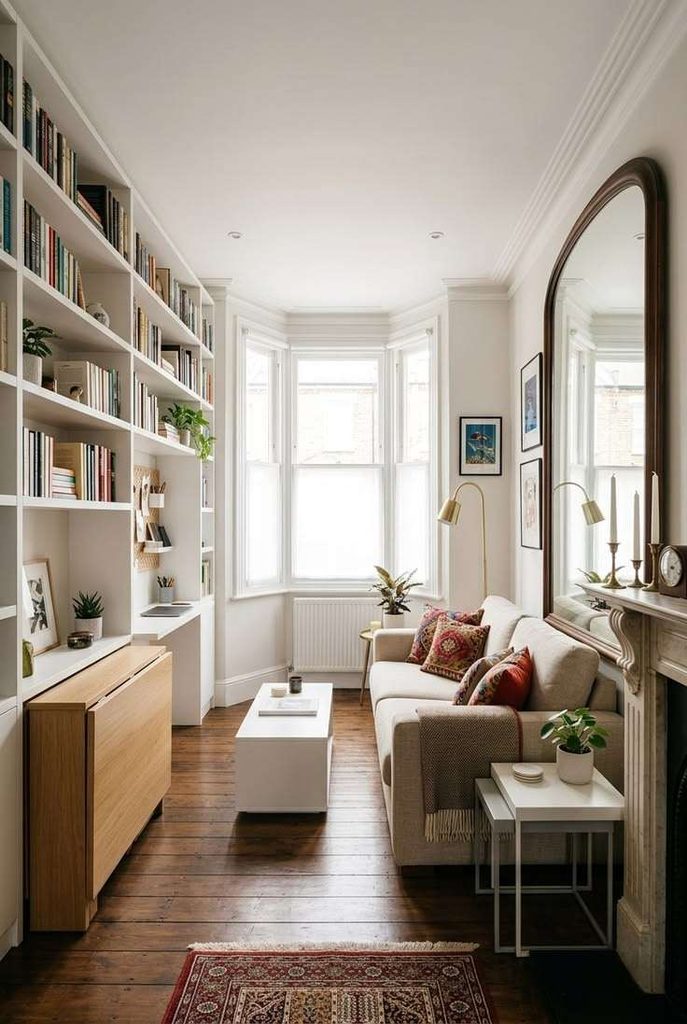
Side tables are useful right up until they’re sitting directly in someone’s walking path.
Look for tables that provide exactly what you need. If you only want somewhere to place a drink and your phone, you don’t necessarily need a substantial cabinet beside the sofa.
Nesting tables, slim round tables, and C-shaped tables can be particularly useful because they give you surface area without demanding much floor space.
In a narrow room, every table should have a job.
12. Use a Rug to Connect the Furniture
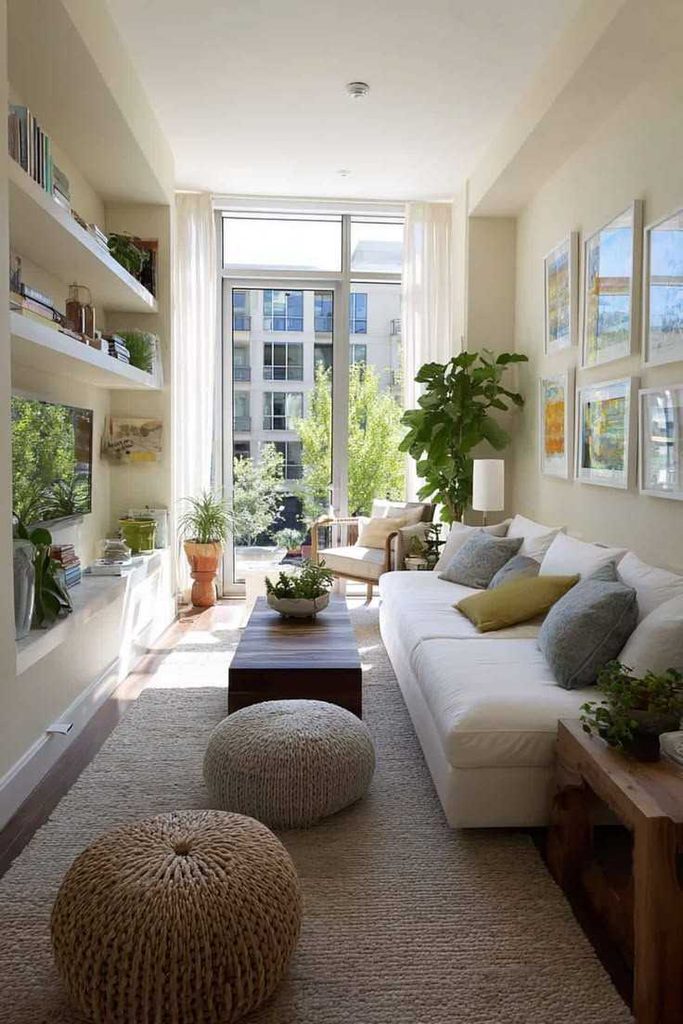
A rug can make separate pieces feel like one seating arrangement.
Position the rug so that at least the front legs of the main seating pieces sit on it. This visually connects the sofa, chairs, and coffee table instead of making them look like unrelated objects scattered around the room.
And don’t automatically choose the smallest rug because you’re worried about covering too much floor. A tiny rug can actually make the seating area look more fragmented.
Measure the furniture arrangement first, then choose the rug.
13. Keep the Furniture Away From Door and Window Zones
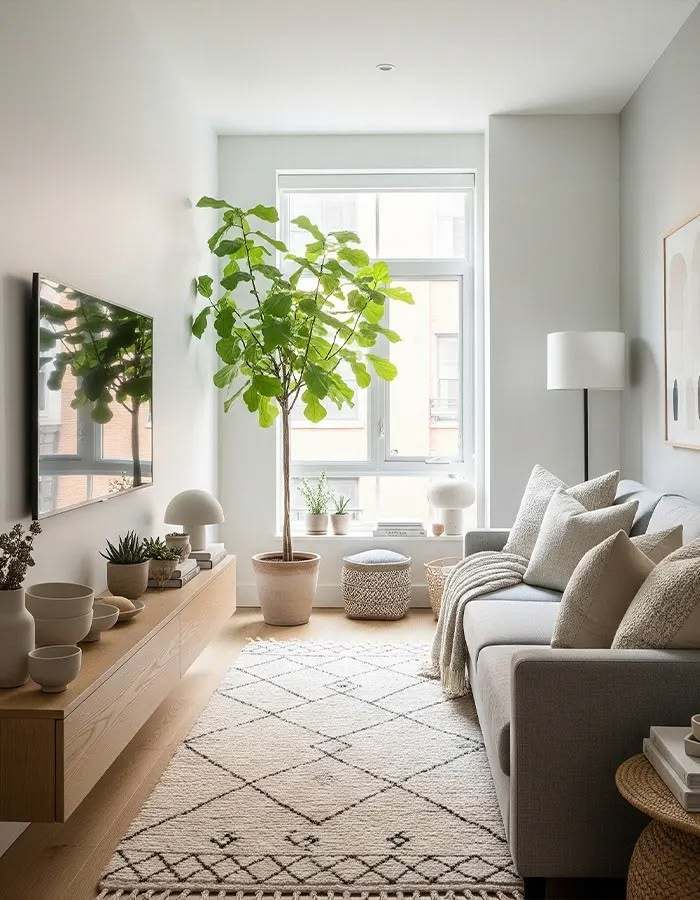
Windows and doors create their own circulation requirements.
Don’t place a chair where it blocks a door from opening fully. Don’t push a tall cabinet directly in front of a window simply because that’s the only empty wall.
Instead, work around those architectural features.
A low bench beneath a window may work beautifully. A narrow chair beside a doorway might be enough. Sometimes the smartest layout comes from respecting what the room is already doing rather than trying to force it into a Pinterest-perfect arrangement.
14. Use an Ottoman When You Need Flexible Seating

An ottoman can be one of the most useful pieces in a narrow living room because it doesn’t have to perform just one job. Use it as a footrest when you’re watching TV, pull it closer to the sofa when you have guests, or use a tray on top when you need an extra surface.
Choose one that’s compact enough to move easily. I particularly like this option when a second chair would make the room feel crowded, because you get the extra function without permanently committing another large piece of furniture to the floor.
15. Swap a Traditional TV Stand for a Slim Media Console
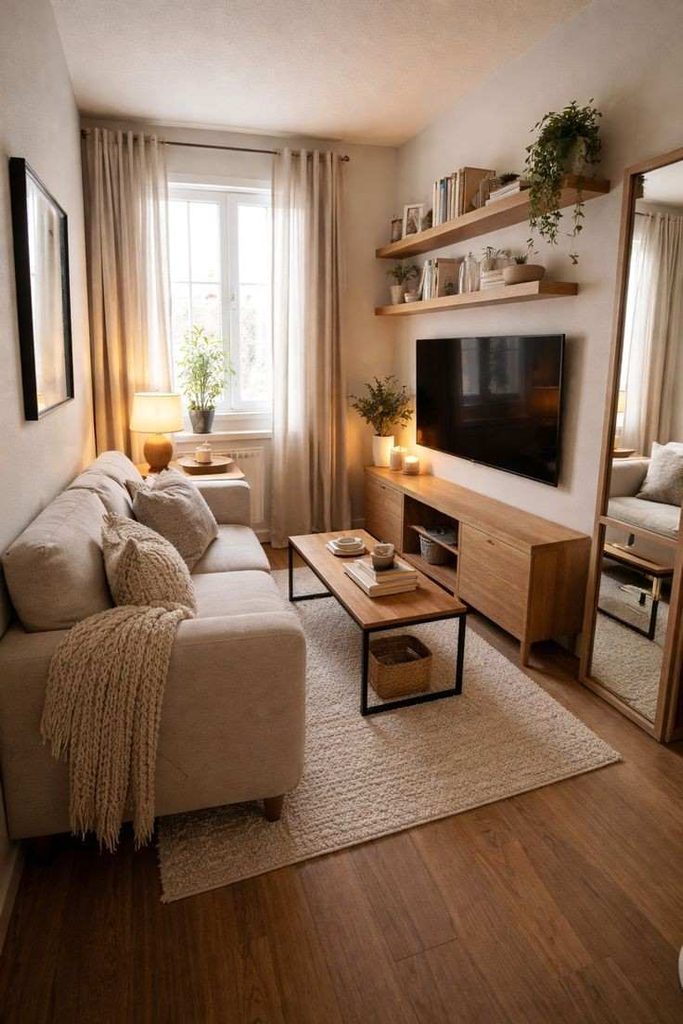
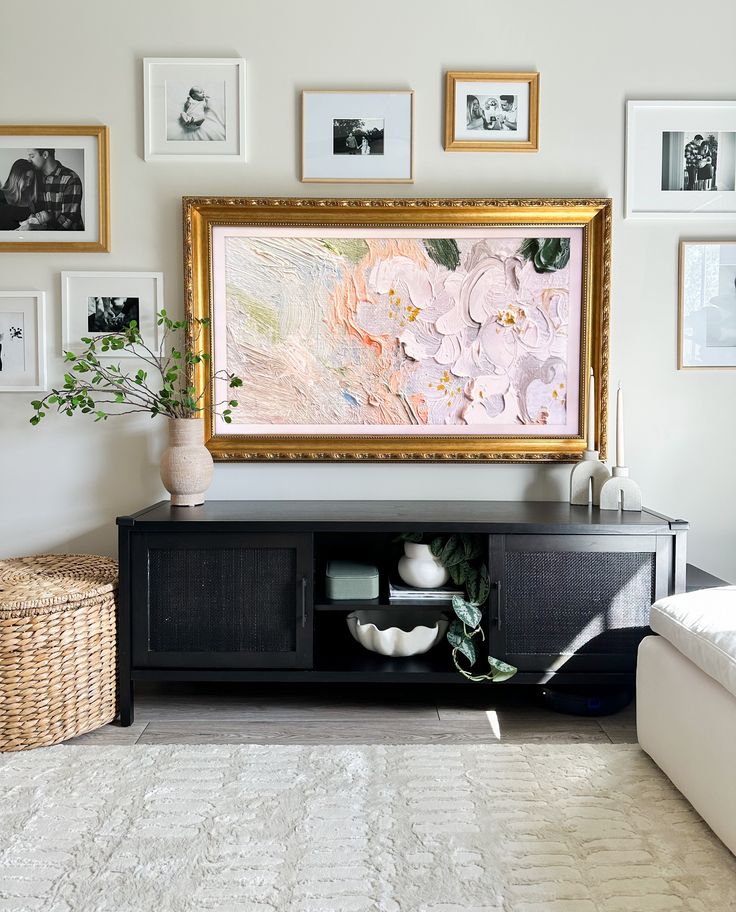
A bulky entertainment unit can eat up more floor space than you realize, especially when it sits on one of the short ends of a narrow room. A slim media console gives you the storage you need for electronics, games, and remotes while keeping the floor around it easier to navigate.
Before buying one, measure the depth carefully. You want enough room for your equipment and cables, but you don’t need a cabinet that sticks several inches farther into the room than necessary.
16. Choose Furniture With Hidden Storage
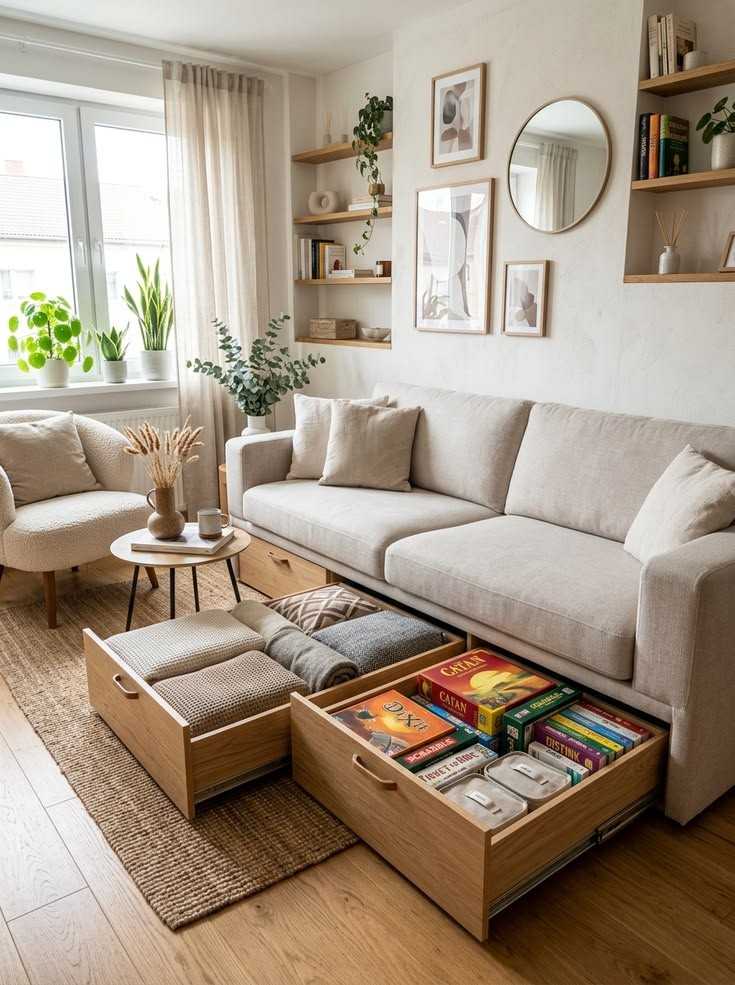
When a living room is narrow, clutter has nowhere to hide. A pile of blankets, children’s toys, books, or chargers can quickly turn an otherwise well-planned layout into a collection of things you have to step around.
Look for pieces that quietly handle those everyday items, a storage ottoman, a coffee table with a shelf underneath, or a bench with a lift-up seat. I’d rather give one hardworking piece two jobs than add another piece of furniture just for storage.