Tired of your cramped entry? These 17 practical, designer-approved strategies will create light, space, and flow. Transform your first impression without a renovation.

If you have a small entryway, you already know the struggle.
It’s the first thing you see when you walk in, yet it somehow feels like an afterthought, cramped, awkward, and always collecting clutter, no matter how hard you try.
I used to think my entryway was just one of those spaces you couldn’t really fix unless you knocked down a wall (which… no).
But here’s the truth: a small entryway doesn’t need more square footage, it needs better decisions.
I spent years trying to fix mine with more baskets and hooks, only to feel more cramped. The real breakthrough came when I stopped fighting the size and started working with it.
These ideas aren’t about stuffing in more decor, they’re about making the space breathe, feel intentional, and yes, actually look bigger.
Let’s get into it.
Related:
How to Make a Small Entryway Look Bigger
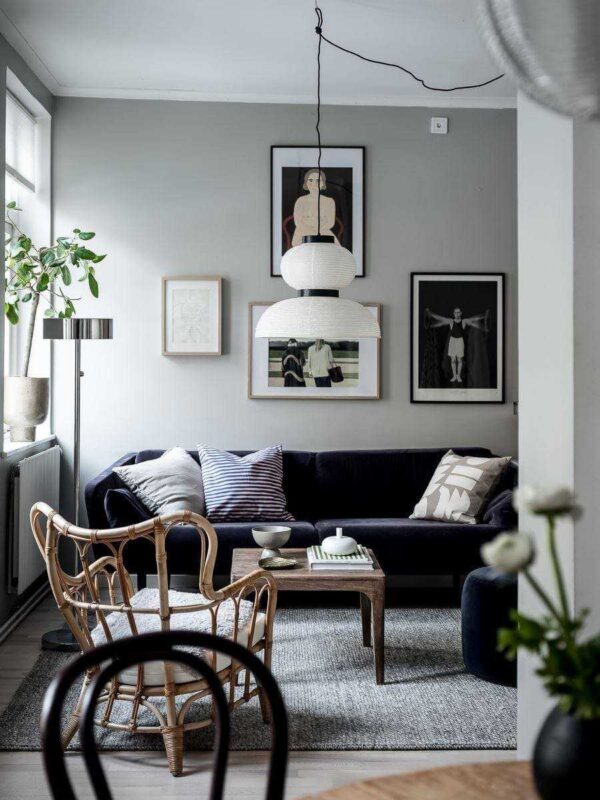
1. Commit to a Single Light Color Palette
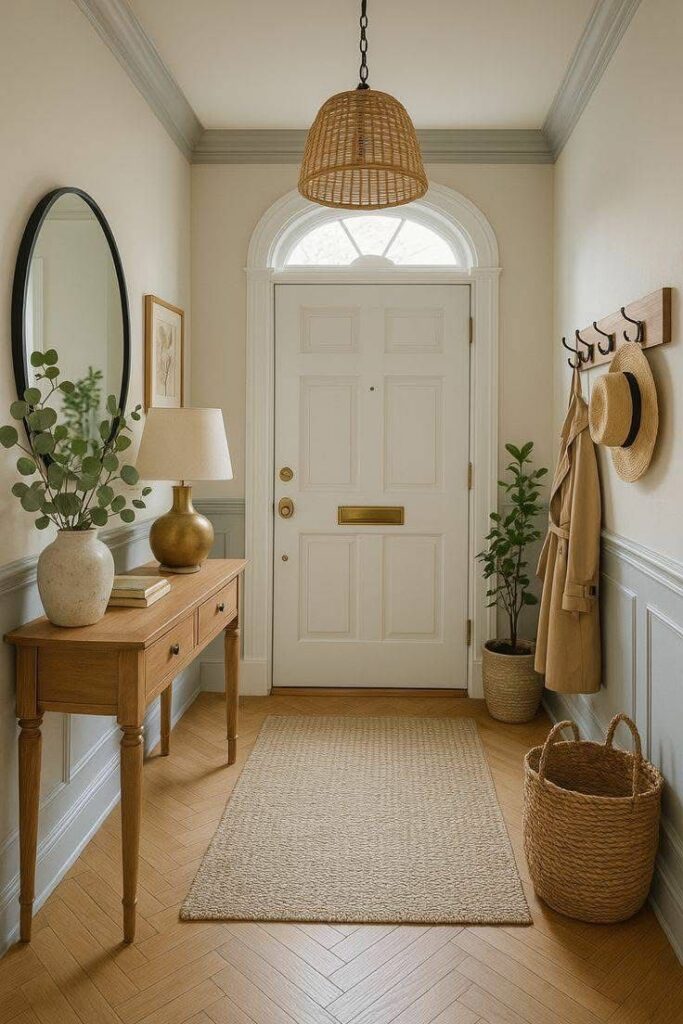
A jumble of colors visually chops up a small space, making it feel busy and confined.
Choose one light, neutral hue for your walls, think soft white, pale gray, or creamy beige, and let it dominate. Carry this color onto trim, doors, and even your largest piece of furniture.
This monochromatic strategy eliminates harsh visual stops, allowing the eye to travel smoothly, which inherently makes the area feel more expansive and calm.
2. Install a Large, Well-Placed Mirror
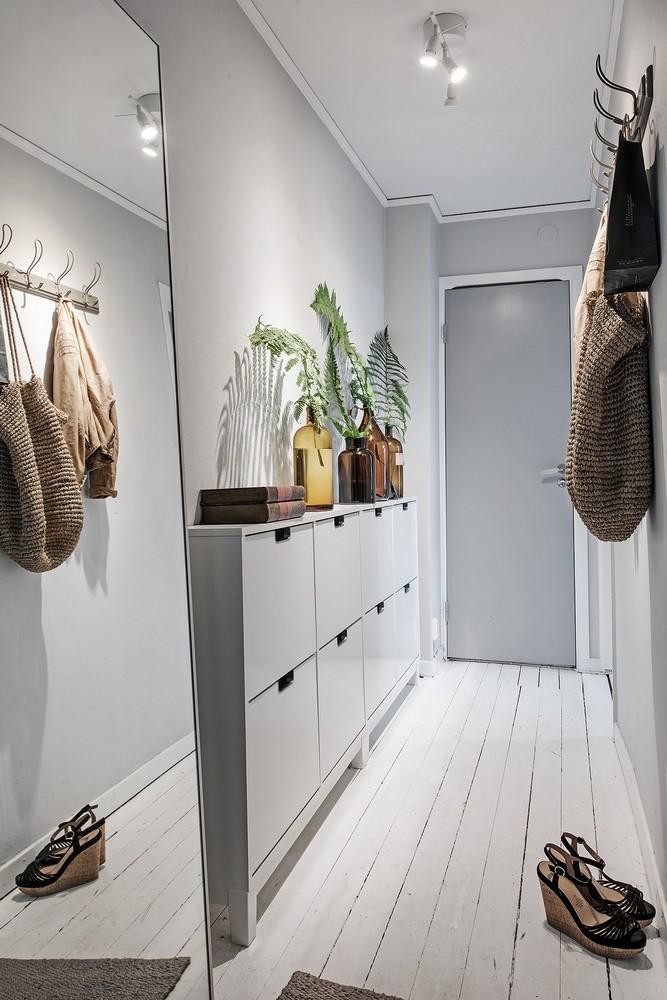
Forget a small, decorative mirror.
A mirror in a small entryway isn’t optional, it’s foundational.
Not the tiny decorative kind, but a real mirror that reflects light, movement, and depth.
It’s the most effective way to trick the brain into perceiving more square footage.
3. Stop Blocking the Floor
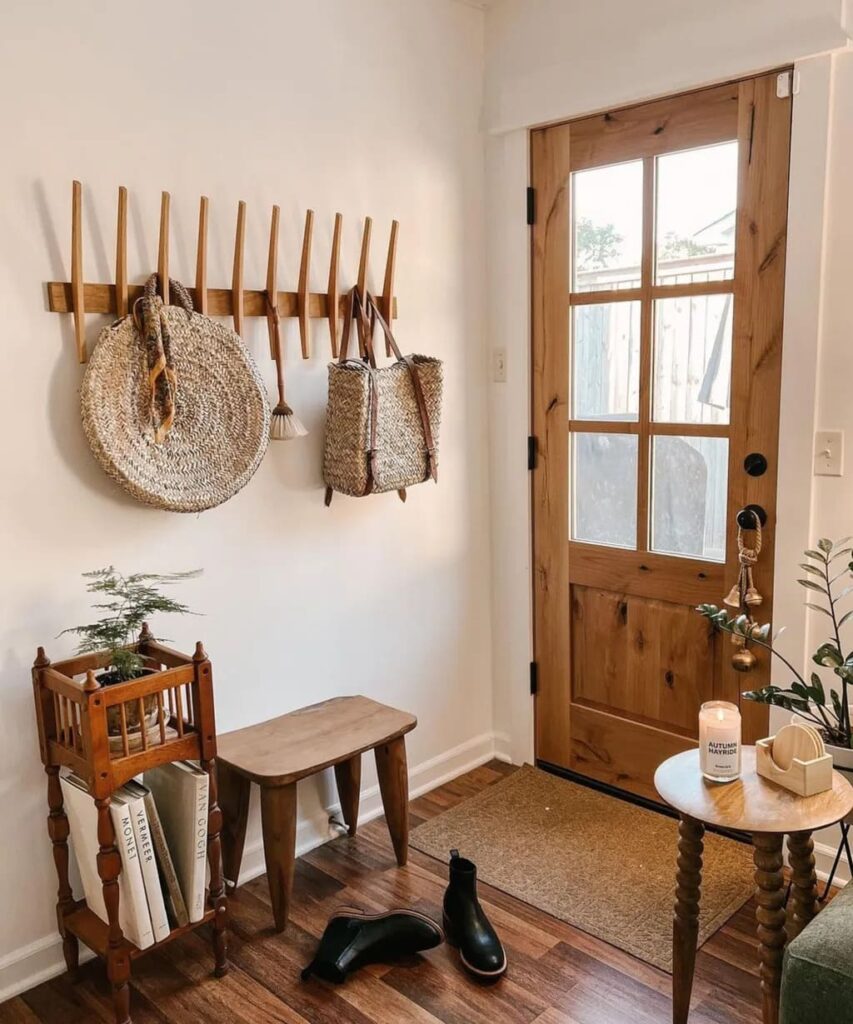
The more floor you see, the larger your entryway will feel, full stop.
This means avoiding floor baskets, chunky shoe racks, or anything that visually chops up the ground.
Wall hooks, floating storage, and vertical solutions keep things functional without crowding the space.
If you must have something on the floor, choose pieces with legs so light can pass underneath.
That little gap creates visual breathing room that your brain actually notices.
4. Implement a Strict One-In, One-Out Rule
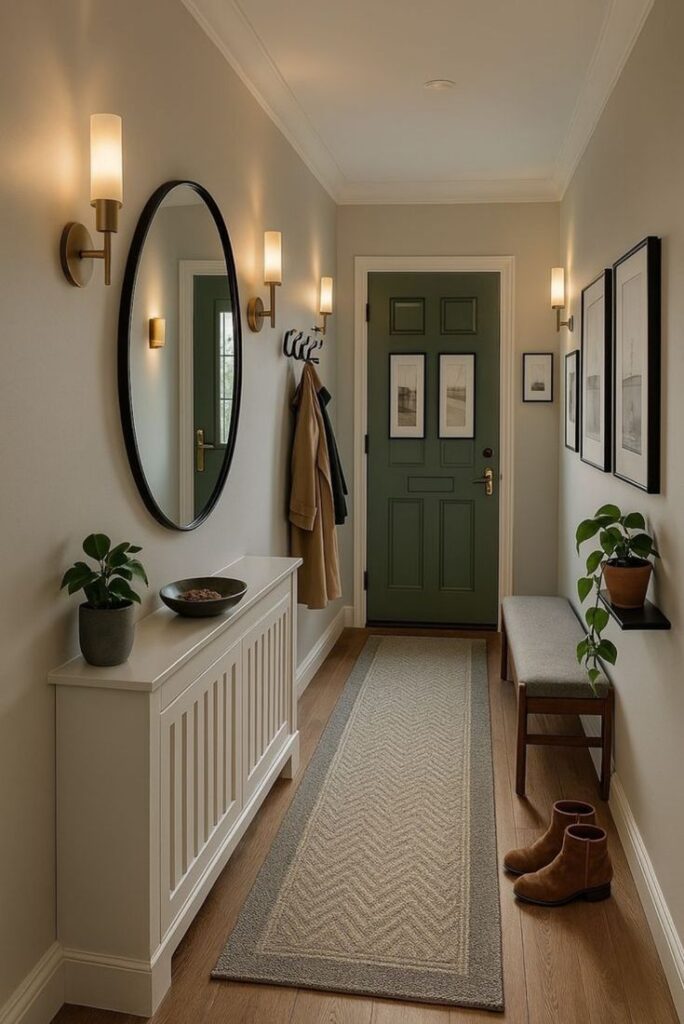
A small entryway has zero tolerance for clutter accumulation.
You must adopt a mindful policy: for every new item that earns a permanent spot here, an old one must be donated or stored elsewhere.
This applies to coats, shoes, and decorative items.
This discipline prevents the slow creep of chaos and ensures the space never feels actively suffocated by stuff.
5. Use Your Vertical Space Strategically
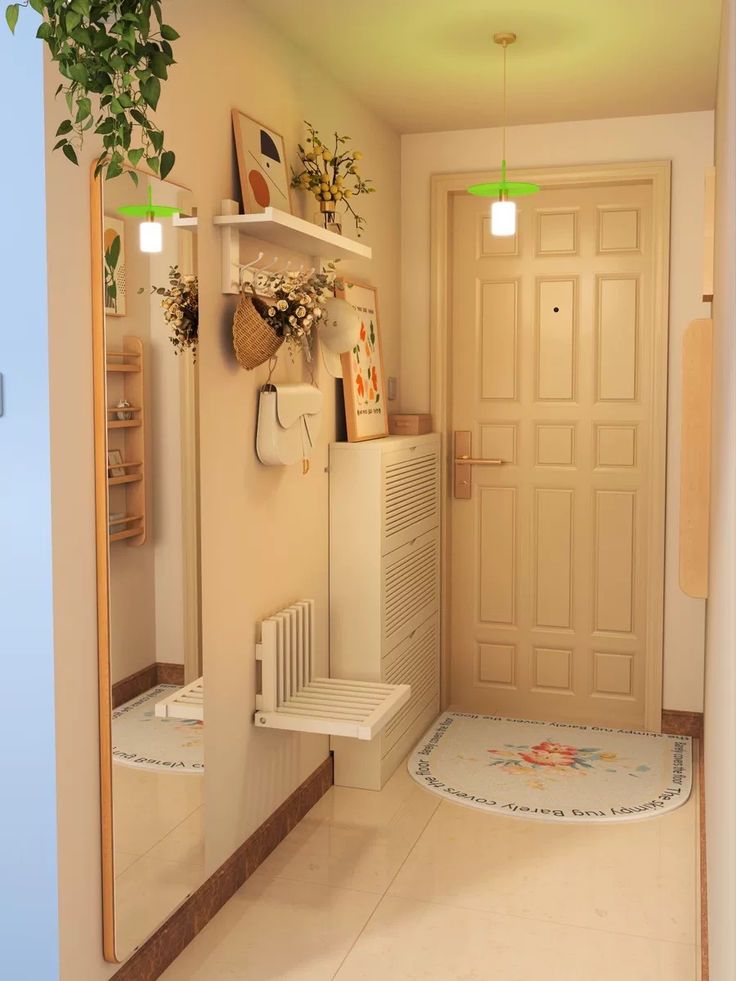
Stop thinking at eye level.
The blank wall space stretching up toward your ceiling is prime real estate.
Install a high floating shelf for attractive but rarely-used items, or use tall, vertical hooks that draw the eye upward.
This tactic lifts the room’s focal point, making the ceiling feel higher and utilizing often-wasted space for smart, out-of-the-way storage.
6. Keep Decor Minimal but Not Empty
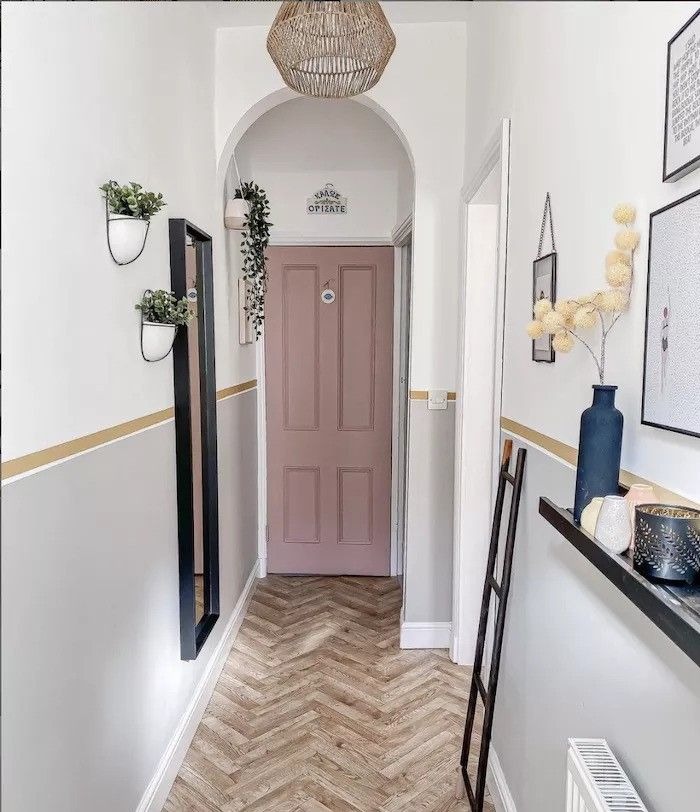
An empty entryway feels unfinished, not bigger.
The goal isn’t to remove personality, it’s to be selective.
One statement piece works better than five small, random objects competing for attention.
Every item should have a reason to be there.
If it doesn’t serve a function or a strong visual purpose, it’s probably making the space feel busier than it needs to be.
7. Choose Lighting That Spreads, Not Spots
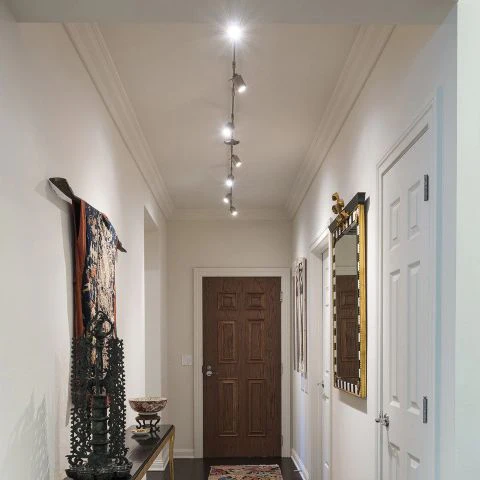
Bad lighting can shrink a space faster than clutter.
A single harsh overhead light creates shadows that make walls feel closer.
Instead, go for lighting that spreads evenly, flush mounts, wall sconces, or soft LED lighting.
Warm, even lighting makes the entryway feel open and welcoming instead of tight and transitional.
If your entryway has no natural light, the lighting choice becomes non-negotiable.
8. Embrace the Power of Negative Space
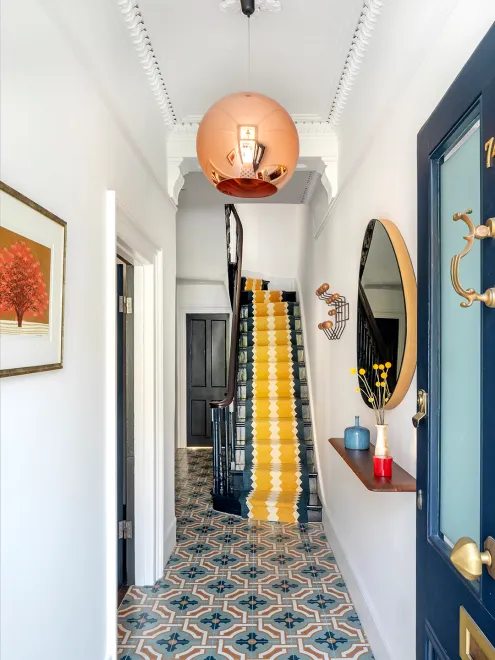
Resist the urge to fill every inch.
Intentionally leave a portion of the wall bare, keep the surface of your console table mostly clear, and ensure there’s a clear path to walk.
This negative space, or visual breathing room, is not empty, it’s a crucial design element.
It gives the eye a place to rest, which reduces visual noise and makes the entire area feel more orderly and spacious.
9. Use a Runner to Visually Stretch the Space

source
A runner rug is one of the easiest ways to make a small entryway look longer.
It guides the eye forward, which tricks your brain into seeing more space than there actually is.
Just make sure it fits, too small, and it does the opposite.
Stick to simple patterns or subtle textures.
Loud prints can visually clutter the space and shorten it instead of elongating it.
10. Treat It Like a Transition, Not a Storage Room
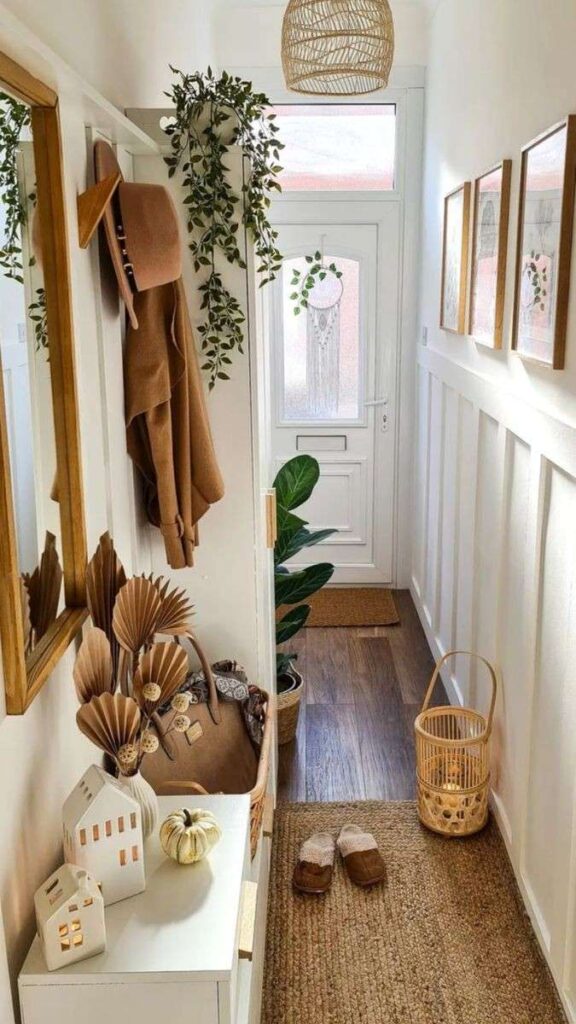
This mindset shift changes everything.
An entryway isn’t meant to hold your life, it’s meant to guide you from outside to inside.
When you design it with flow in mind instead of storage first, it naturally feels more open.
A clear path, intentional decor, and visual breathing room make the space feel calm and bigger than it is.
And honestly? That feeling matters more than squeezing in one more basket.
11. Create a Clear Drop Zone
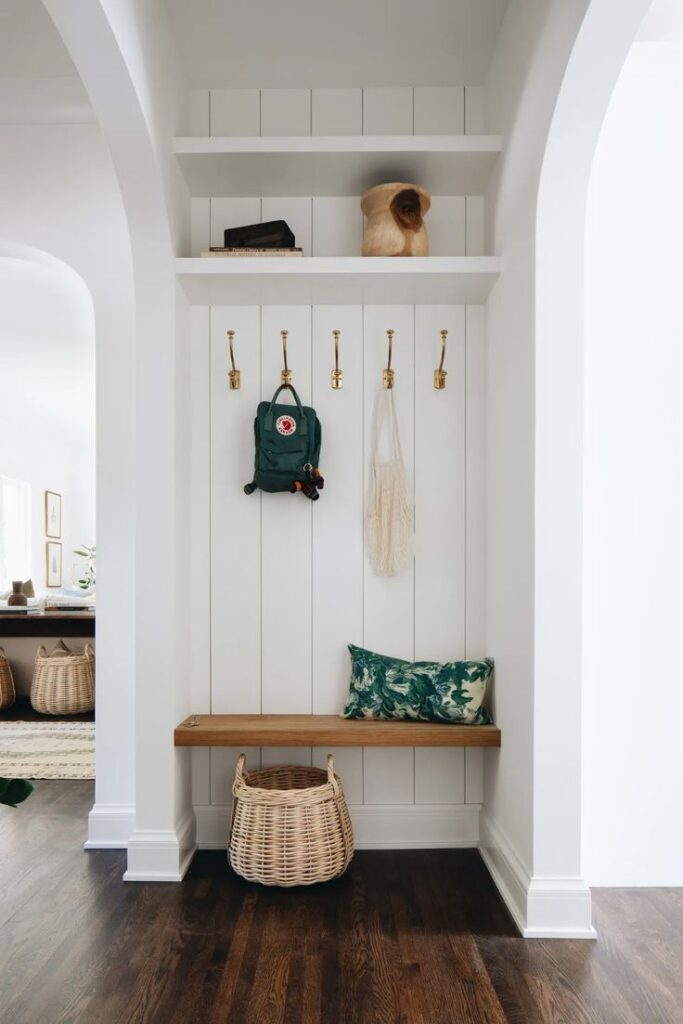
When keys, bags, sunglasses, and random papers don’t have a designated spot, the entryway instantly feels smaller, even if it technically isn’t crowded.
A small tray, a wall-mounted catchall, or a shallow drawer gives those items a home so they’re not visually scattered.
This isn’t about being “organized” in a perfect way. It’s about reducing visual noise the second you walk in.
The calmer the surface, the more open the space feels.
12. Match the Entryway Style to the Room It Opens Into
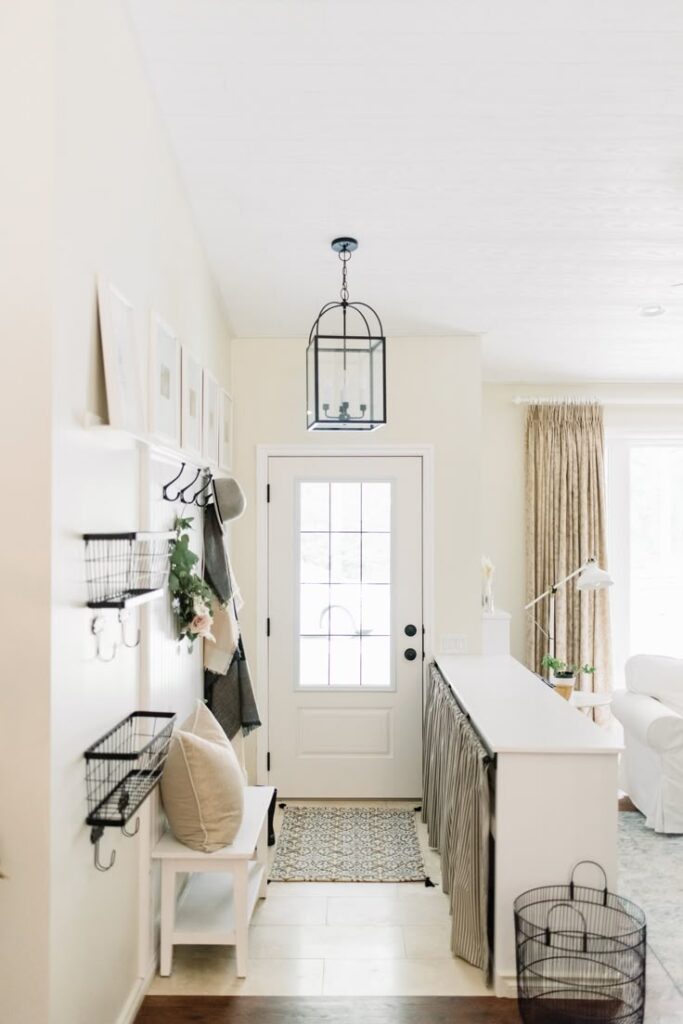
One reason small entryways feel awkward is that they feel disconnected.
If your entryway decor clashes with the space right next to it, your eye stops instead of flowing forward, and that makes everything feel tighter.
Use similar colors, materials, or decor styles so the transition feels seamless.
When your eye moves smoothly from the entryway into the rest of the home, the space feels larger by association.
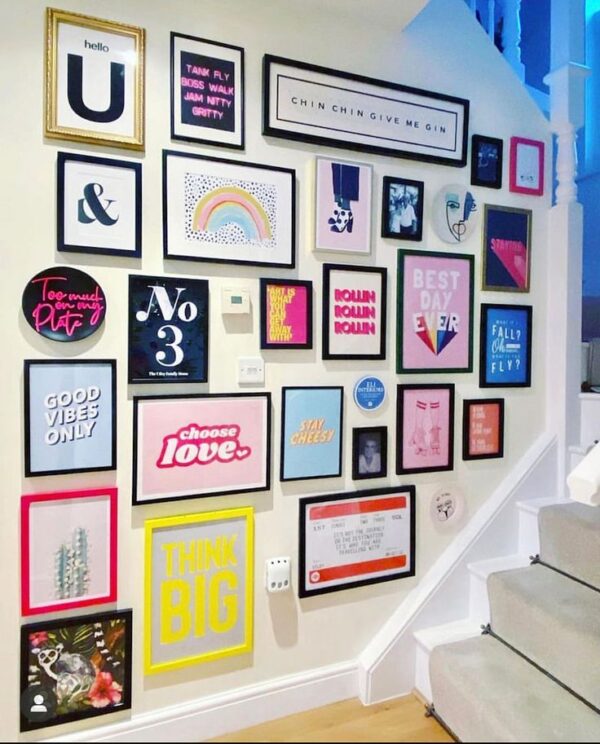
13. Skip Tiny Art
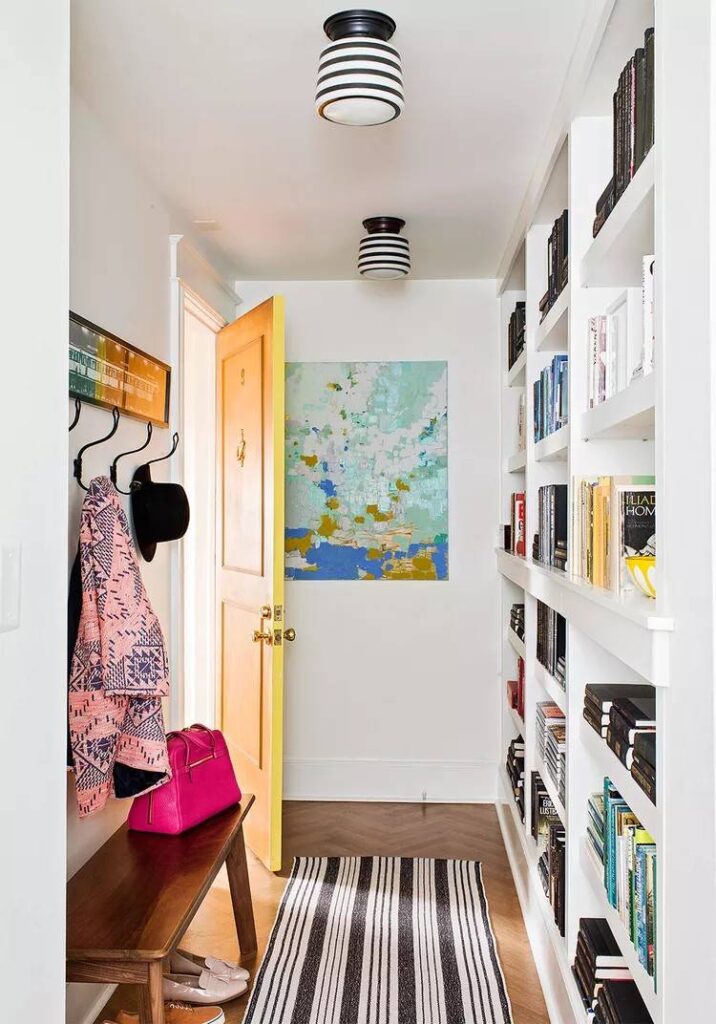
A bunch of small frames in a tiny entryway can make the walls feel cluttered and busy.
Instead, one larger piece of art creates a focal point that grounds the space without overwhelming it.
It sounds counterintuitive, but bigger art actually makes small spaces feel more confident and intentional.
It tells your brain the room isn’t apologizing for its size.
14. Choose Hooks Over Racks (Every Time)
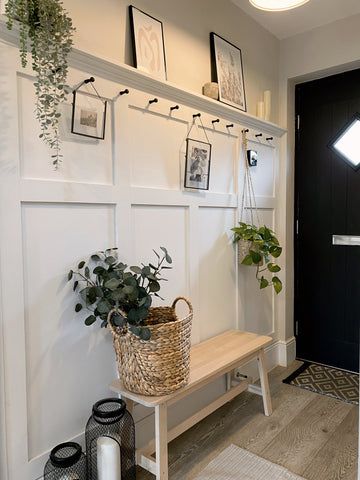
Coat racks and standing organizers eat up valuable floor space and visually crowd the entryway.
Wall hooks do the same job while keeping the footprint minimal and the layout open.
Place them slightly higher than usual to pull the eye upward and keep coats from dragging visually.
The space stays functional without feeling jammed.
15. Use Closed Storage to Hide the Mess You Can’t Avoid
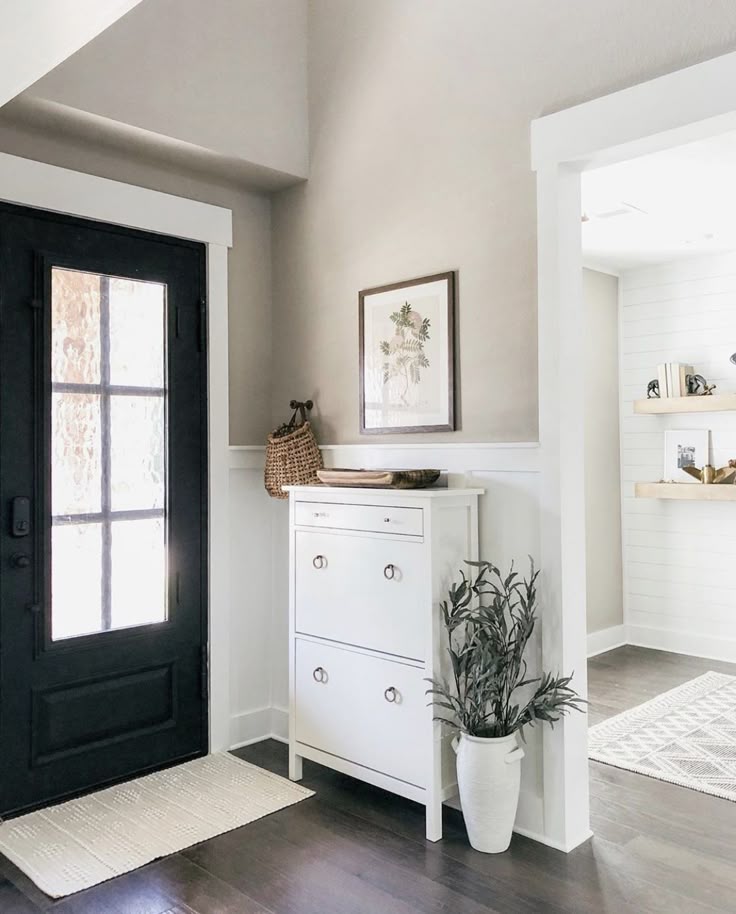
Open baskets and shelves look great in photos, but in real life, they fill up fast—and clutter shrinks a space immediately.
Closed storage keeps the unavoidable mess out of sight so the entryway feels calmer and more open.
Even a small cabinet with doors can make a huge difference visually, what you don’t see matters just as much as what you do.
16. Let the Door Work for You
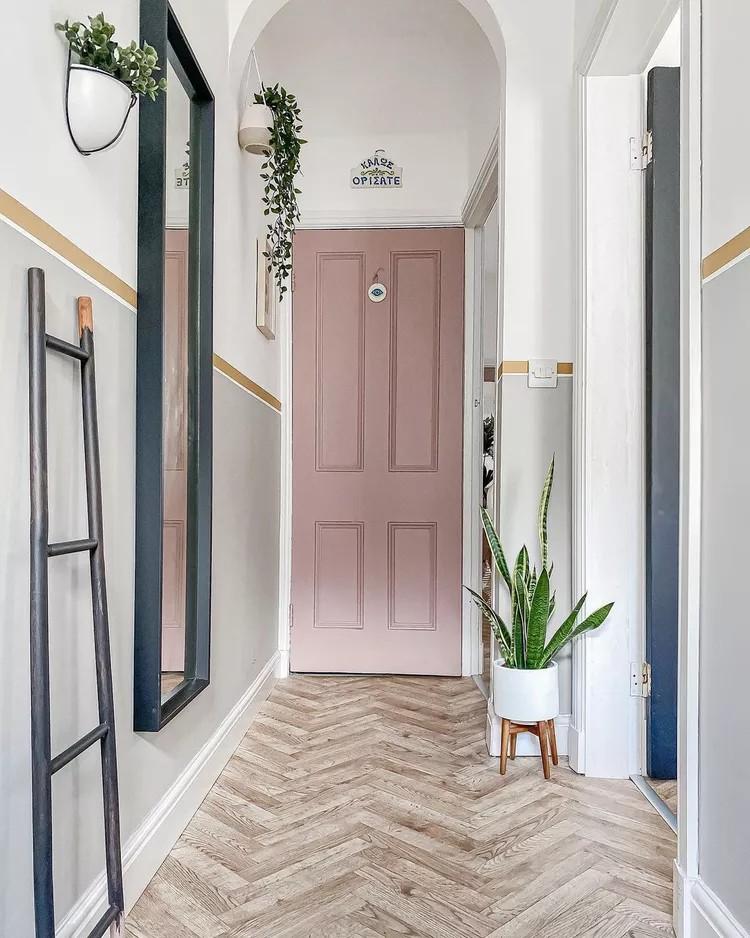
If your entryway door is dark or heavy-looking, it can visually close the space in.
Painting it a lighter color or matching it to the walls helps it blend instead of dominating.
You can also use the back of the door for slim hooks or storage, as long as it stays visually light.
The door should support the space, not overwhelm it.
17. Accept That “Less” Really Is the Trick Here
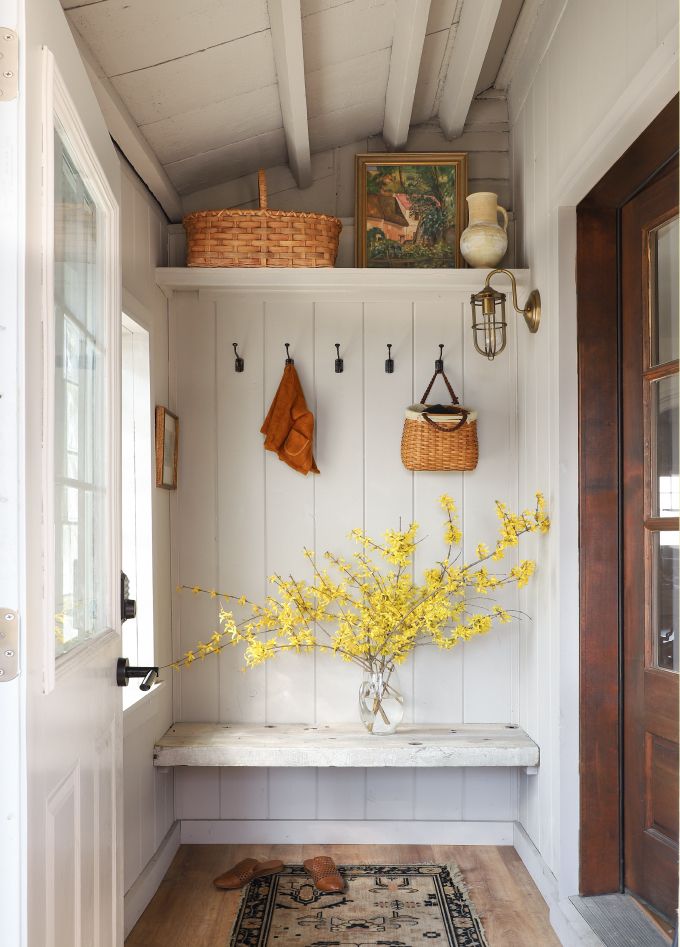
This isn’t about depriving the space, it’s about respecting it.
A small entryway looks bigger when it’s edited, intentional, and allowed to breathe.
If something feels like it’s there just because you didn’t know where else to put it, that’s your sign.
The more honest you are about what the space actually needs, the better it will feel.
This post showed you the best ideas on how to make a small entryway look bigger.