How to Style Open Shelves in the Kitchen Without Making Them Look Cluttered
Learn how to style open shelves in the kitchen with dishes, cookbooks, glassware, plants, and thoughtful arrangements that feel personal, practical, and beautifully lived-in.
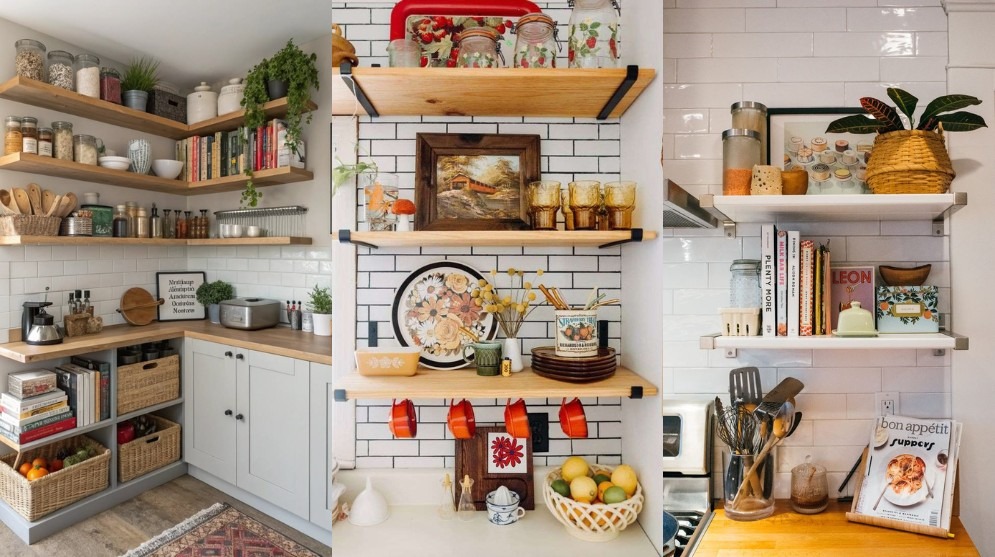
Open kitchen shelves have a way of making you rethink the things you keep within arm’s reach. The everyday plates you reach for at lunch, the mugs you save for your morning coffee, the little bowl you use for lemons suddenly, these ordinary things become part of the room itself. And that is precisely what makes open shelving so appealing to me. Your kitchen starts to feel less like a collection of cupboards and more like a space that reflects how you actually live.
Of course, there is a difference between shelves that look thoughtfully put together and shelves that seem to collect every spare dish in the house. I think the secret is knowing what deserves a place in the open and what is better tucked behind a cabinet door. If you are wondering how to style open shelves in the kitchen, these ideas will help you find that balance, whether you have one narrow shelf above the coffee maker or an entire wall to work with.
How to Style Open Shelves in the Kitchen
1. Start With the Dishes You Use Every Day
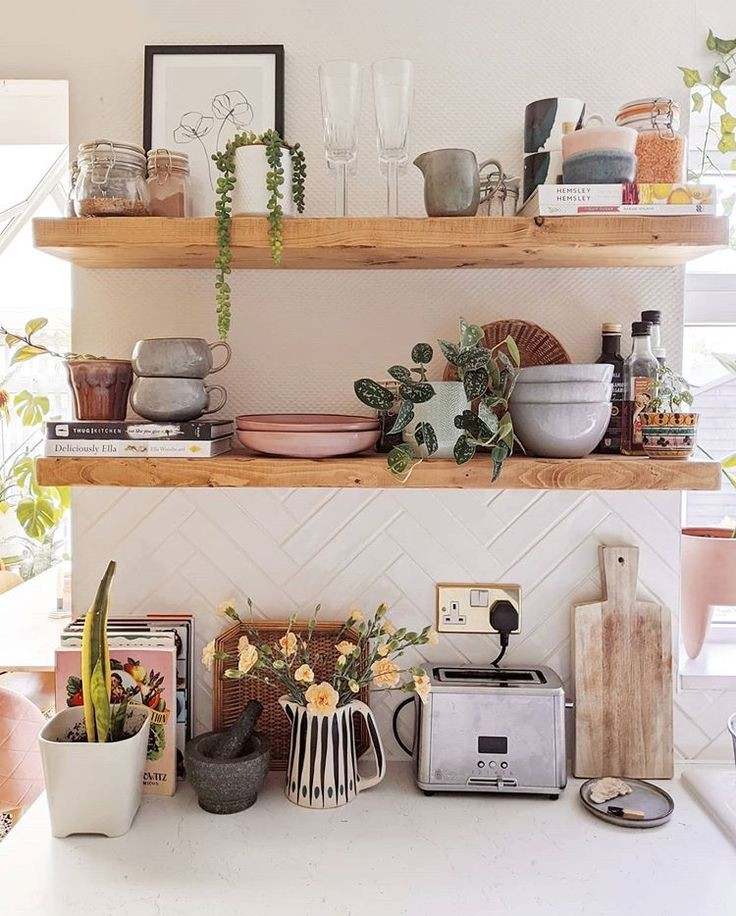
My first piece of advice is to resist the temptation to buy decorative dishes before looking at what you already own. White plates, everyday bowls, and a few serving dishes can make a lovely display when they are arranged with a little intention. Better still, you will not have to move something pretty out of the way every time you need to make lunch.
Stack plates by size and keep bowls together rather than spreading individual pieces across the shelves. If your dishes are mismatched, that can work beautifully, too.
2. Mix White Dishes With a Little Color
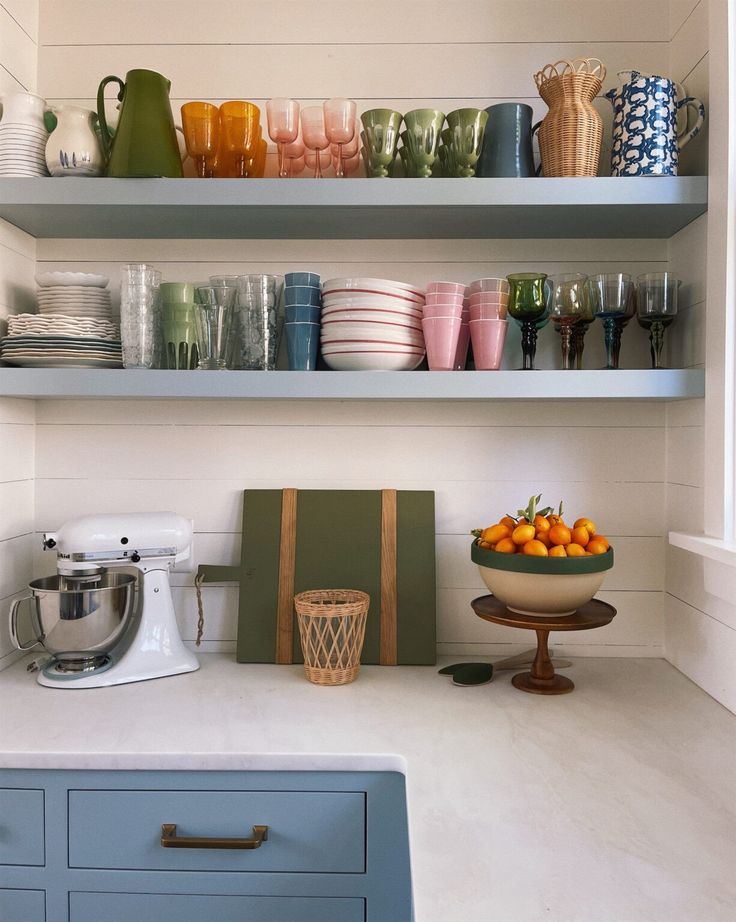
An all-white kitchen shelf can look lovely, but it can also feel a little lifeless if every single item is the same shade. I would keep the white plates and bowls as a base, then introduce a few pieces in a color you genuinely enjoy. Think muted blue pottery, sage-green bowls, or a couple of terracotta dishes that bring out the tones in your countertops.
The trick is to repeat that color somewhere else on the shelves rather than introducing a different shade with every object.
3. Give Your Cookbooks a Place on the Shelf
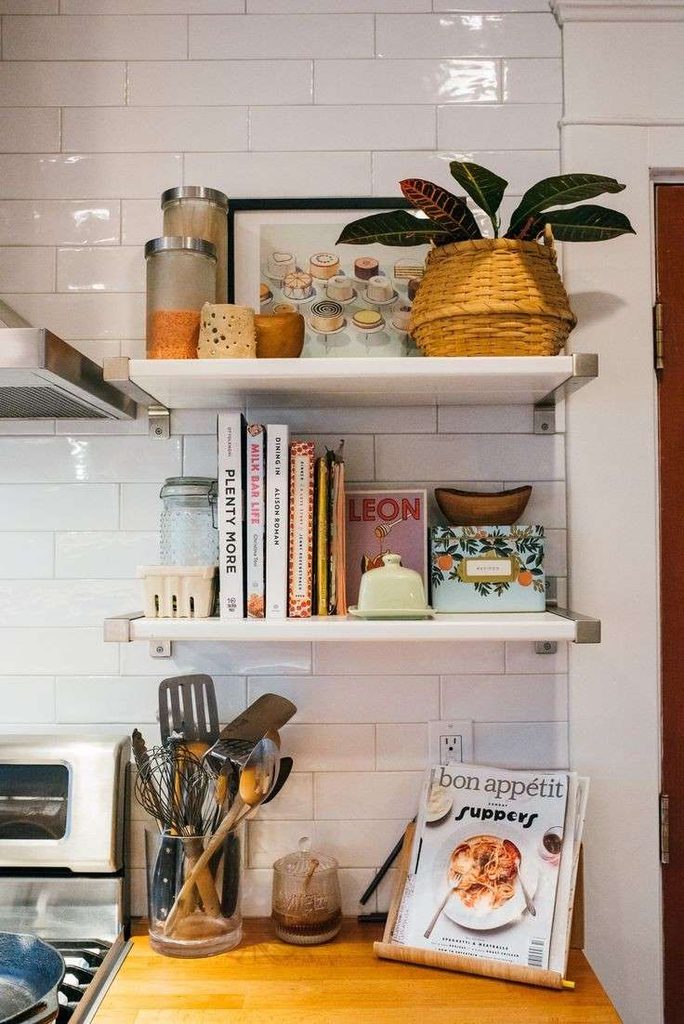
Cookbooks are one of my favorite things to include on kitchen shelves because they make the room feel personal. Maybe you have a baking book covered in flour marks, a cookbook you bought on holiday, or a collection of recipes you return to every Sunday. Those are the books worth displaying, especially if you actually reach for them.
Stand two or three books upright with a small bookend, then lay another short stack horizontally beside them. This creates variation in the arrangement while leaving room for the other things you need in the kitchen.
4. Use Glassware to Add Lightness
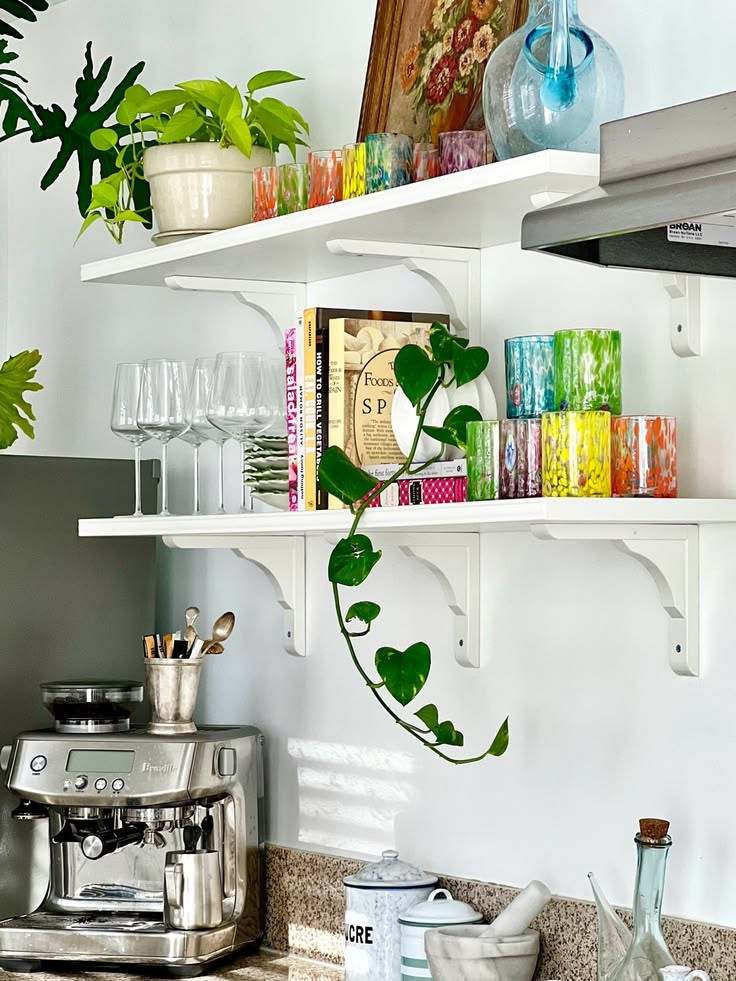
If your shelves already hold stacks of plates and ceramic bowls, glassware is an easy way to break up all that solid color. Clear tumblers, water glasses, and a glass carafe add variety without introducing another material that competes for attention. They also catch the daylight, which can make a small kitchen feel a little brighter.
I would group glasses by type rather than lining up every piece you own. Keep your everyday tumblers together, put wine glasses on a separate shelf if you use them regularly, and leave the delicate crystal for a cabinet if dusting it every few days sounds like a chore.
5. Add a Plant or Fresh Herbs
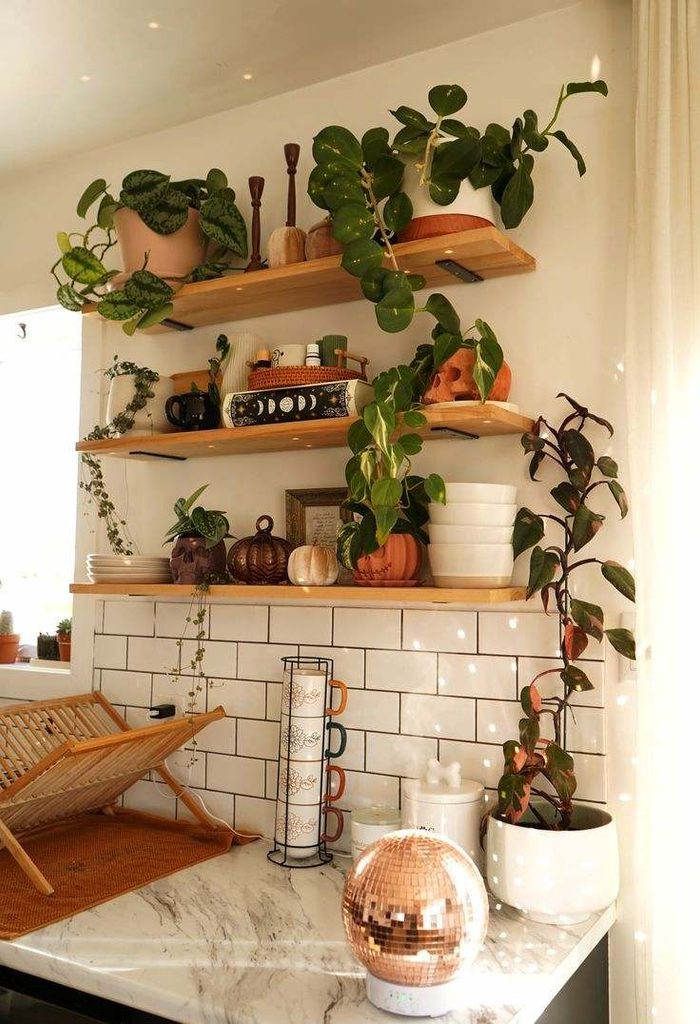
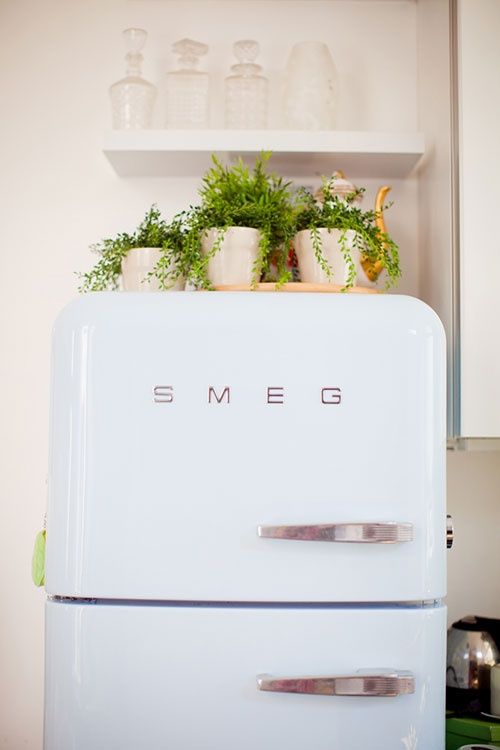
A little greenery can make kitchen shelving feel less static. I particularly like herbs because they earn their place twice, they look good, and you can use them when dinner needs a finishing touch.
Before adding a plant, think about the light your shelves actually receive. Herbs generally need plenty of bright light, so a dark corner above the stove is unlikely to be their happiest home.
6. Display Your Favorite Mugs Instead of Hiding Them Away
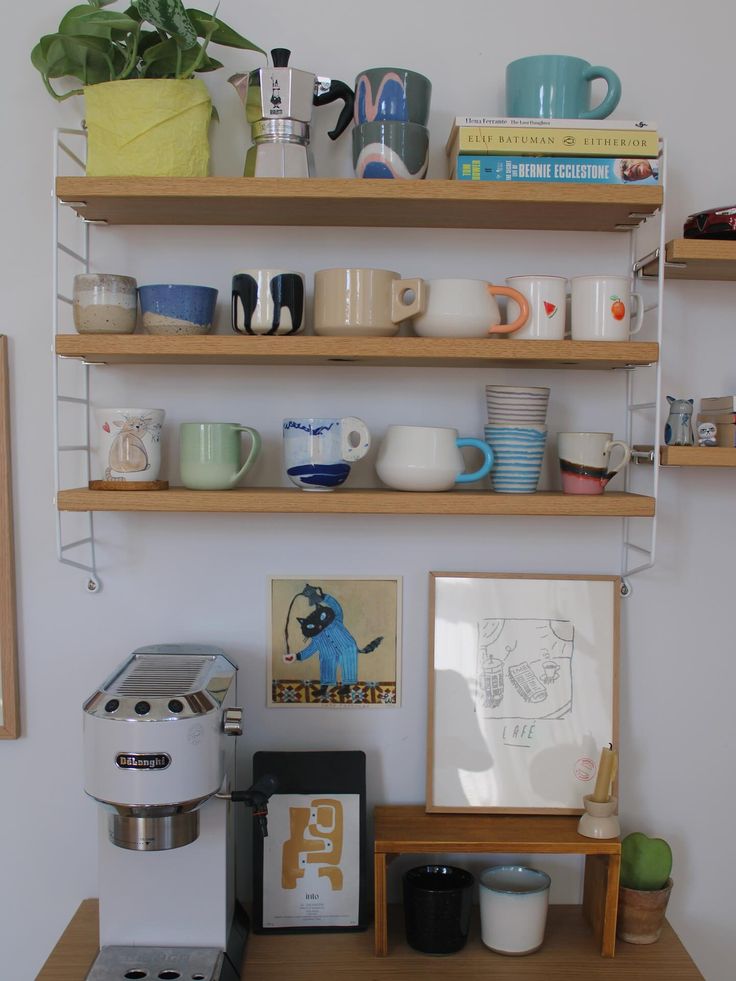
If you have a favorite mug for your first coffee of the day, why keep it hidden behind a cabinet door? A small collection of mugs can give open shelves a more personal feel, particularly when the shapes or colors vary slightly.
Group mugs by color or material, and leave enough room between stacks to take one down easily. If your collection includes a few oversized mugs, place them at the end of a shelf where they will not crowd smaller pieces.
7. Bring in Wooden Boards and Serving Platters
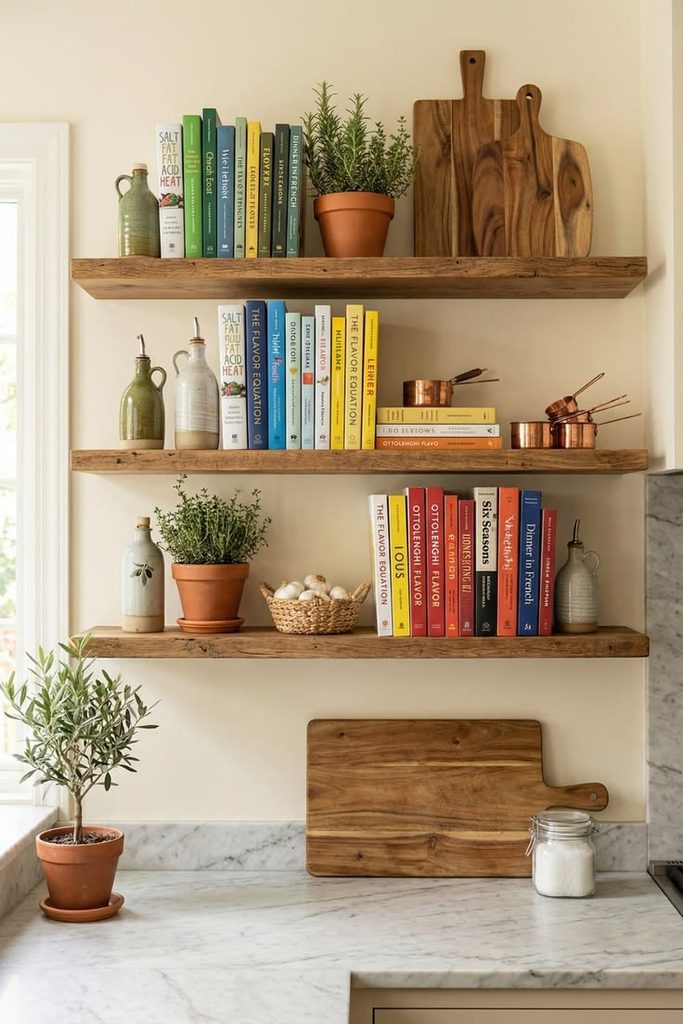
Wooden cutting boards are useful, but they also happen to be some of the easiest kitchen accessories to display. Lean two boards of different sizes against the back of a shelf, then place a small stack of bowls or a ceramic jug in front.
I would use boards you actually cook with rather than buying decorative versions just for the shelves. A beautiful olive-wood board or a well-used chopping board can make the kitchen feel more authentic. Just make sure the boards are thoroughly dry before storing them on open shelving.
8. Create a Small Coffee Station on Your Shelves
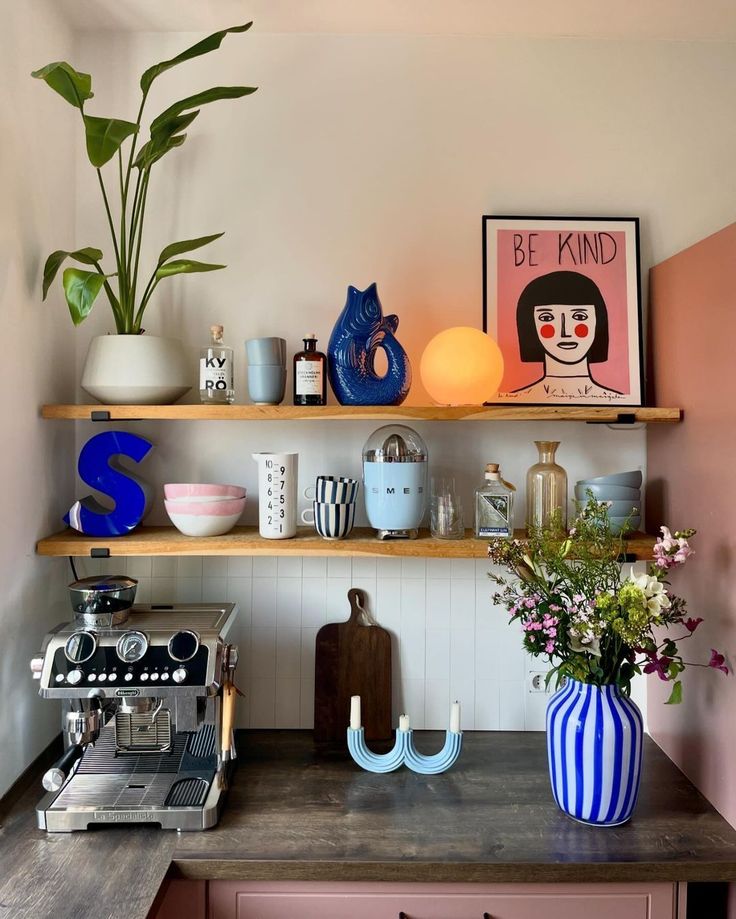
If your morning coffee is a daily ritual, dedicating part of a shelf to it makes practical sense. Keep your favorite mugs nearby, store coffee beans in a sealed jar, and add a small container for sugar or your preferred sweetener.
The important thing is to keep the setup proportional to the space. A few useful items beside the coffee machine are enough, you do not need a decorative sign, multiple jars, and a collection of accessories to make the corner feel complete. Let the things you use do most of the work.
9. Layer in a Few Decorative Objects
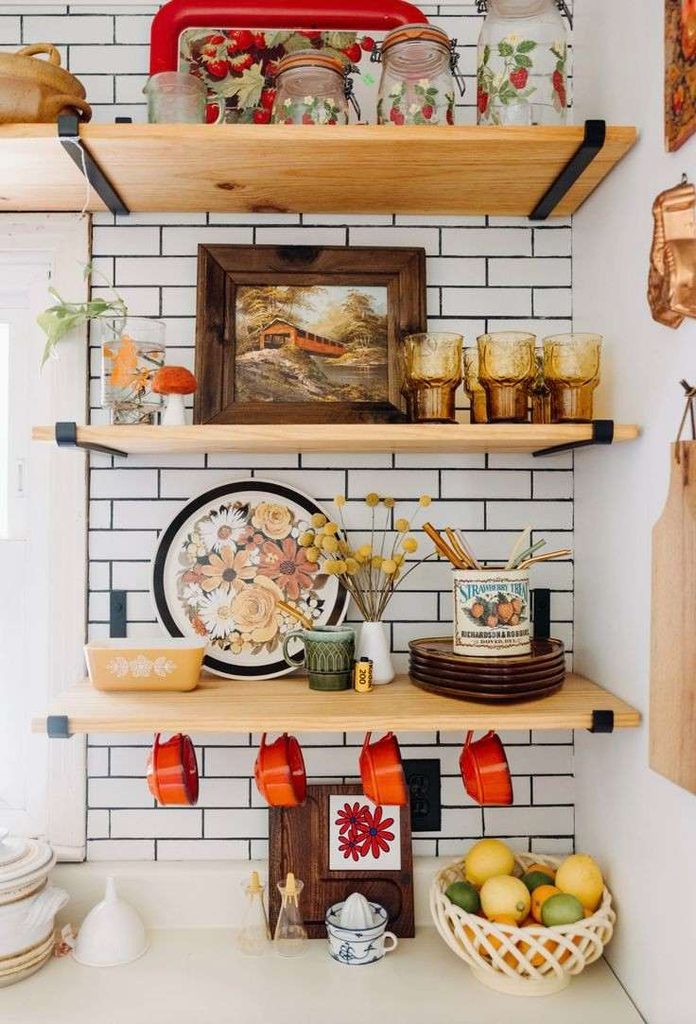
Not every item on your kitchen shelves has to be strictly functional. I like decorative pieces best when they mean something or have an interesting shape, rather than objects chosen simply because a shelf looks empty.
Try placing one small object beside a stack of plates or letting a shallow bowl sit in front of a larger serving platter. If you are unsure whether an object belongs, remove it and see whether the arrangement looks better without it.
10. Use Baskets to Hide the Little Things
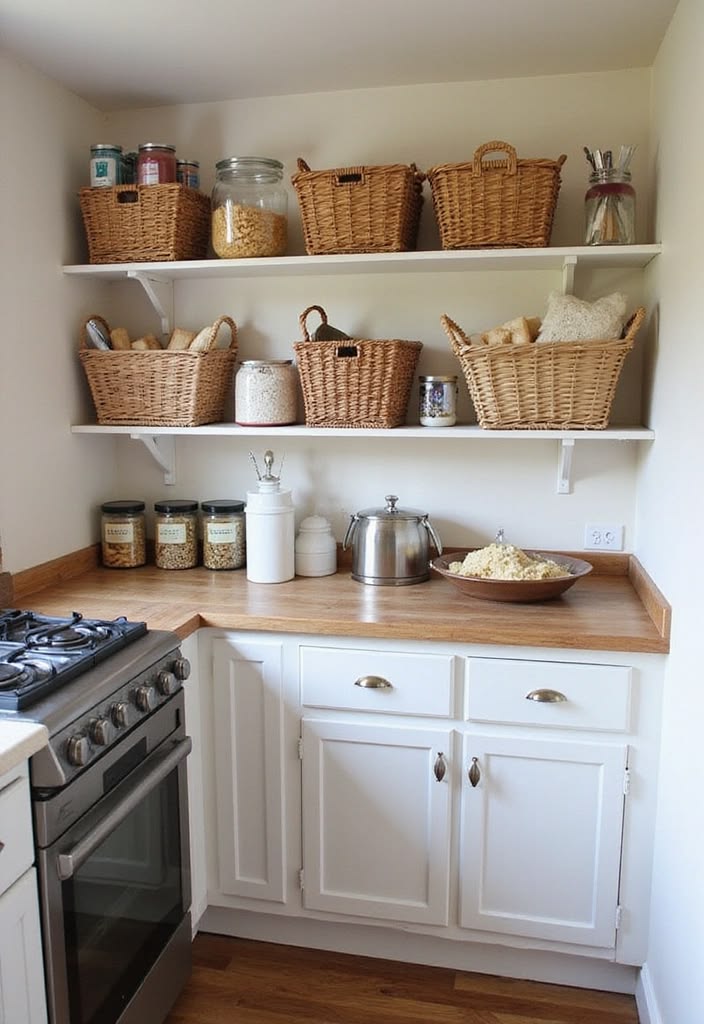
Even the most thoughtfully arranged kitchen has small things that are not particularly attractive to look at. Spare napkins, tea bags, snack packets, and miscellaneous kitchen supplies can quickly make open shelves feel messy.
Choose baskets that fit the depth of your shelves and leave enough room to pull them out comfortably. The point is to make everyday storage easier, not to disguise your entire kitchen behind a row of baskets.
11. Arrange Items in Small Groups Instead of Filling Every Gap
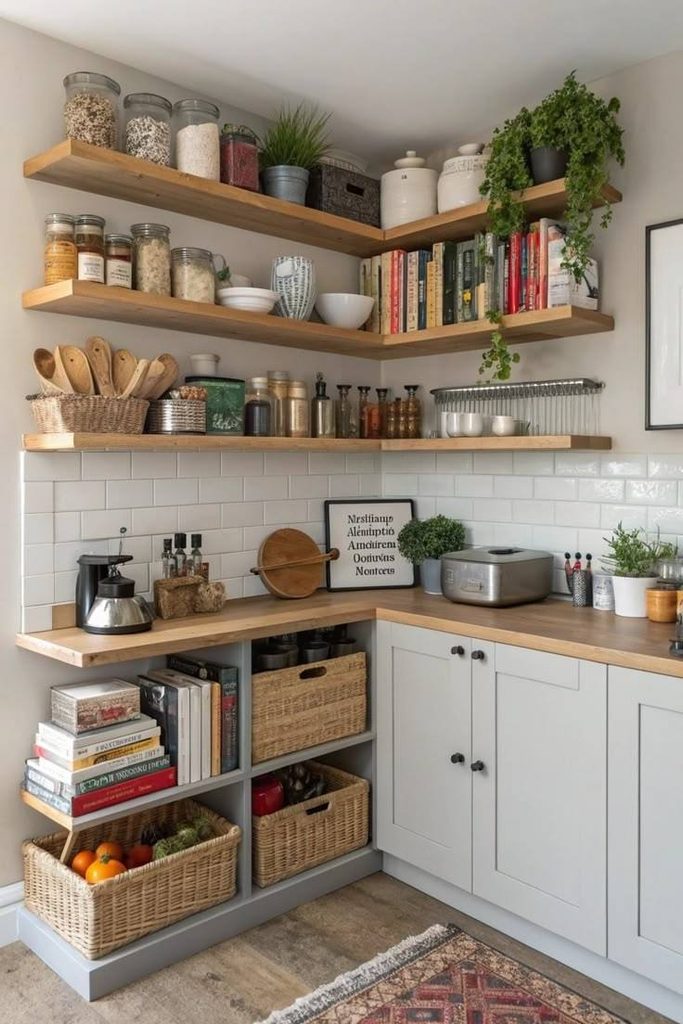
One of the most common open-shelving mistakes is treating every empty patch as a problem that needs fixing. In my opinion, a little breathing room is what allows your favorite pieces to stand out.
Try arranging objects in groups of two or three. A stack of plates beside a small vase, or a few glasses next to a carafe, gives the eye somewhere to settle. Vary the height and shape of each group, and leave a gap before starting the next one.
12. Style Your Shelves Around the Kitchen You Already Have
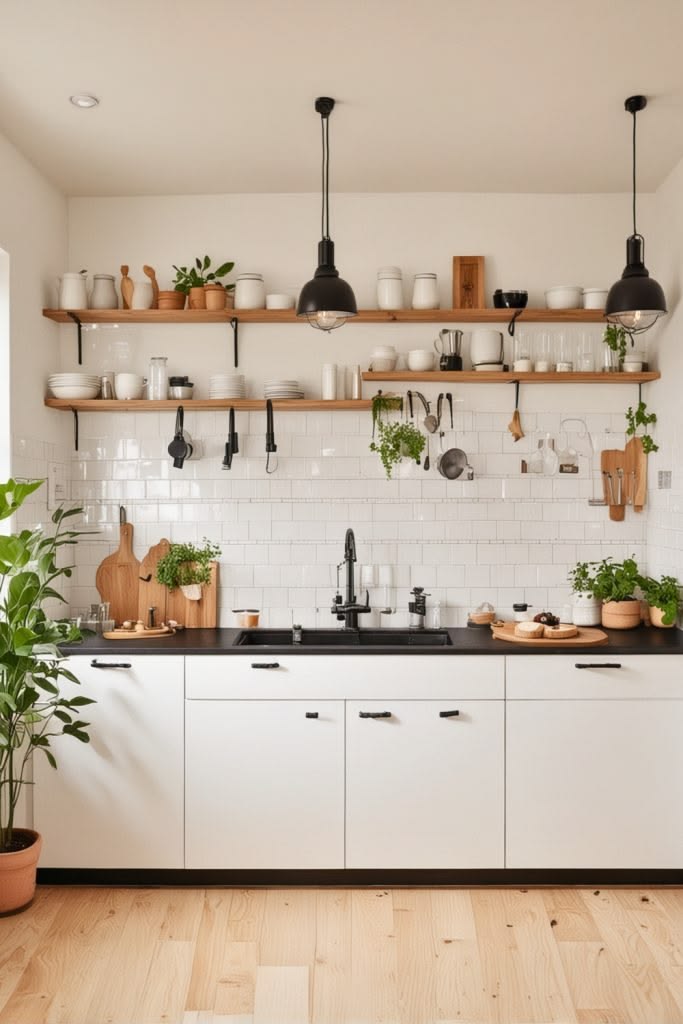
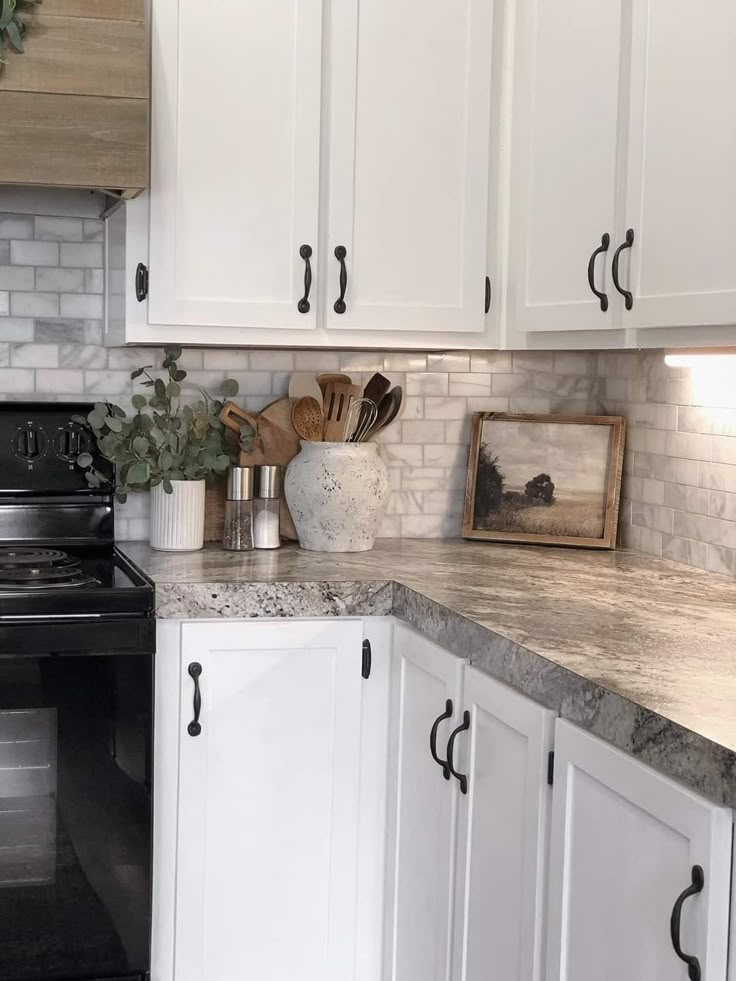
Before copying a shelf arrangement you spotted on Pinterest, take a look at the finishes and colors already in your kitchen. Dark wood shelves paired with white ceramics create a different effect from white shelves against a colorful backsplash.
For a kitchen with lots of natural wood, I would lean into white ceramics, clear glass, and a few muted colors. If your kitchen is mostly white, darker pottery, wooden boards, or colored glass can introduce contrast. And if your countertops already have a strong pattern, simpler objects will usually let the space breathe.
13. Keep Everyday Maintenance in Mind
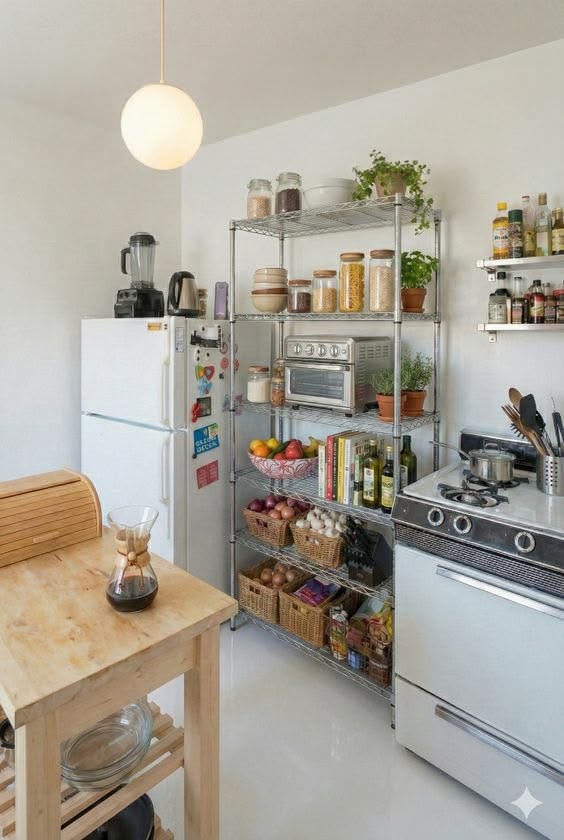
Open shelves look lovely in photographs, but real kitchens produce dust, cooking residue, and the occasional splash of sauce. Everyday plates, sturdy glassware, and easy-to-clean ceramics are generally more practical choices than delicate objects that need constant attention.
I would also be selective about what goes on shelves near the hob. Cooking grease can settle on exposed surfaces, so keep food-contact items covered or stored elsewhere if the location is particularly prone to splashes.