Japandi living room ideas that feel calm, practical, and livable. Thoughtful tips to blend Japanese minimalism and Scandinavian warmth without perfection pressure.
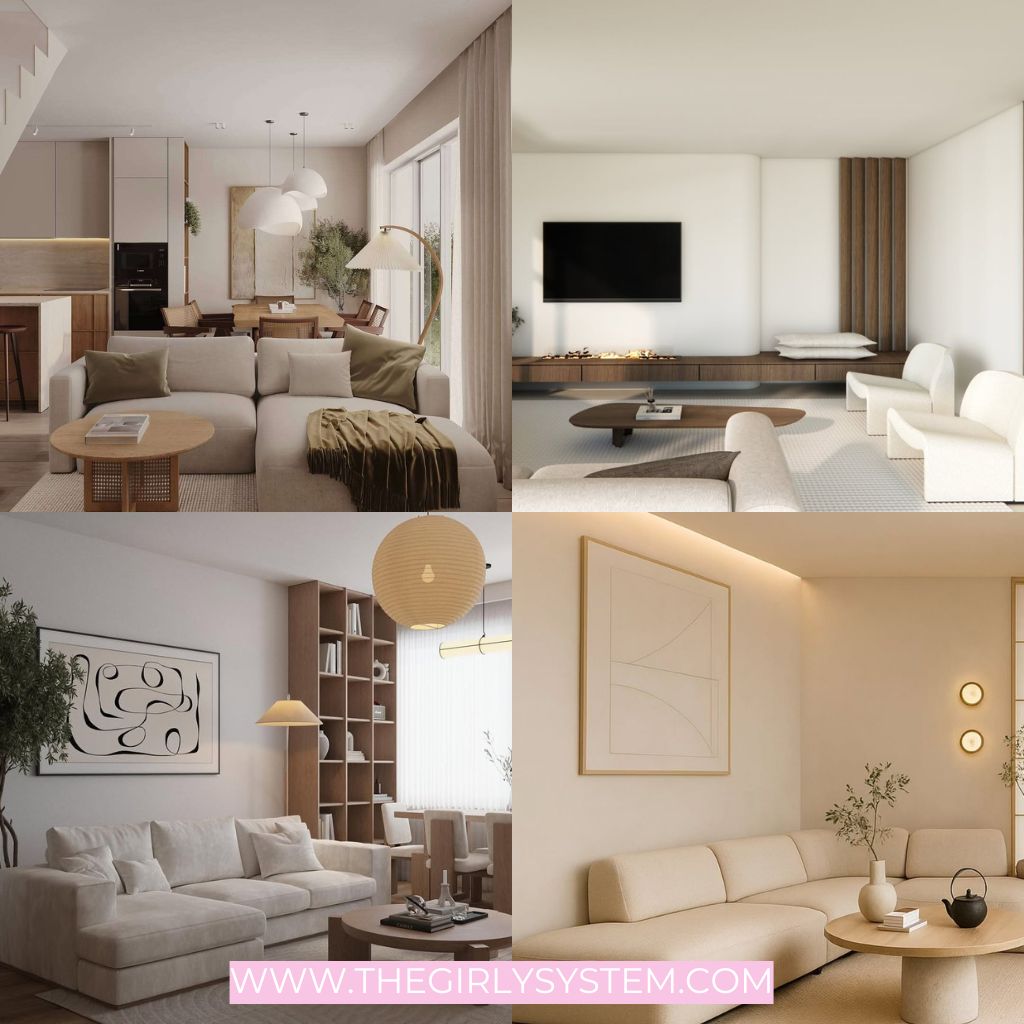
If you love the idea of a calm, pared-back living room but worry it might feel cold or impractical, you’re not alone.
Japandi style is everywhere right now, but a lot of inspiration online looks more like a showroom than a real home.
Perfect sofas, untouched coffee tables, and zero signs of daily life aren’t exactly reassuring when you actually live in your space.
This post is for you if you want Japandi living room ideas that feel grounded, realistic, and doable.
Not minimalist for the sake of it, and definitely not influencer-perfect.
We’re talking about choices that make your living room easier to live in, calmer to look at, and more intentional overall.
You’ll find ideas that explain why certain elements work together, how to adapt them to your space, and when to bend the rules.
Japandi isn’t about stripping everything awa, it’s about choosing fewer things, more thoughtfully, so your living room finally feels like a place you can breathe in.
Japandi Living Room Ideas
1. Start with a Soft Neutral Base
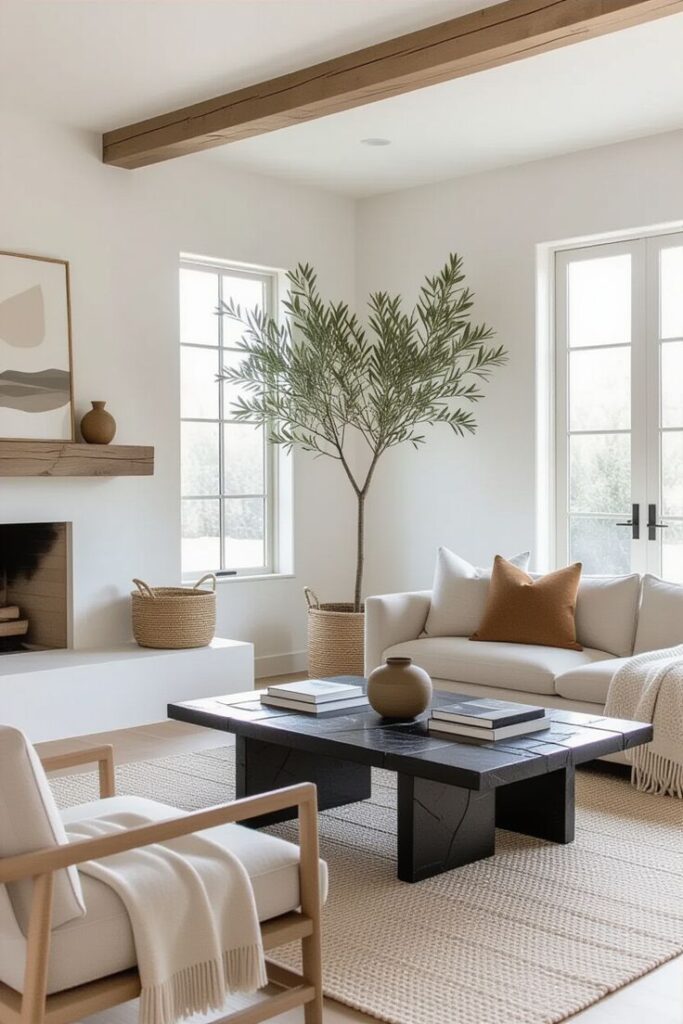
A Japandi living room works best when the foundation feels warm, not clinical.
Think soft whites, light beige, greige, or muted stone tones for walls and large furniture pieces.
These colors create a calm backdrop without making the room feel empty or unfinished.
If pure white feels too sharp in your space, choose a warmer off-white or a pale taupe instead.
This small adjustment keeps the room inviting while still honoring the minimalist roots of Japandi style.
2. Choose Low-Profile Furniture to Ground the Room
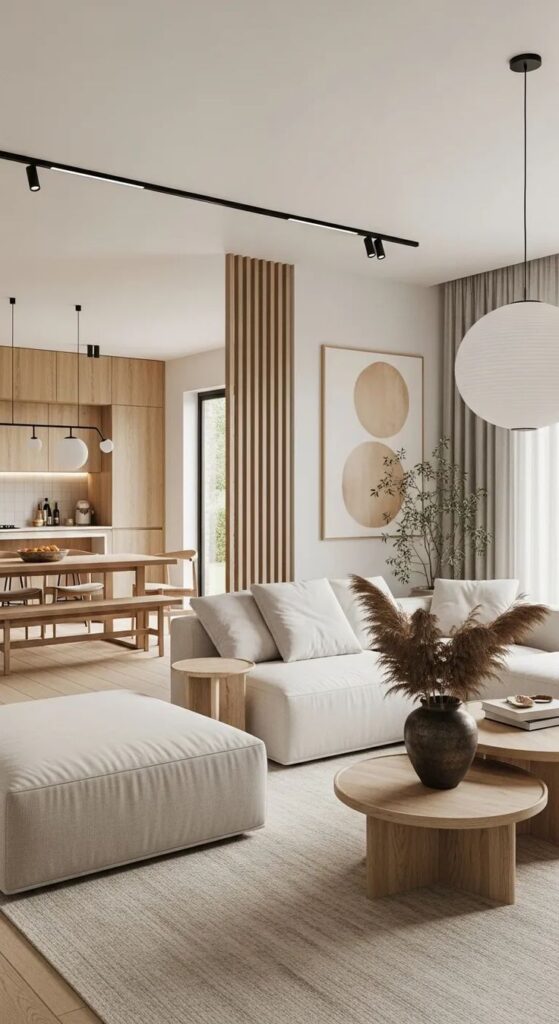
Low seating is one of the easiest ways to bring Japanese influence into your living room.
Sofas and lounge chairs with a lower height naturally make the space feel more grounded and relaxed.
They also help rooms with standard ceilings feel more spacious.
You don’t need traditional floor seating to achieve this look.
A modern sofa with clean lines and a slim frame does the job just as well.
3. Mix Light Woods Thoughtfully
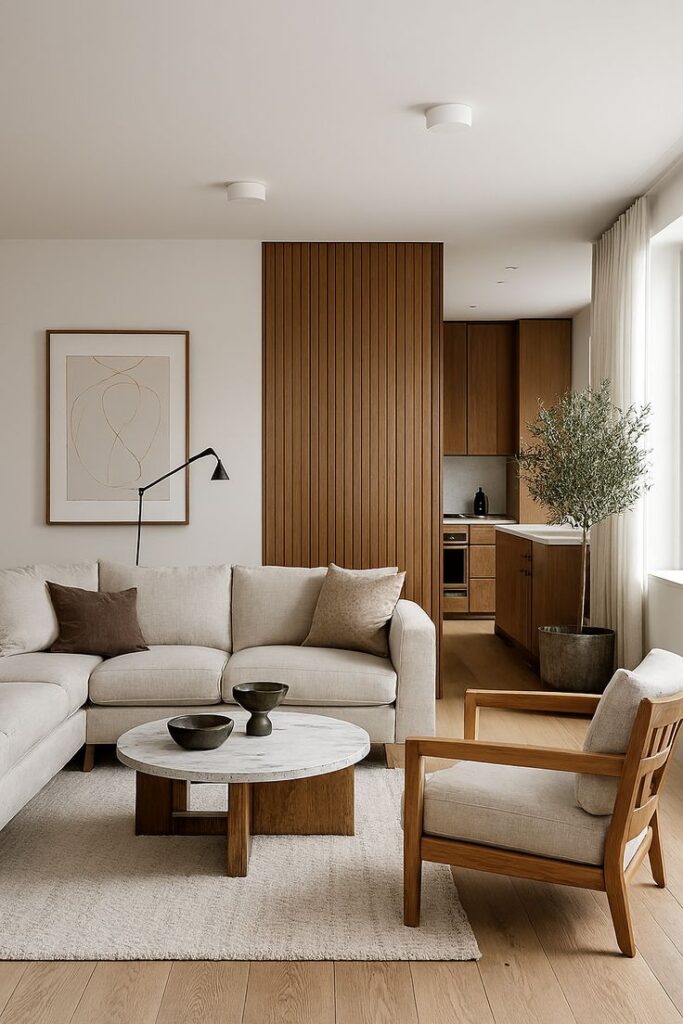
Japandi living room ideas often shine when they balance contrast instead of avoiding it.
Mixing light woods like oak or ash with darker woods such as walnut or smoked finishes adds depth without visual clutter.
The key is restraint.
Limit dark wood to one or two elements, like a coffee table or shelving, and let lighter wood dominate the space.
Too much contrast can feel busy, but a controlled mix adds sophistication.
4. Keep Furniture Functional, Not Decorative
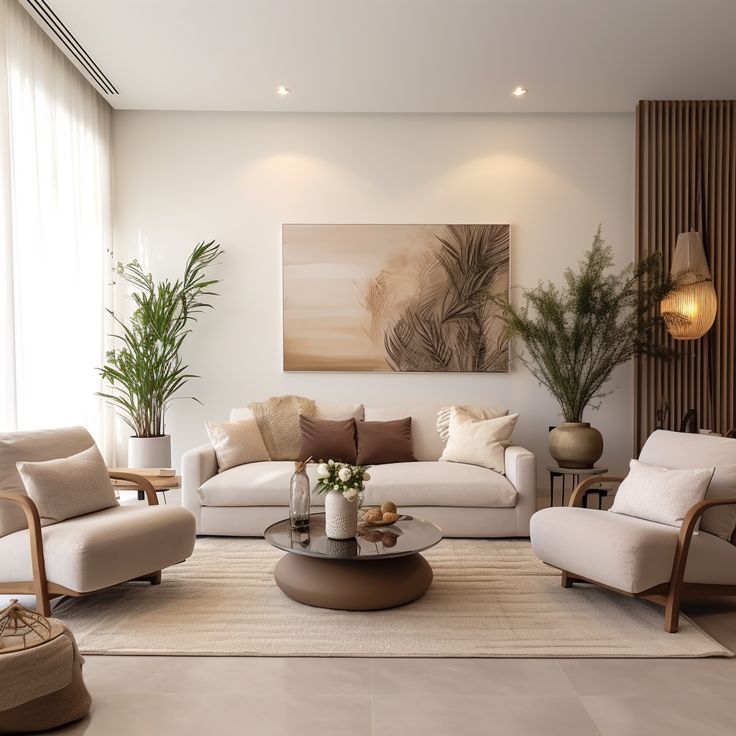
In Japandi interiors, every piece should earn its place.
Furniture isn’t there to fill space, it’s there to solve a problem or improve daily life.
This mindset instantly makes a living room feel calmer and more intentional.
Before adding something new, ask what purpose it serves.
A side table that holds a lamp and your book is a better choice than a purely decorative accent.
When everything has a role, the room naturally feels less cluttered and more livable.
5. Use Texture Instead of Pattern for Visual Interest
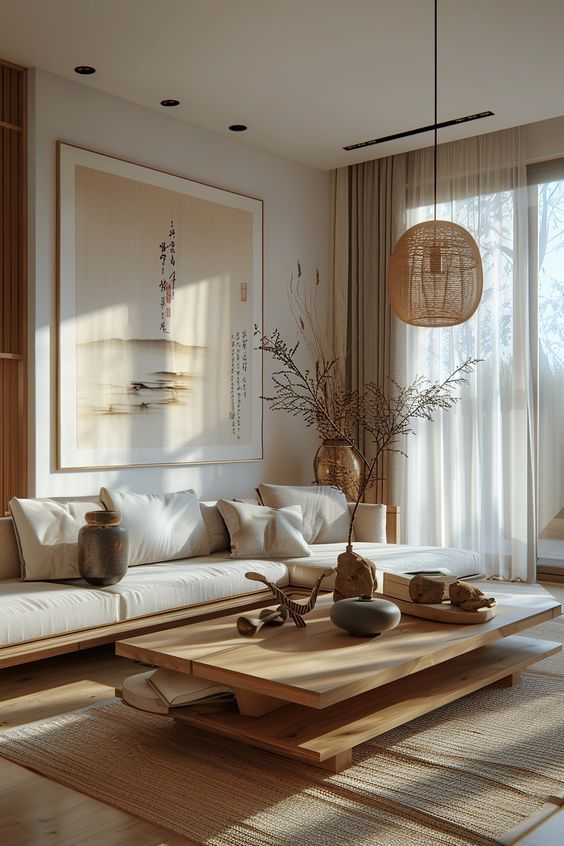
Rather than relying on bold patterns, Japandi living room ideas focus on texture to create warmth.
Linen, wool, cotton, wood grain, and ceramic finishes all add depth without overwhelming the space.
This keeps the look timeless and easy on the eyes.
A textured throw, a woven rug, or a matte ceramic vase can do more than a busy print ever could.
Texture adds character quietly, which is exactly what the Japandi style does best.
6. Let Negative Space Be Part of the Design
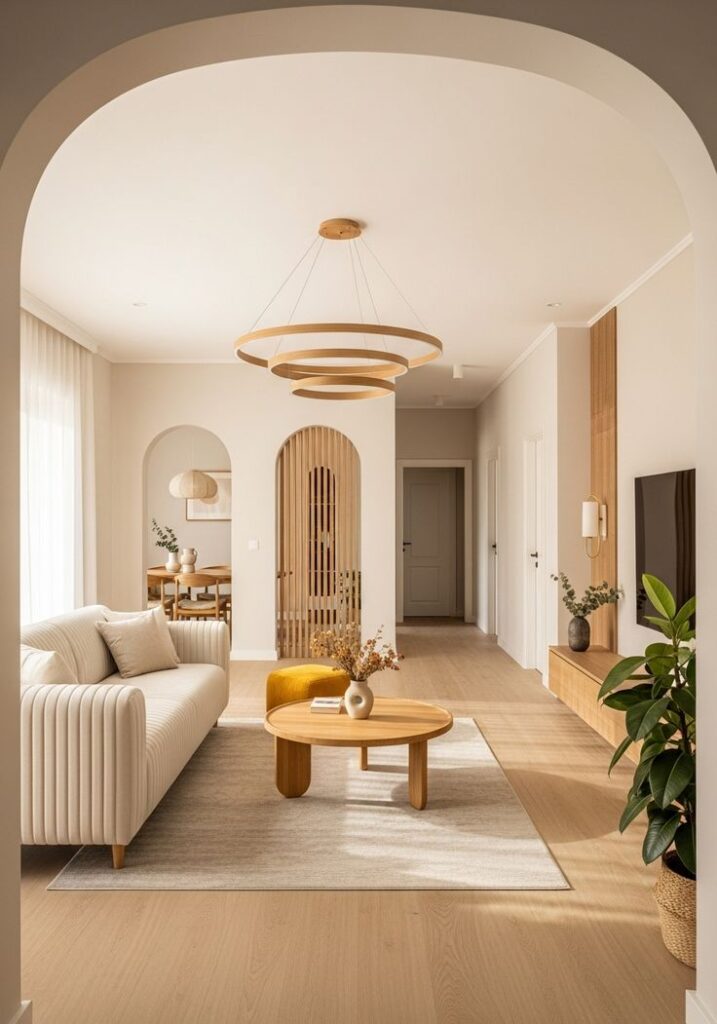
Empty space isn’t wasted space in a Japandi living room.
Leaving areas intentionally open allows the room to breathe and gives your furniture room to stand on its own.
This is one of the hardest adjustments for many people, but also one of the most impactful.
You don’t need to fill every corner or wall.
A clear stretch of floor or a blank wall can make the entire room feel more peaceful.
When in doubt, remove one item and see how the room feels. Often, it feels better.
7. Choose Lighting That Feels Soft and Intentional
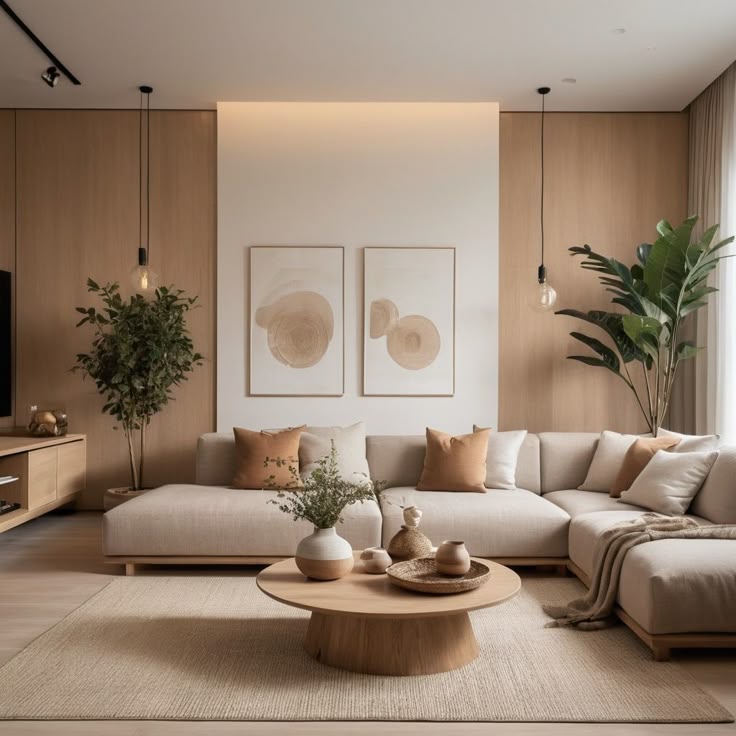
Lighting can make or break Japandi living room ideas.
Harsh overhead lights tend to work against the calm atmosphere this style aims for.
Instead, layer your lighting with floor lamps, table lamps, and soft ambient sources.
Paper lanterns, fabric shades, and warm bulbs work especially well.
Keep lighting functional but gentle, creating pockets of warmth rather than flooding the room with brightness.
This makes the space feel more lived-in and less staged.
8. Add Natural Elements in a Subtle Way
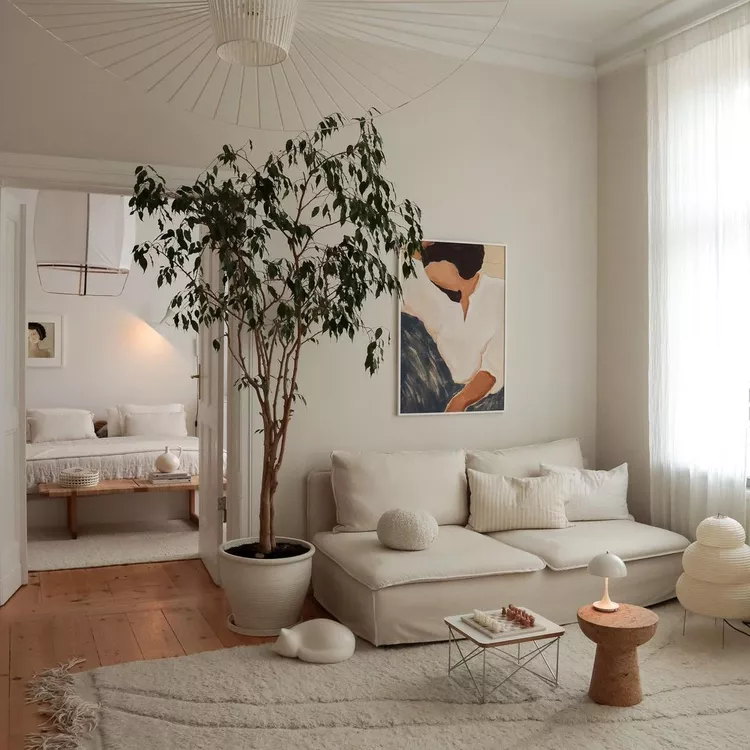
Nature is central to the Japandi style, but that doesn’t mean turning your living room into a jungle.
A few well-chosen plants, a wooden bowl, or a stone object can bring in natural influence without clutter.
Stick to simple planters and avoid overly decorative pots.
One medium plant often looks better than several small ones scattered around.
9. Keep Decor Minimal but Personal
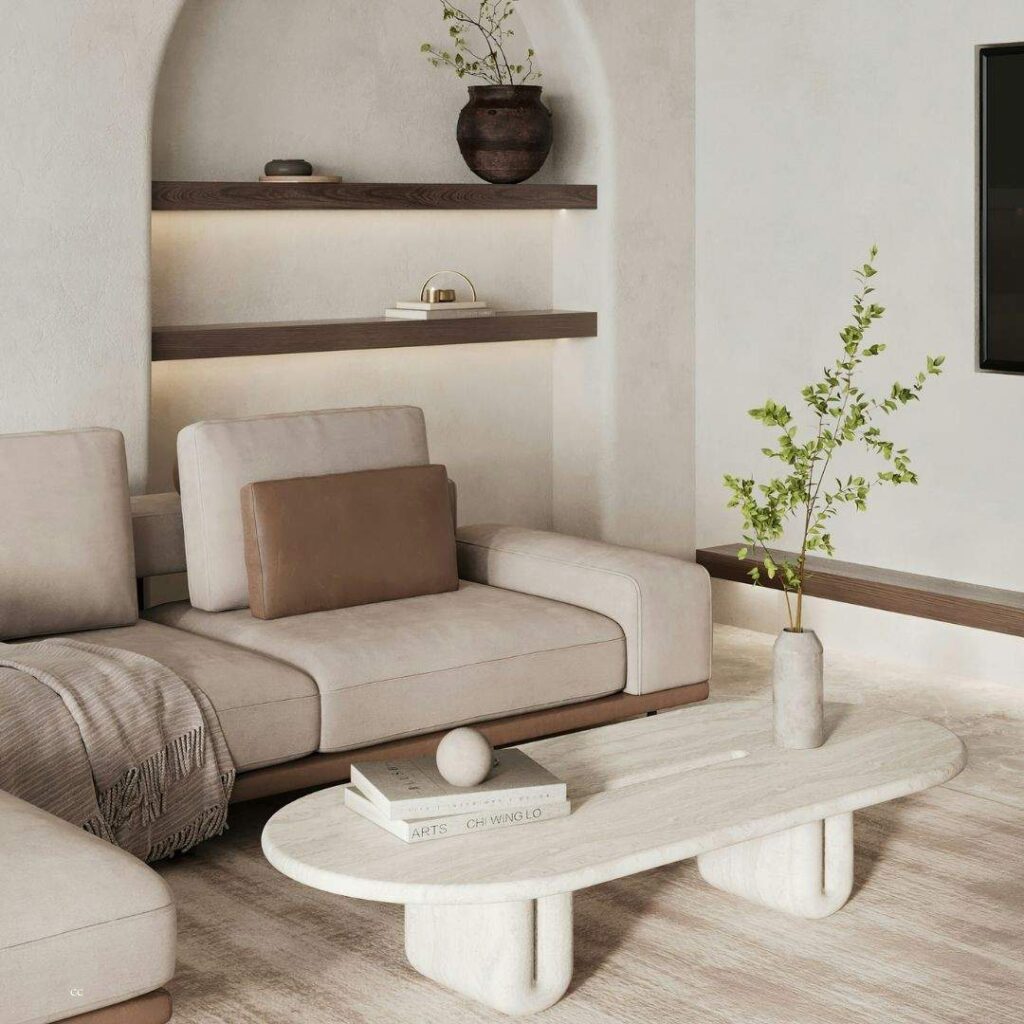
Japandi living room ideas aren’t about removing personality, they’re about editing it.
Choose a small number of decor pieces that actually mean something to you.
This could be a ceramic piece you love or a framed photo with emotional value.
Limit decorative objects to a few surfaces and avoid stacking items.
When decor is intentional and spaced out, each piece feels more special.
This approach makes the room feel curated, not empty.
10. Use a Grounded Color Accent
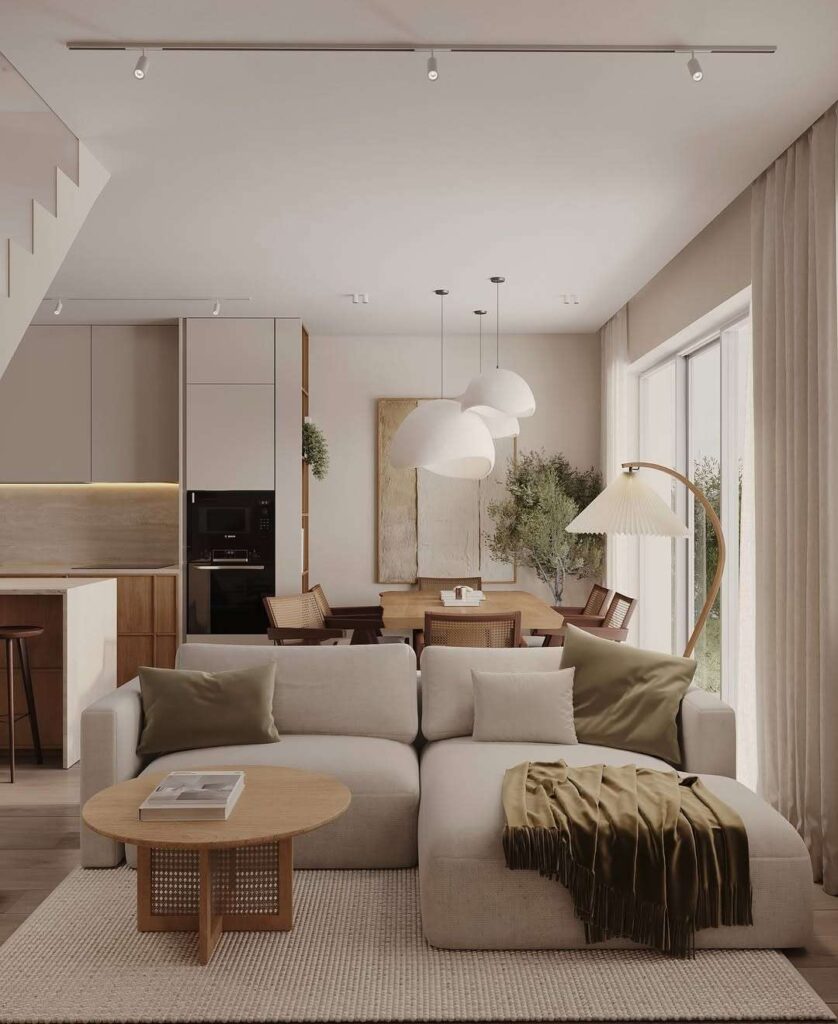
While Japandi interiors are mostly neutral, one muted accent color can add depth. Think soft olive, clay, charcoal, or warm gray.
These shades complement natural materials and keep the palette grounded.
Use the accent sparingly, perhaps in a cushion, artwork, or small textile.
When done right, it adds interest without pulling focus away from the overall calm of the room.
11. Prioritize Storage That Disappears Visually
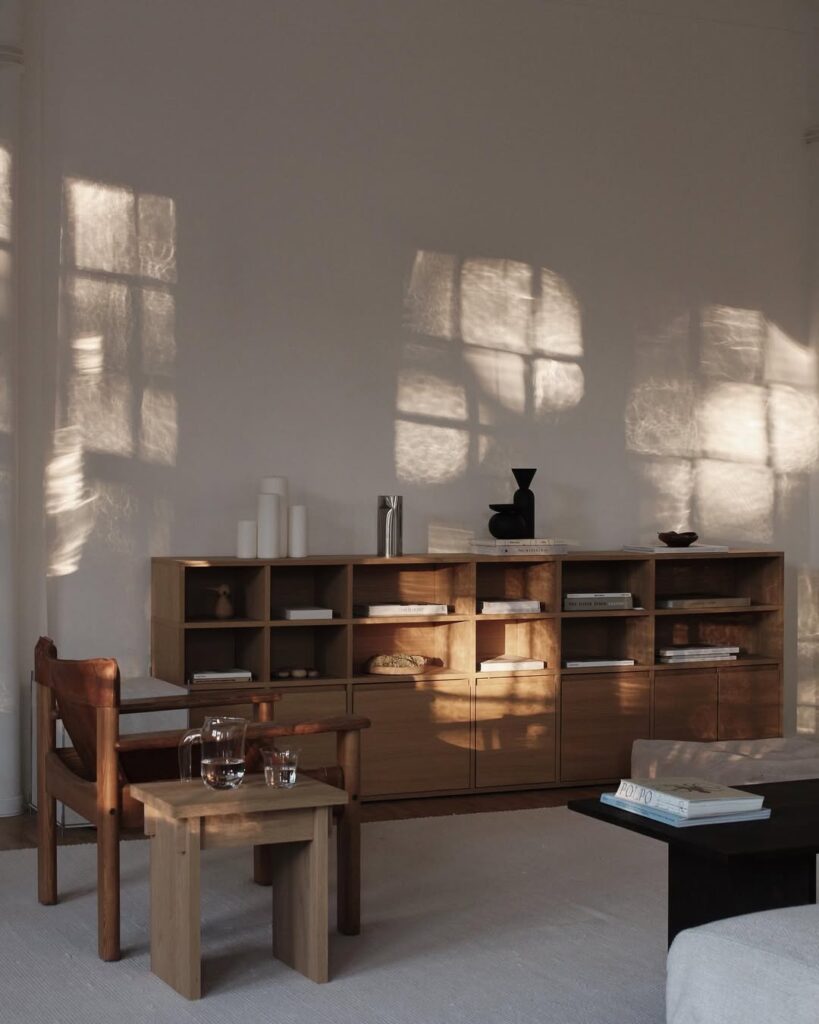
Clutter is the fastest way to undo a Japandi living room.
Smart storage helps maintain the clean look without sacrificing practicality.
Closed storage pieces, low cabinets, and furniture with hidden compartments work especially well.
Choose storage in finishes that blend with your walls or floors.
When storage visually recedes, the room feels lighter and more organized, even if it’s working hard behind the scenes.
12. Let the Room Evolve Slowly
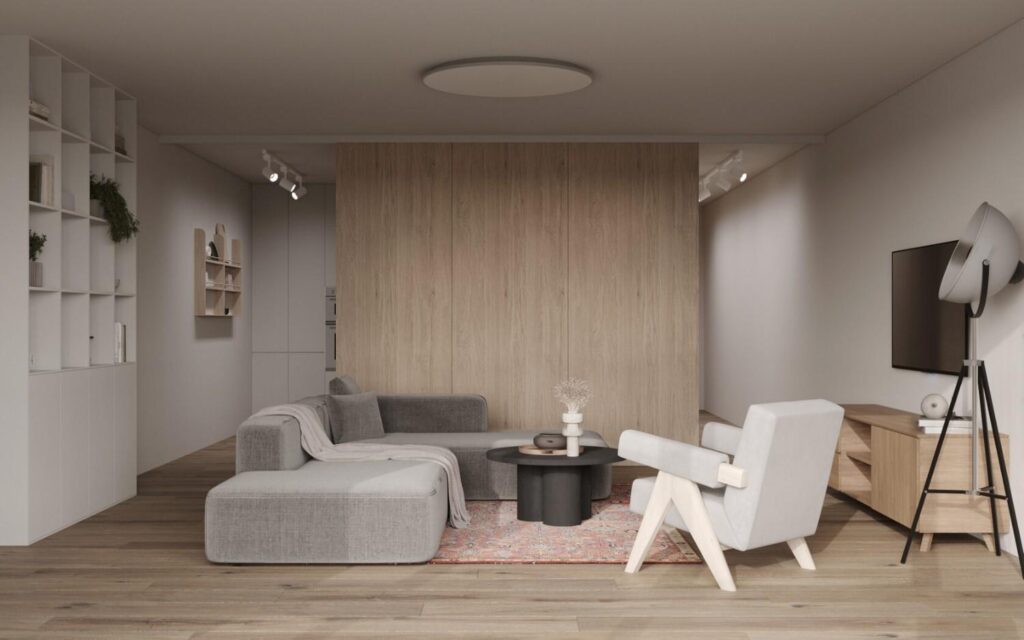
One of the most overlooked Japandi living room ideas is patience. This style isn’t meant to be rushed or copied all at once.
It develops over time as you refine what you actually need and love.
Allow the space to change gradually.
Live with fewer items, notice what’s missing, and add thoughtfully.
A Japandi living room should feel like a reflection of your life, not a checklist you completed in a weekend.
13. Anchor the Room with a Structured Rug
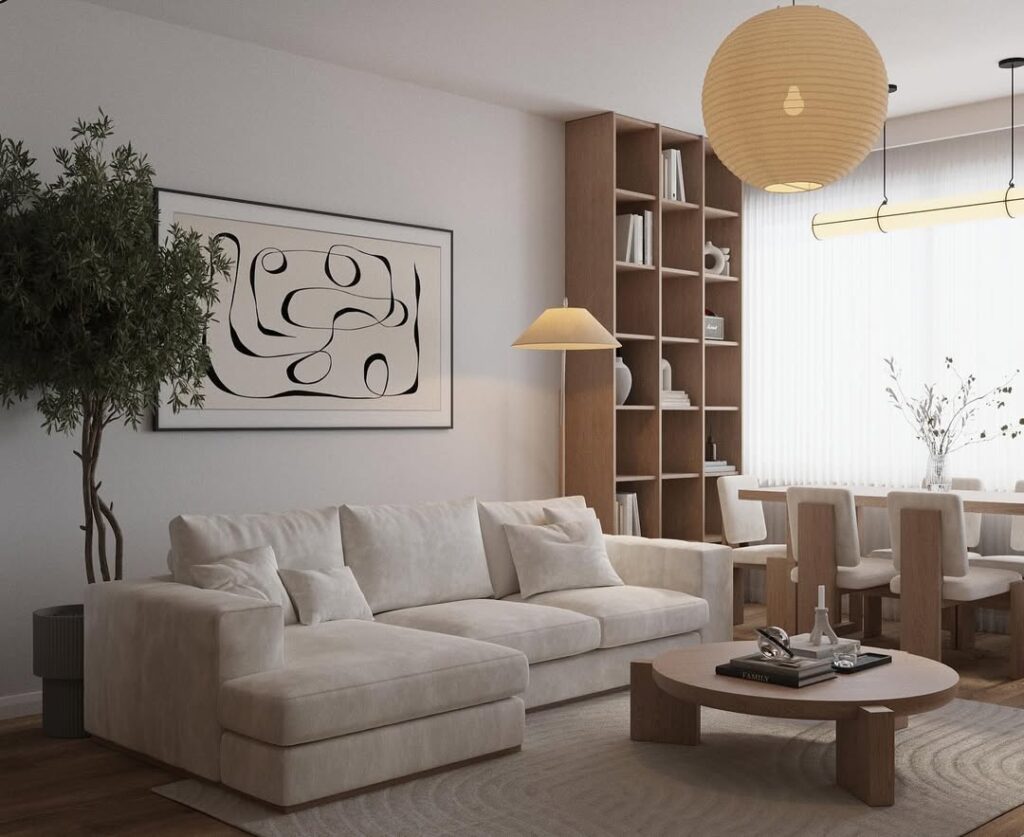
A rug in a Japandi living room should quietly define the space without stealing attention.
Flatweave or low-pile rugs in neutral tones help ground seating areas while keeping the room visually open.
Avoid bold patterns and instead look for subtle texture or tonal variation.
This works especially well in open-plan spaces where the living area needs definition without visual separation.
The rug should feel like part of the architecture, not an accessory added at the end.
14. Use One Statement Piece Instead of Many Small Ones
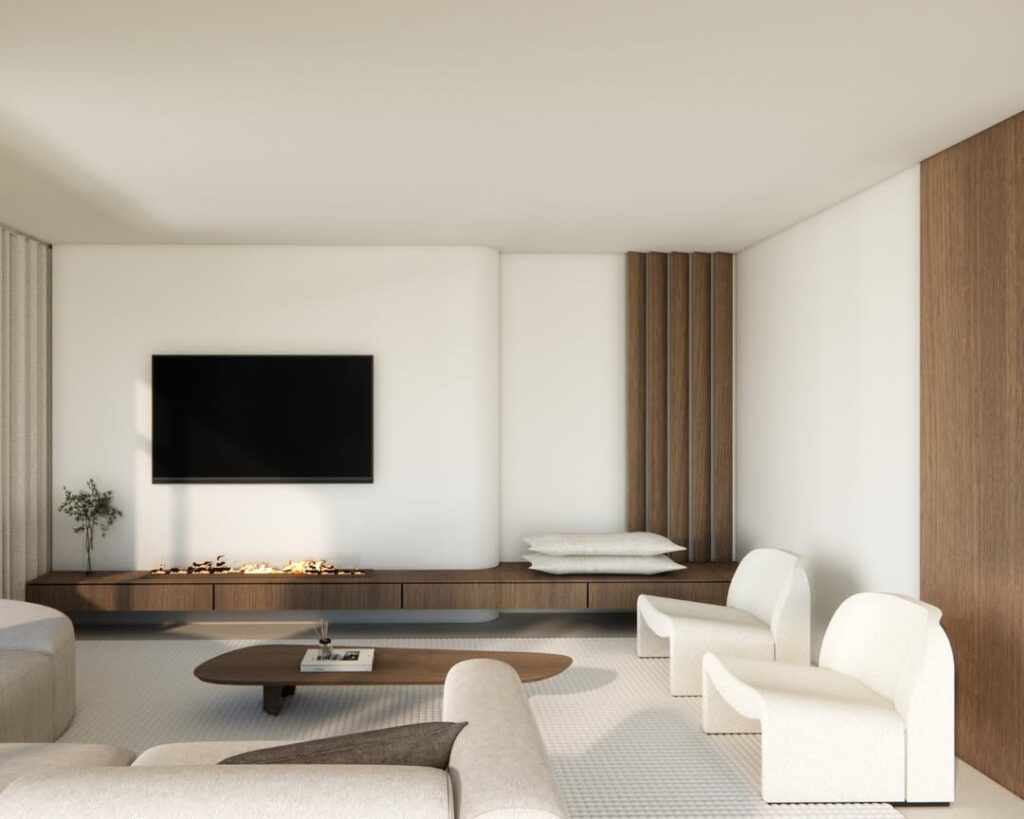
Rather than scattering small decor throughout the room, choose one statement piece that carries visual weight.
This could be a sculptural coffee table, a handcrafted armchair, or a large ceramic vessel.
One strong element creates focus without clutter.
This approach makes decision-making easier and keeps the room feeling intentional.
When everything competes for attention, the calm disappears.
When one piece leads, everything else can stay quiet.
15. Opt for Open Shelving Only If You Can Edit Ruthlessly
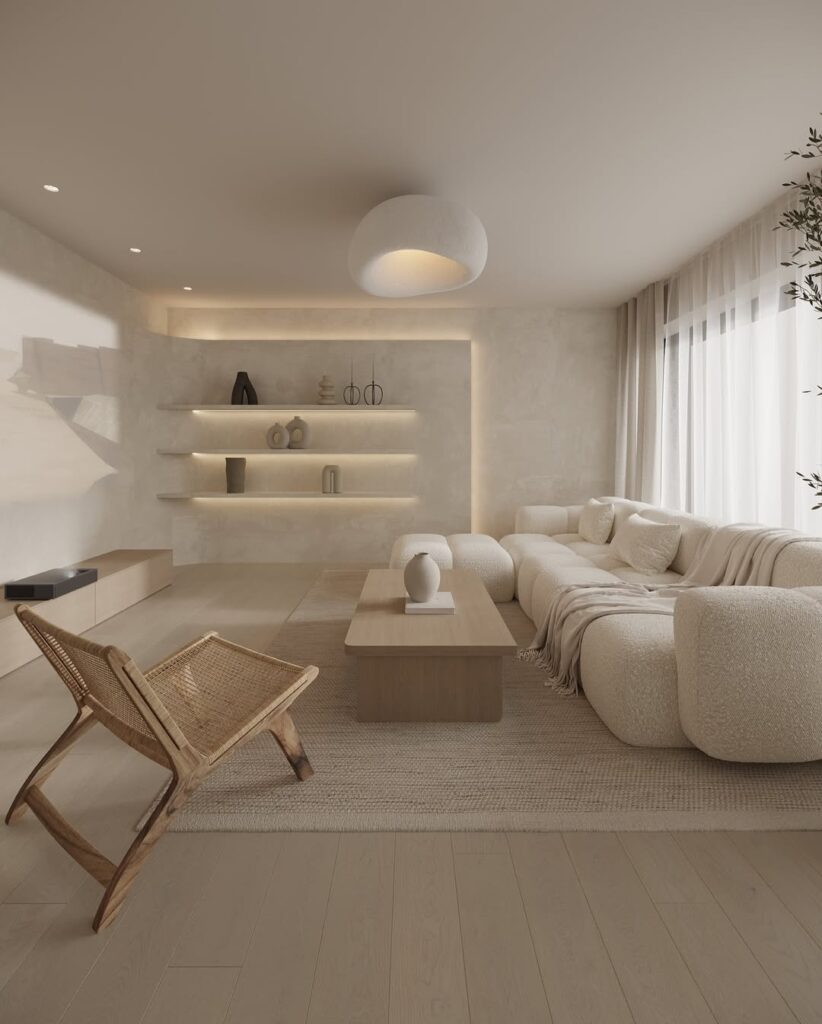
Open shelving can work in a Japandi living room, but only when it’s treated as negative space with purpose.
Limit shelves to a small area and keep what you display minimal and intentional.
Empty space between objects matters just as much as the objects themselves.
If styling shelves feels stressful, closed storage is the better choice.
Japandi is about ease, not constant visual maintenance.
16. Choose Art That Feels Grounded, Not Trend-Driven
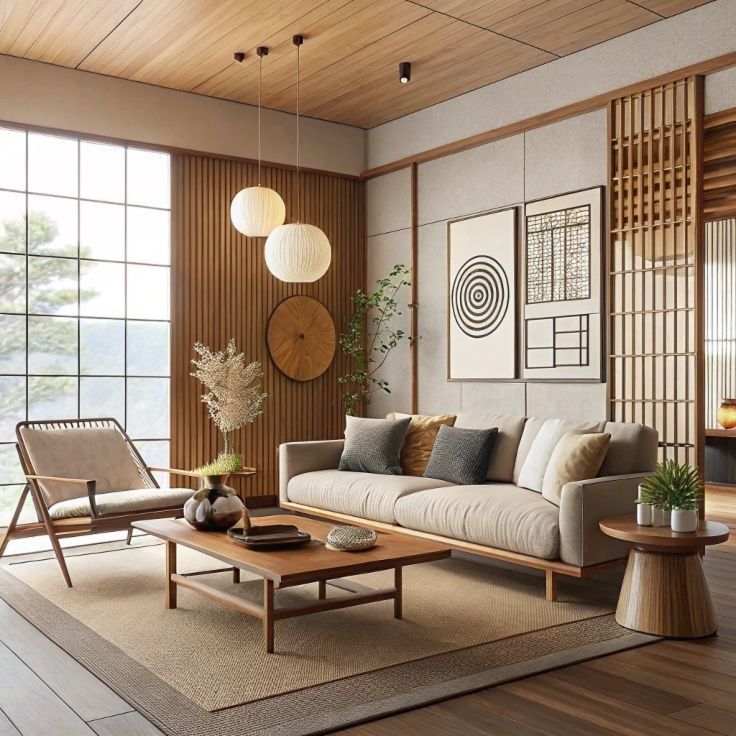
Artwork in a Japandi living room should feel calm and considered.
Abstract pieces, soft landscapes, or line drawings tend to work well because they don’t dominate the room.
Stick to a restrained color palette that complements your existing tones.
One larger piece often works better than a gallery wall.
It allows the room to breathe and avoids visual fragmentation, especially in smaller living rooms.
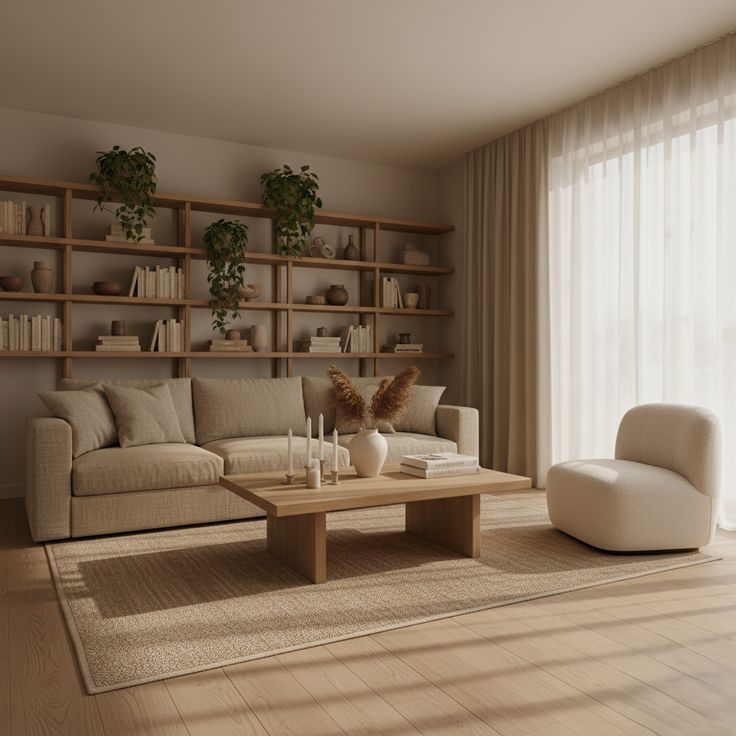
17. Keep Window Treatments Light and Uncomplicated
source
Heavy curtains can quickly overpower a Japandi living room.
Instead, opt for light linen drapes, woven shades, or simple roller blinds that filter light gently.
The goal is softness and function, not drama.
Natural light plays a major role in this style.
Window treatments should support it, not block it.
If privacy is a concern, layering sheer panels can solve that without sacrificing openness.
18. Let Materials Age Naturally
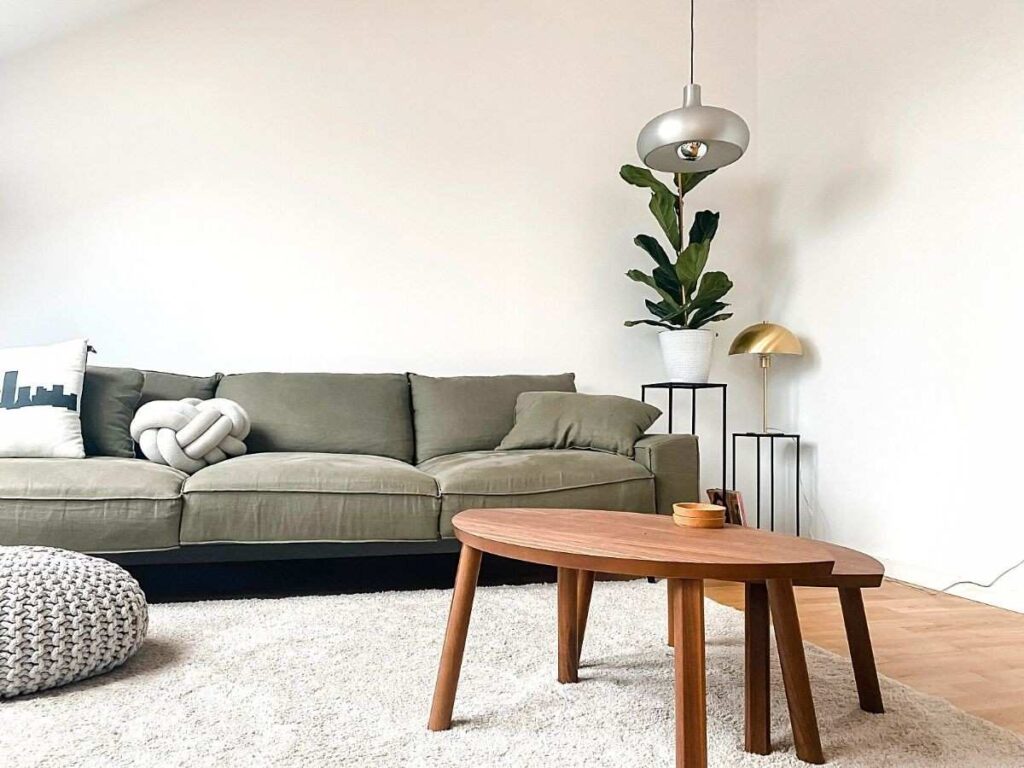
Japandi living room ideas often feel more authentic when materials are allowed to show wear.
Natural wood, leather, and stone all develop character over time.
This lived-in quality adds warmth and depth without adding objects.
Avoid finishes that feel overly glossy or artificial.
Slight imperfections make the space feel human, which is exactly what keeps Japandi from feeling cold.
19. Keep Technology Visually Quiet
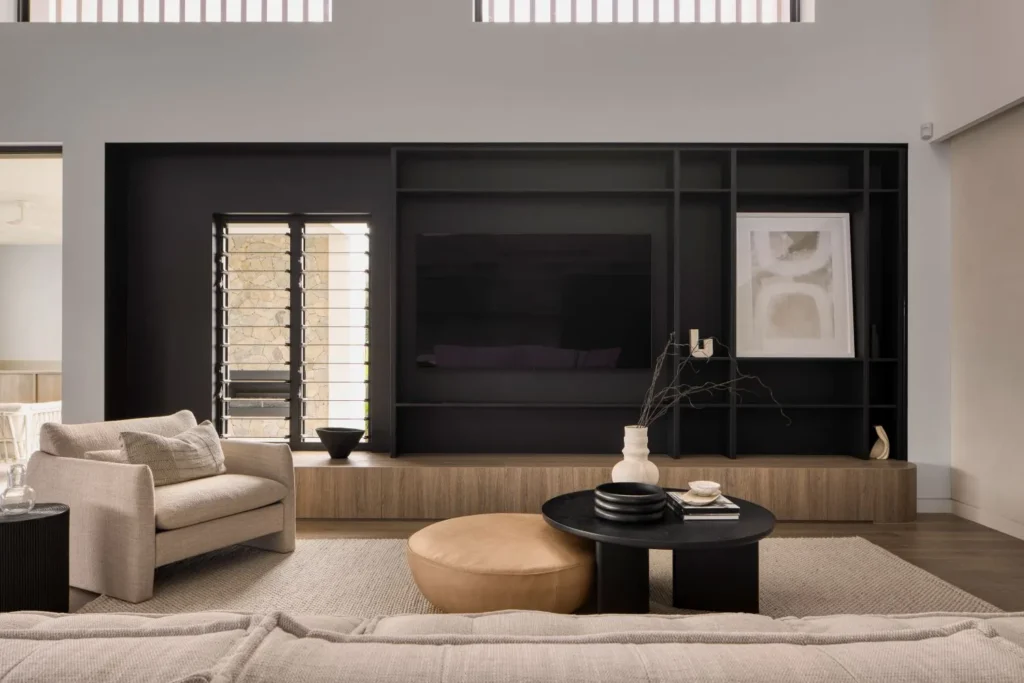
Electronics are part of real life, but they don’t need to dominate your living room.
Choose low-profile TVs, hide cords, and use media consoles that blend into the room rather than stand out.
Dark, matte finishes often recede better visually.
When technology doesn’t draw attention, the room feels calmer overall.
This balance is especially important in Japandi spaces where visual noise is kept to a minimum.
20. Use Symmetry Sparingly, Not Strictly
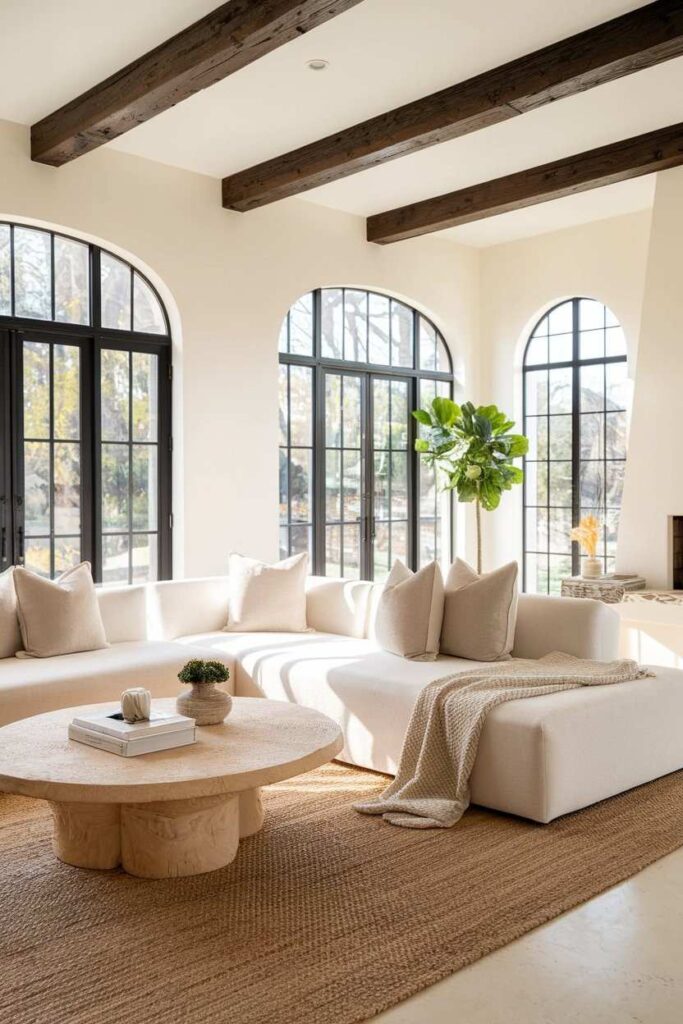
While Japandi interiors lean balanced, they don’t need perfect symmetry.
A slightly offset lamp or an asymmetrical seating arrangement can feel more relaxed and natural.
This keeps the room from feeling rigid or overly designed.
Balance comes from proportion and spacing, not mirroring everything exactly.
A space that feels easy usually looks that way, too.
21. Choose Softer Edges Over Sharp Angles
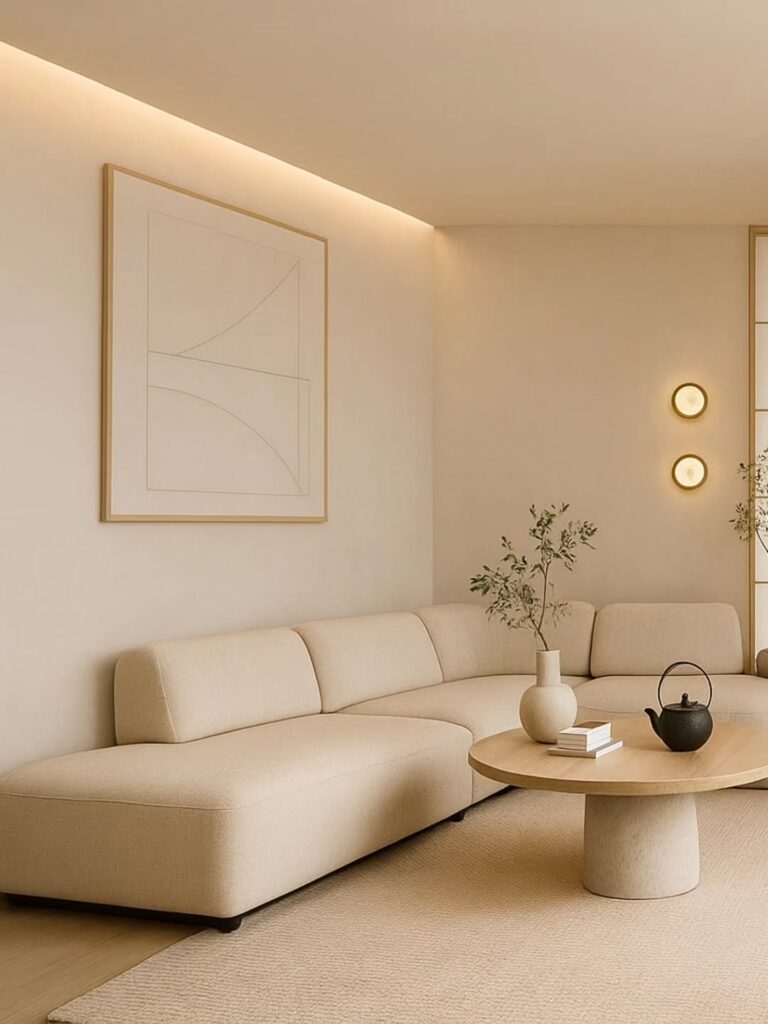
Furniture with gentle curves can soften a Japandi living room without breaking the minimalist feel.
Rounded coffee tables, curved armchairs, or softly shaped cushions add comfort and approachability.
This is especially helpful if your space feels boxy.
Mixing clean lines with a few softened shapes keeps the room from feeling too strict.
22. Edit Regularly, Not Just Once
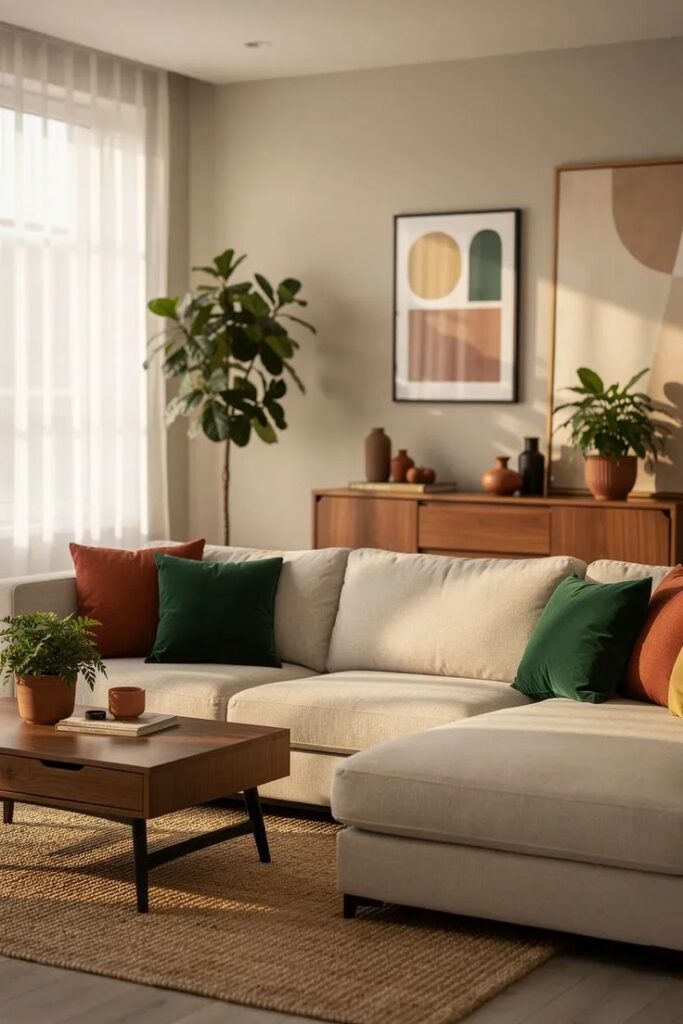
A Japandi living room isn’t something you set up and forget. It benefits from regular editing as your needs change.
Items that once felt useful may no longer serve you, and letting them go keeps the space aligned with how you actually live.
This habit reinforces the core idea of Japandi: intentional living.
When your living room reflects your current life, it naturally feels calm, functional, and personal.
This post showed you the best japandi living room ideas.