20 open plan kitchen living room Ideas That Actually Make Sense For 2026
Struggling with your open plan kitchen living room? These layout and decor ideas help you define zones, improve flow, and create a space that actually feels put together.
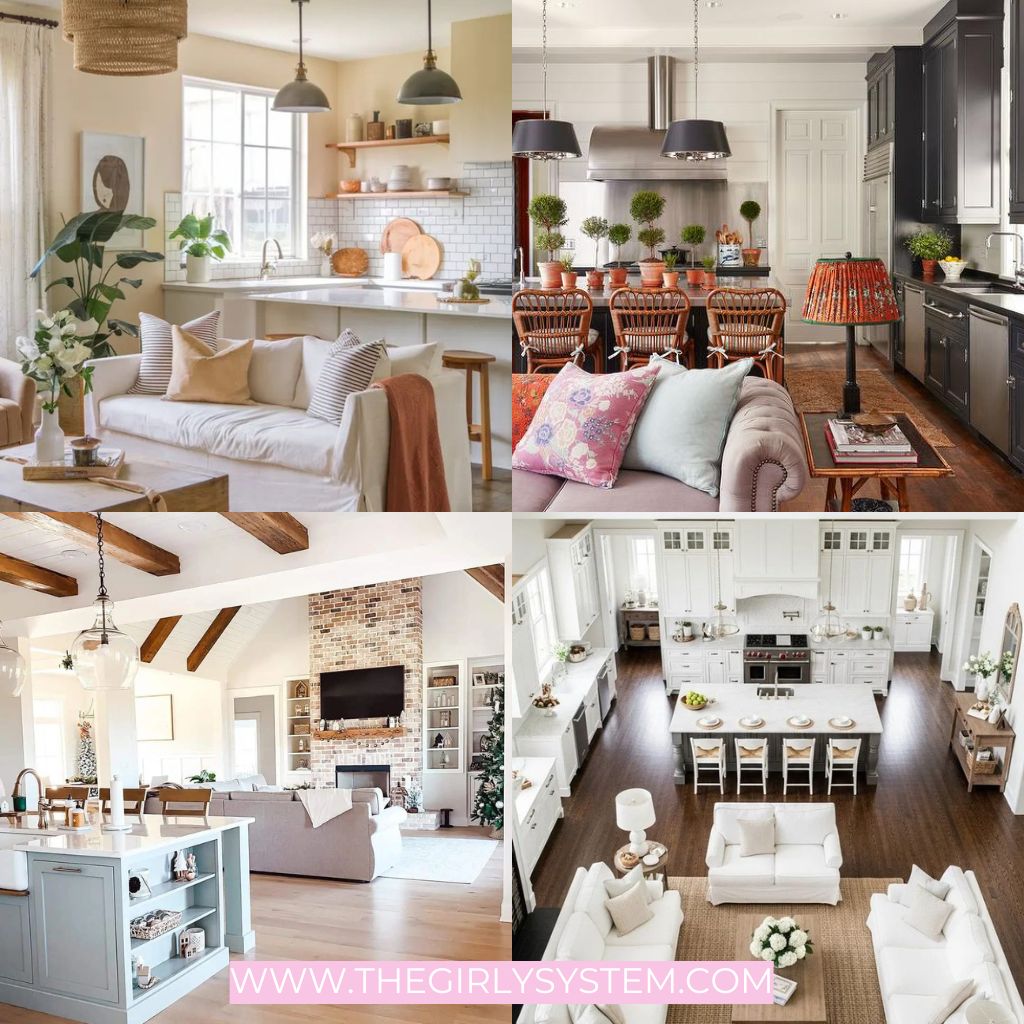
There’s no clear separation, everything is visible all the time, and if one area feels off, it throws the entire space.
It’s not just a decorating issue, it’s a layout problem.
What most people don’t realize is that open spaces don’t need more decor. They need structure.
Open plan kitchen living room ideas look simple online, but actually getting the layout right is where most people get stuck…
Once you fix that, everything else starts to fall into place.
That’s why in this blog post, we will go through amazing 20 open space living rooms and kitchen ideas that you can implement anywhere, no matter what the size of your home is.
Open Plan Kitchen Living Room Ideas
1. Start With the Layout Before You Think About Decor
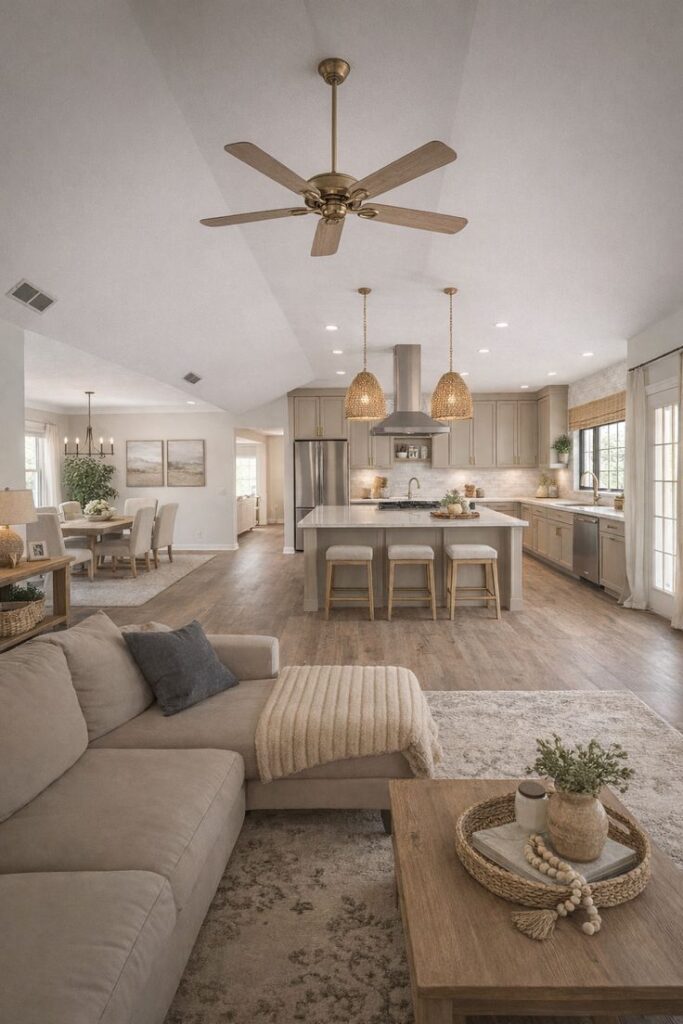
A lot of people try to decorate first, then wonder why the space still feels awkward.
In an open layout, placement matters more than styling.
Where your sofa sits, how far it is from the kitchen, and how people move through the space will define everything else.
If the layout works, the room will feel right even before you add decor.
2. Use Your Sofa as a Natural Divider
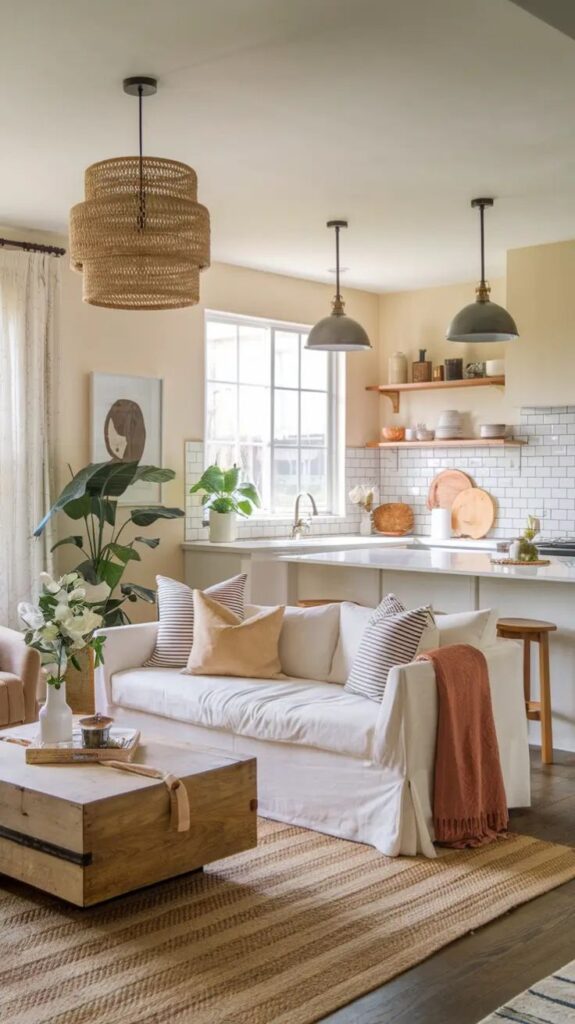
One of the easiest ways to create separation without building anything is to let your sofa do the work.
Position it so it faces the living area while its back subtly separates it from the kitchen.
This immediately creates two distinct zones without breaking the open feel.
It also stops the space from feeling like one long, undefined room.
3. A Rug Isn’t Optional Here
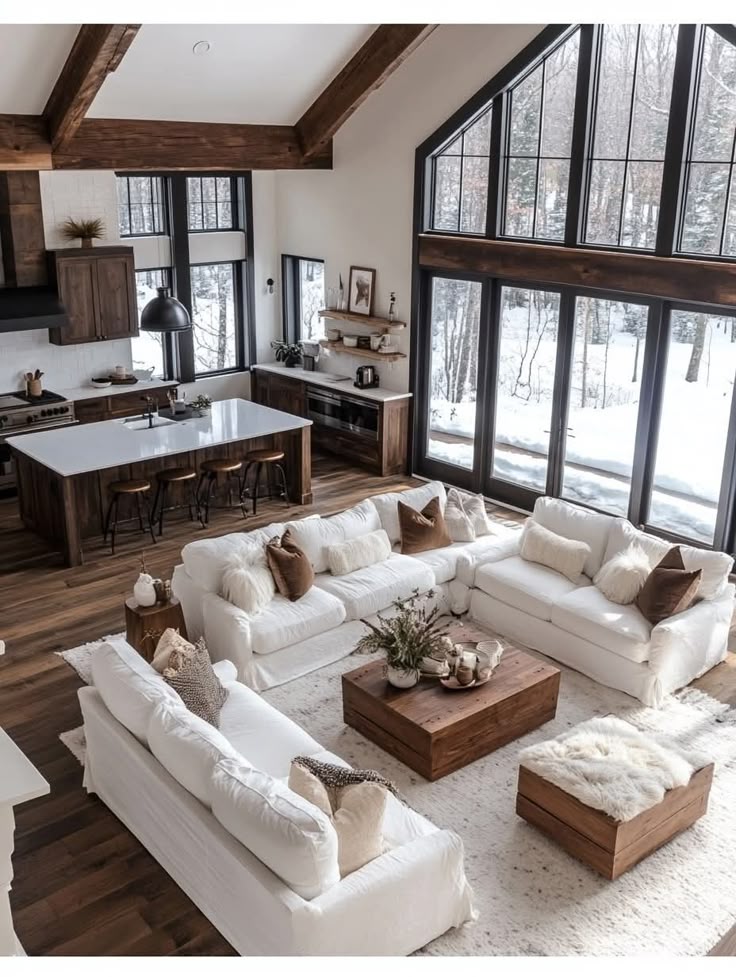
In a closed living room, you can sometimes get away without a rug.
In an open space, it usually looks unfinished.
A properly sized rug anchors the seating area and visually tells you where the living room begins and ends.
If your rug is too small, the entire setup will feel off, even if everything else is right.
4. Stop Treating the Kitchen and Living Room as Separate Spaces
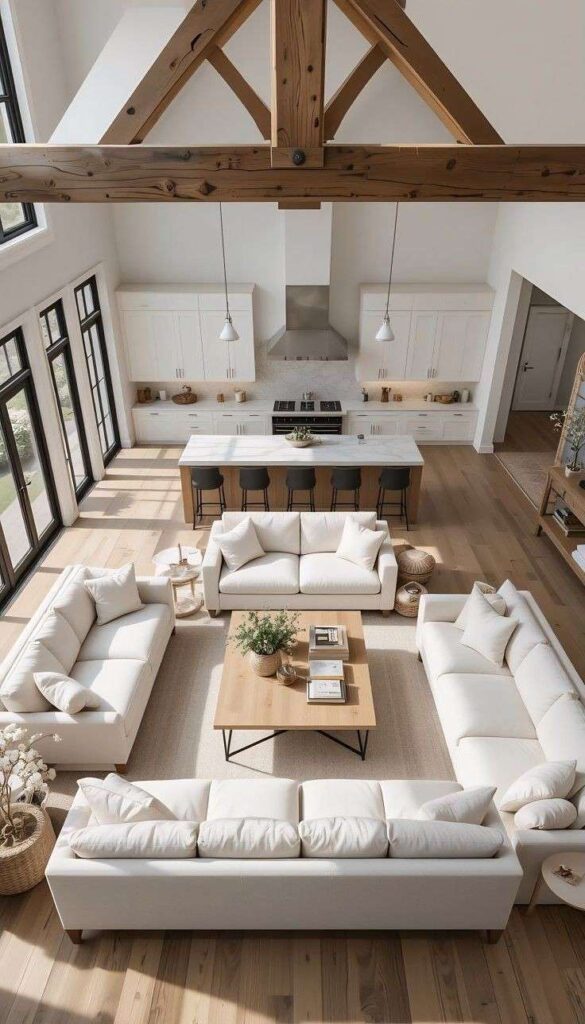
This is where things usually go wrong.
If your kitchen has one style and your living room has another, the contrast becomes very obvious because there are no walls to buffer it.
You don’t need everything to match, but there should be a clear connection, through color, materials, or finishes, so the space feels cohesive instead of divided.
5. Add a Visual Anchor to the Living Area
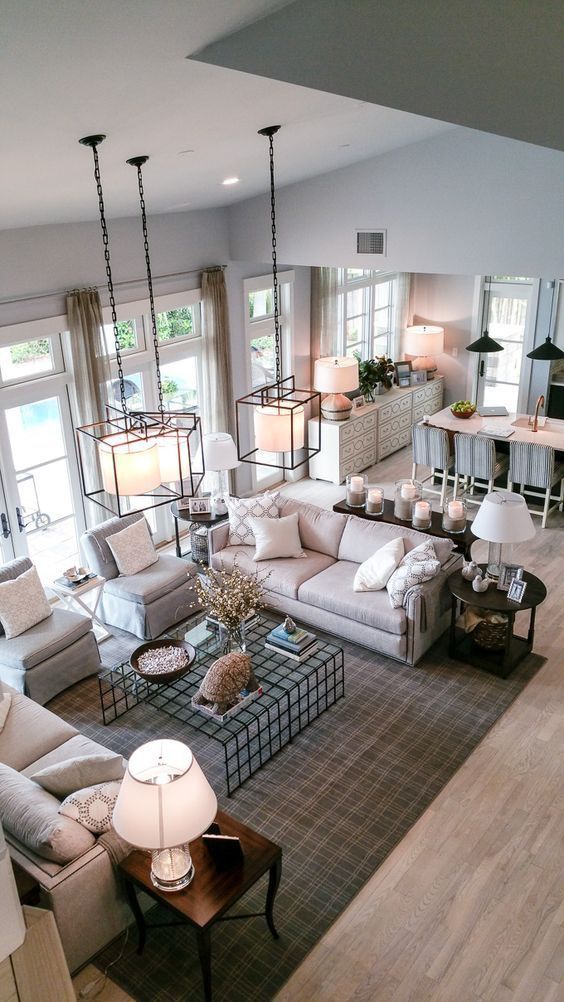
Kitchens naturally have a focal point, usually the island.
Living areas in open spaces often don’t.
That’s why adding a statement light, a defined TV wall, or a strong piece of art makes such a difference.
It gives the living side weight, so it doesn’t feel like an afterthought.
Without this, the kitchen tends to dominate the entire space.
6. Pay Attention to What’s Behind the Sofa
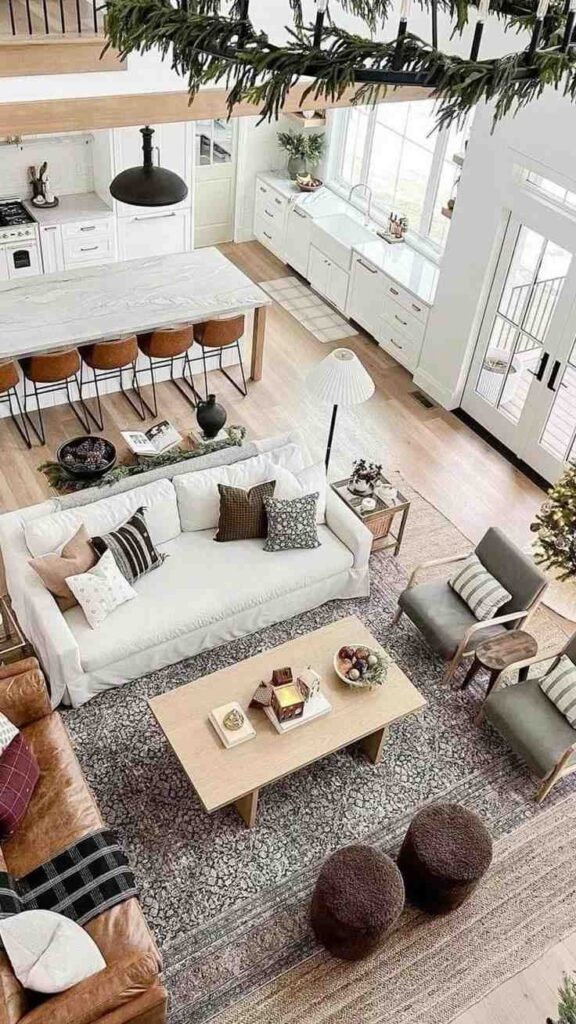
If your sofa floats in the middle of the room, the space behind it matters more than you think.
Leaving it empty can make the layout feel incomplete.
Adding a console table or even a bench makes that transition area feel complete.
It’s a small detail, but it’s one of those things that separates a nice space from a well-designed one.
7. Keep the Color Palette Consistent
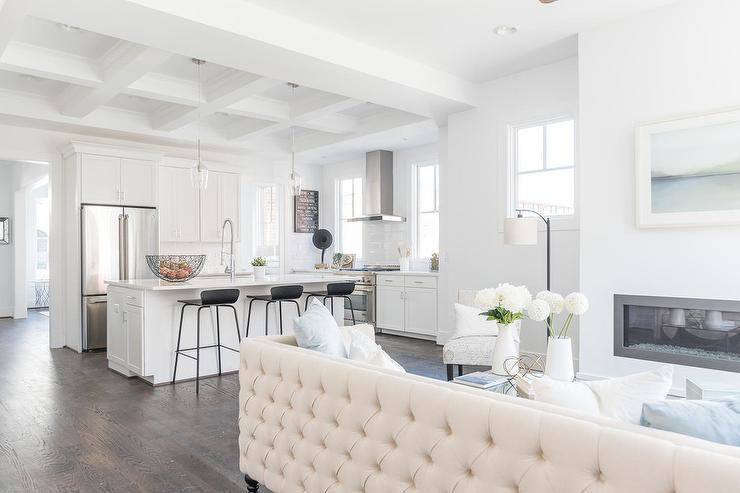
Open spaces don’t handle randomness well.
If you want different tones or styles, they need to relate to each other in some way.
Repeating colors or materials across both areas helps everything feel connected.
Otherwise, your eye doesn’t know where to settle.
8. Think About What You See From the Couch
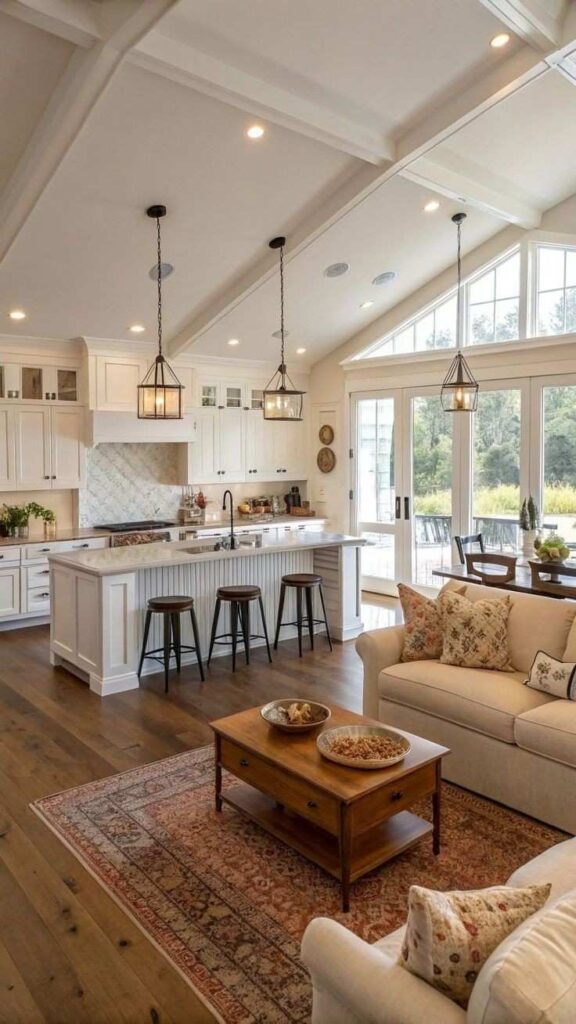
This is something people overlook all the time.
When you sit in your living room, your kitchen is part of the view.
That means clutter, appliances, or mismatched items will stand out more than they would in a separate room.
You don’t need a perfect kitchen, you just need it to look considered from a distance.
9. Make Movement Through the Space Easy
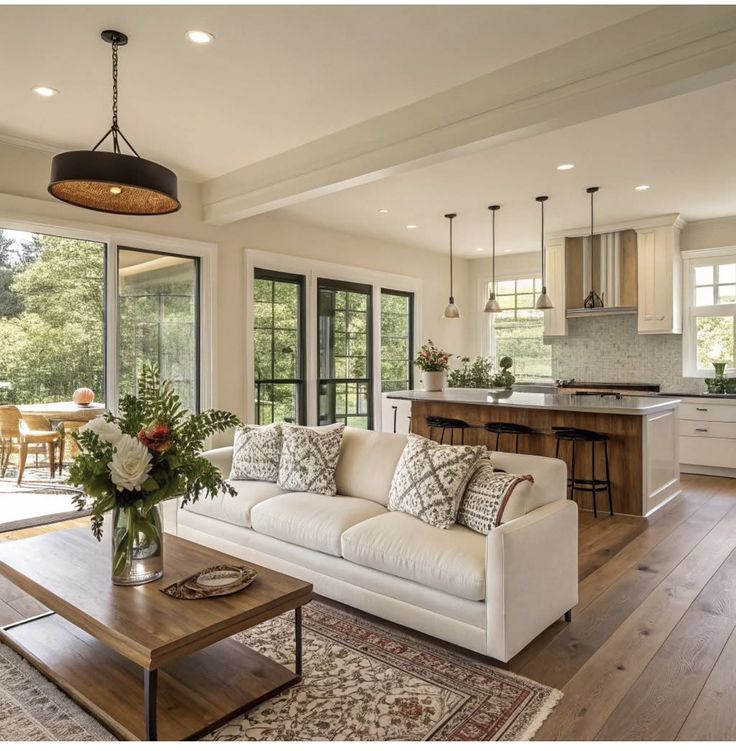
An open layout should feel easy to move through.
If you’re constantly navigating around furniture or squeezing between the sofa and the island, the layout needs adjusting.
Clear pathways make the space feel calmer and more functional, even if nothing else changes.
10. Use Height to Break Up the Space
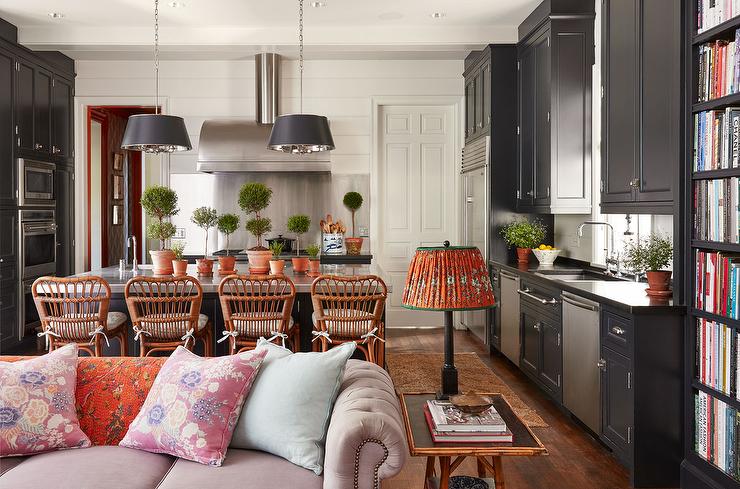
When everything sits at the same level, the room can feel flat.
Adding taller elements, like floor lamps, shelving, or plants, creates variation and helps define different areas without closing them off.
It’s one of the simplest ways to add depth without cluttering the space.
11. Make Your Dining Area Part of the Flow
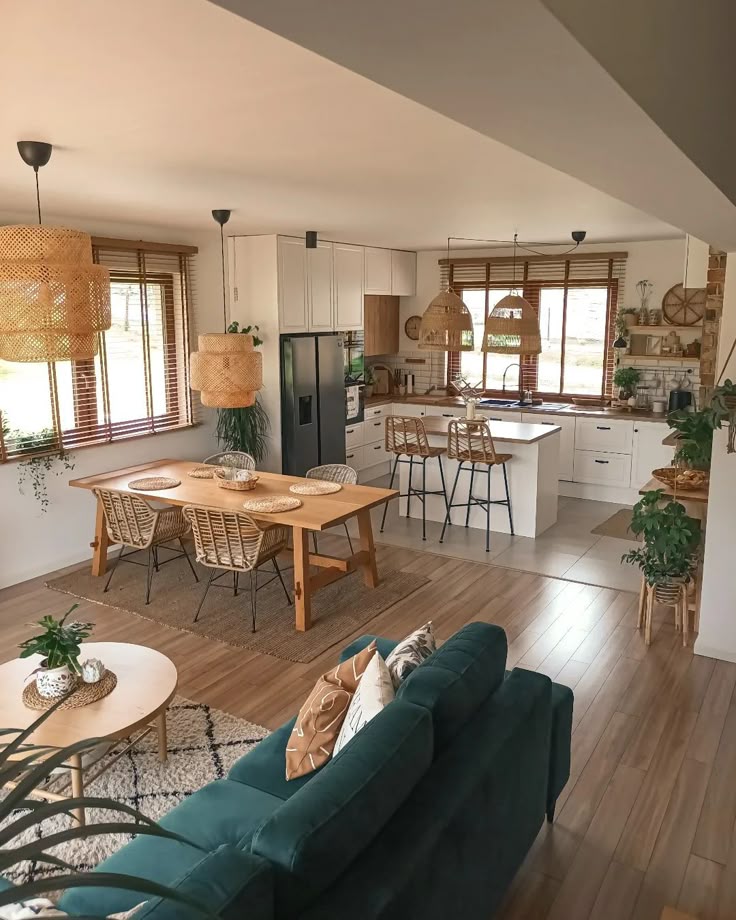
If your open space includes a dining table, it shouldn’t feel like it’s randomly placed between the kitchen and living room.
Align it with the overall layout and keep the style consistent so it feels like a natural transition between both zones.
Think of it as the bridge, not a separate area.
12. Edit More Than You Add
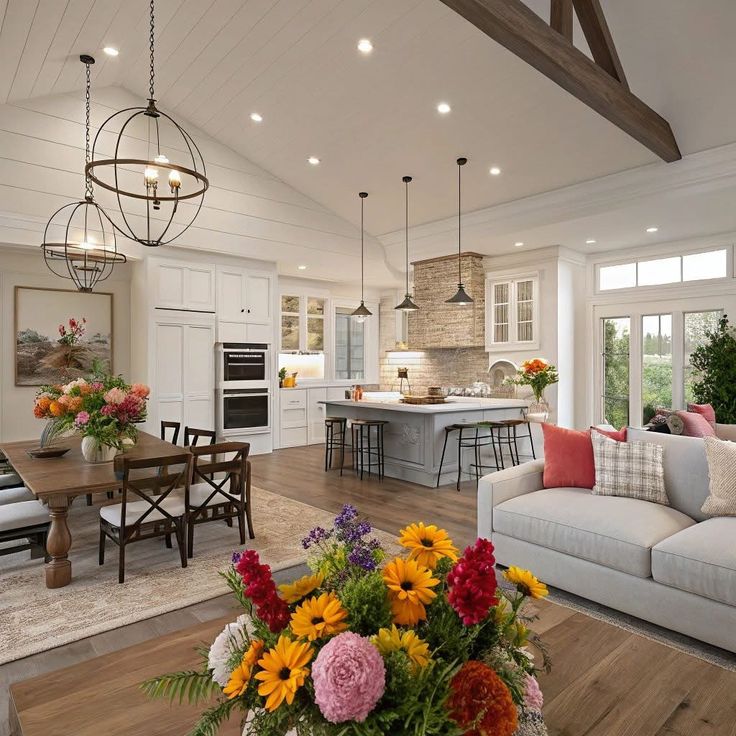
Open spaces don’t hide anything.
If there’s too much going on, the entire area starts to feel messy, even if each section looks fine on its own.
Being selective with decor makes a bigger impact than adding more pieces.
13. Align Your Kitchen Island With the Living Area
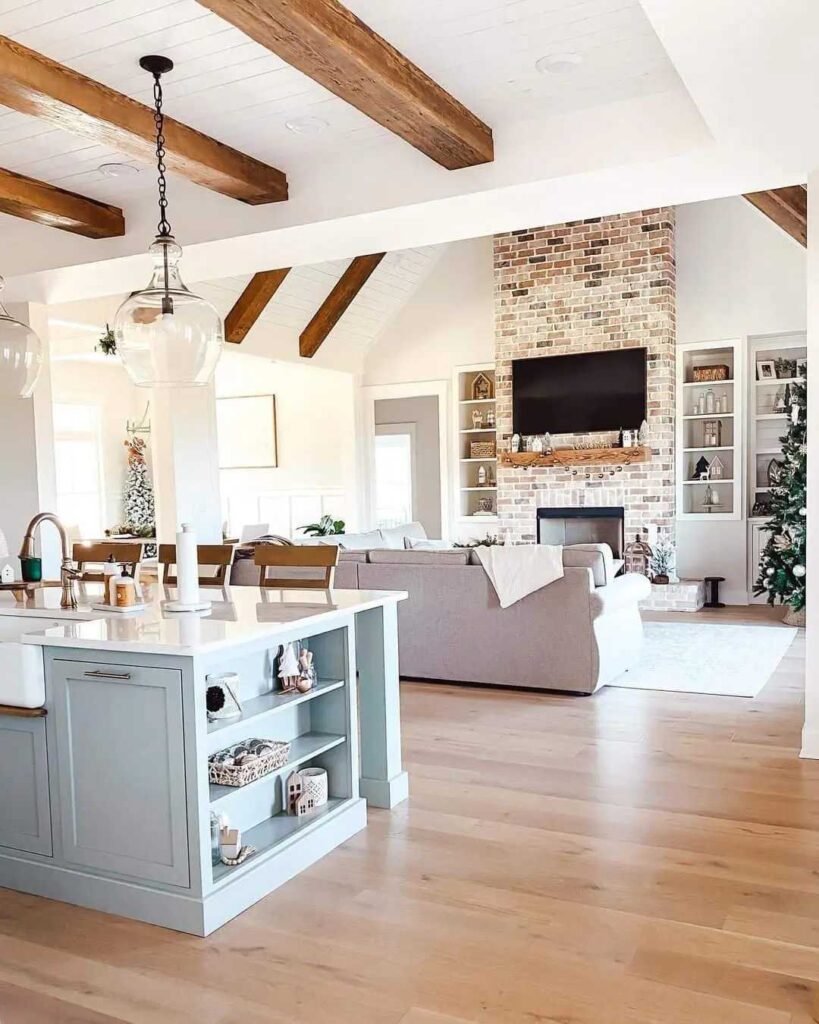
If your island is slightly off from your seating area, the whole space can feel subtly disjointed.
Try aligning your sofa or coffee table with the island so there’s a visual connection between the two zones.
It creates a sense of order that people feel, even if they can’t immediately explain why.
14. Choose Bar Stools That Actually Relate to Your Living Room
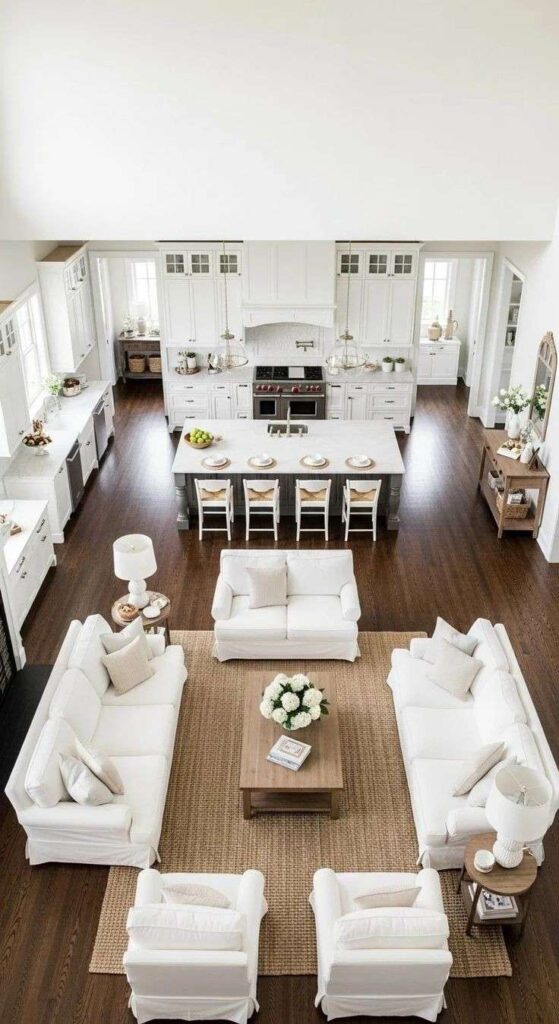
Barstools aren’t just kitchen furniture in an open space, they’re part of the overall look.
If your living room has soft fabrics and warm tones, but your stools are cold metal or ultra modern, the contrast will stand out.
Pick stools that echo something in your living area, even if it’s just the color or material.
15. Keep Your Coffee Table Proportional to the Space
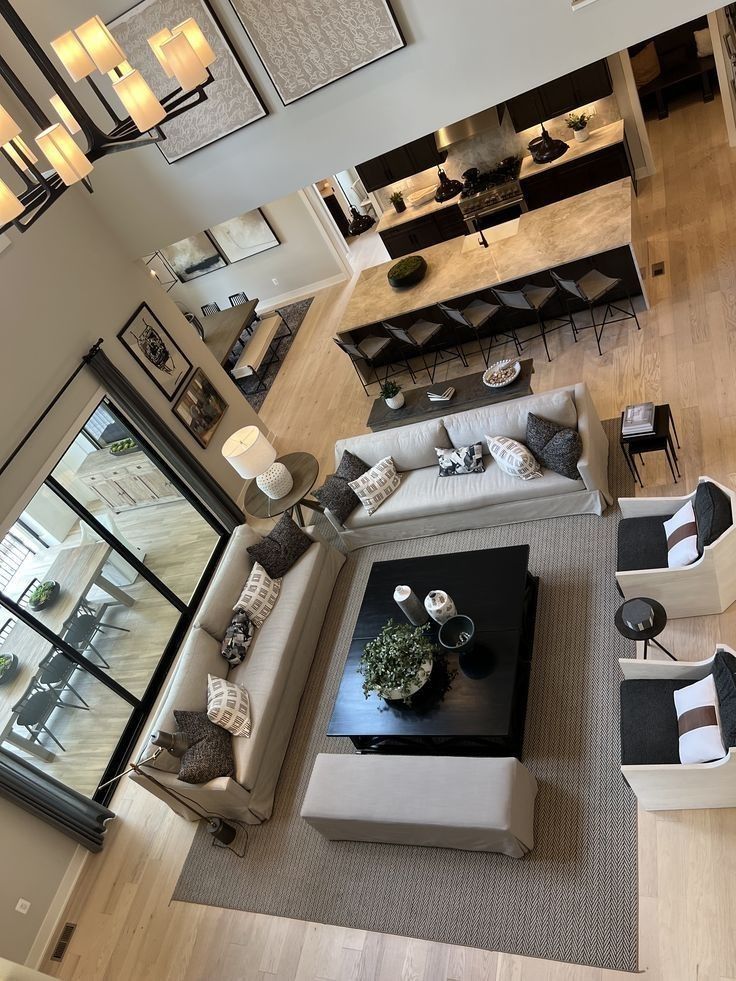
In open layouts, scale matters more because everything is visible at once.
A tiny coffee table in a large open space makes the seating area feel disconnected, like it’s floating without purpose.
Go slightly larger than you normally would, it helps anchor the entire living zone.
16. Use Lighting Layers Instead of Relying on One Source
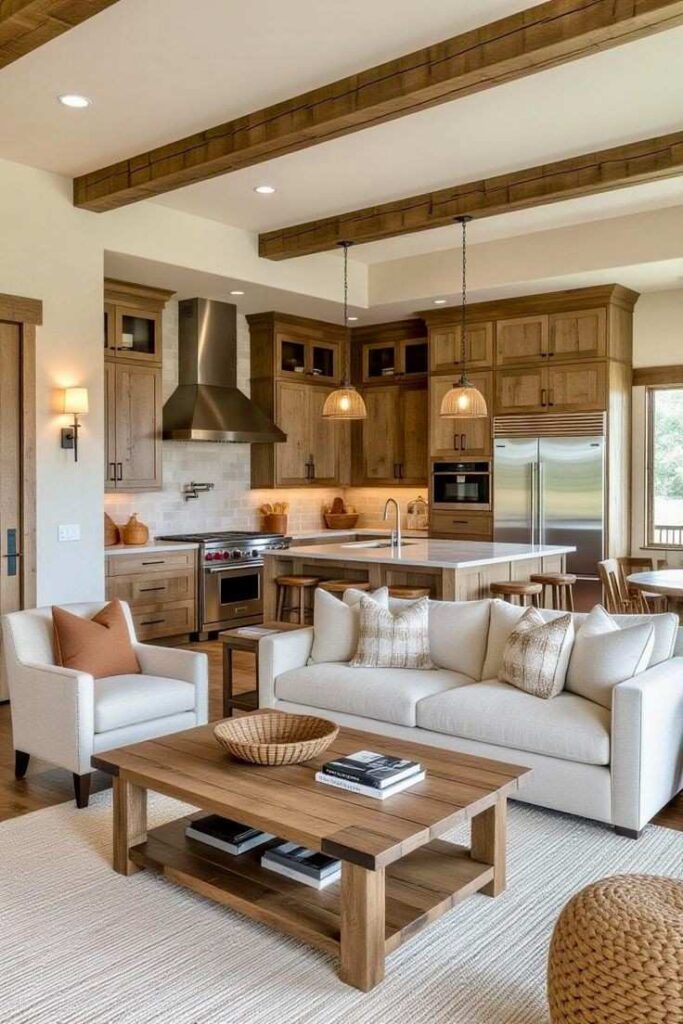
If your whole space is lit by ceiling lights, it’s going to feel flat at night.
Add layers, floor lamps in the living room, under-cabinet lighting in the kitchen, maybe a table lamp on a console.
Each zone should have its own lighting, even though they’re connected.
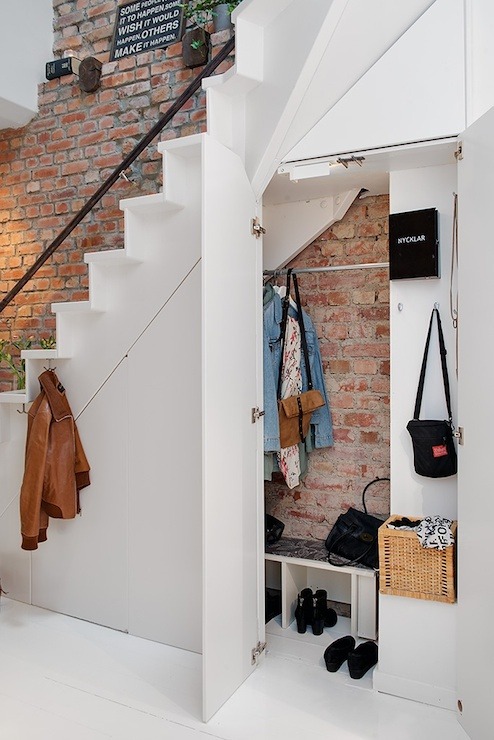
17. Create a Clear Drop Zone
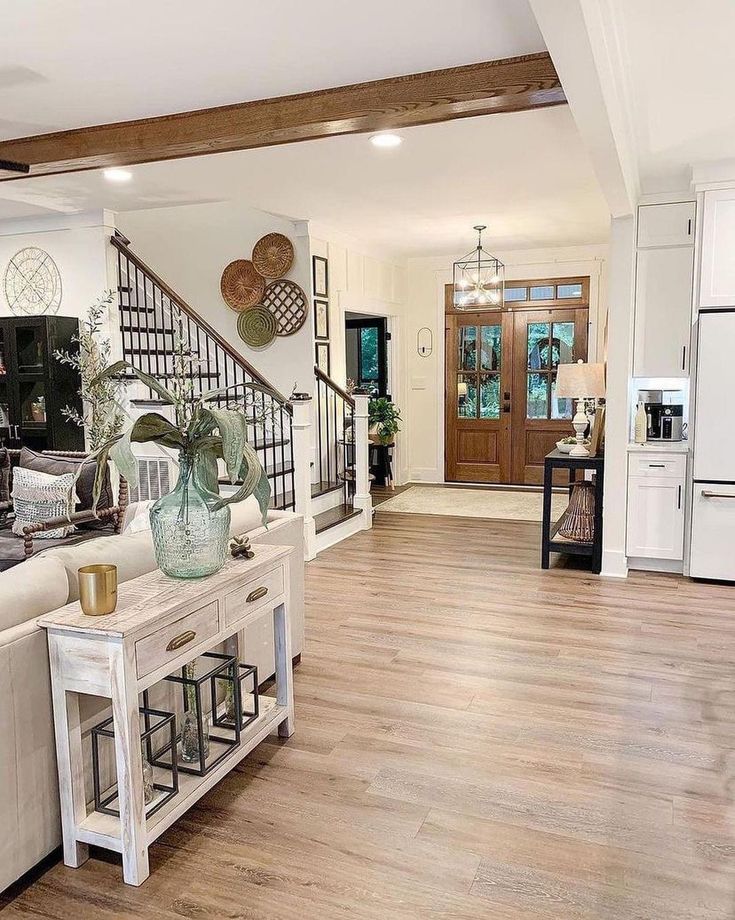
If your open space connects to an entry, things can get messy fast.
A small area for keys, bags, or shoes, even just a tray or a basket, keeps clutter from spreading into both the kitchen and living room.
It’s not glamorous, but it makes everyday life noticeably easier.
18. Let One Area Be Slightly More Relaxed Than the Other
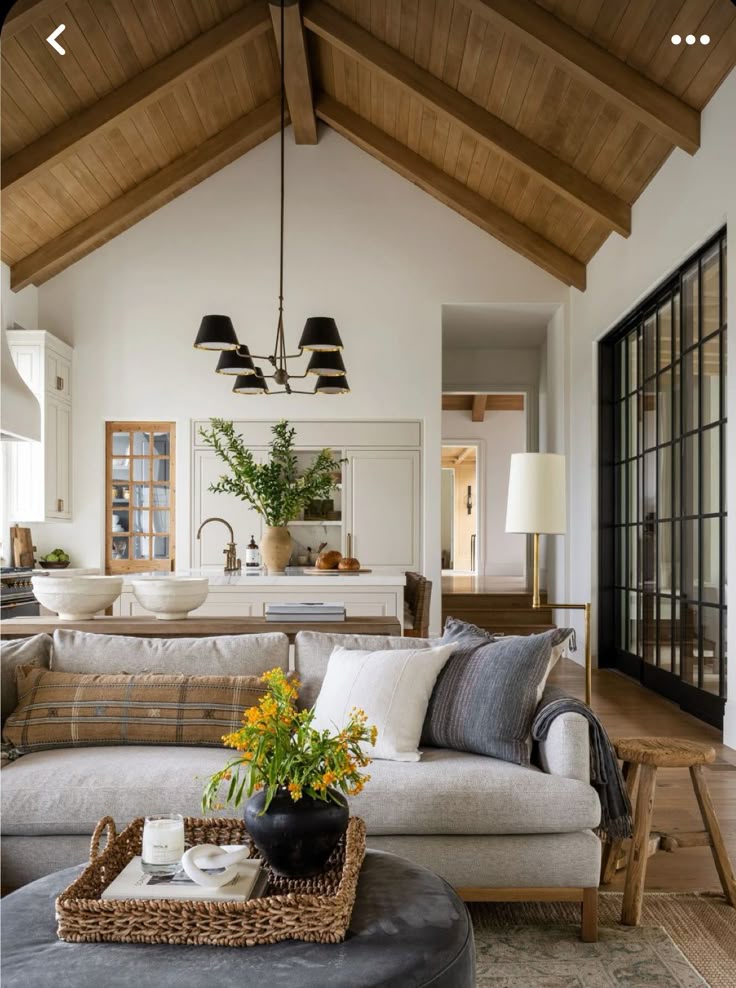
If both the kitchen and living room are styled to the same level of detail, it can feel a bit rigid.
Usually, it works better when one area feels more designed (often the kitchen), and the other feels more lived-in (the living room).
That contrast makes the space feel natural instead of staged.
19. Avoid Pushing All Your Furniture to the Edges
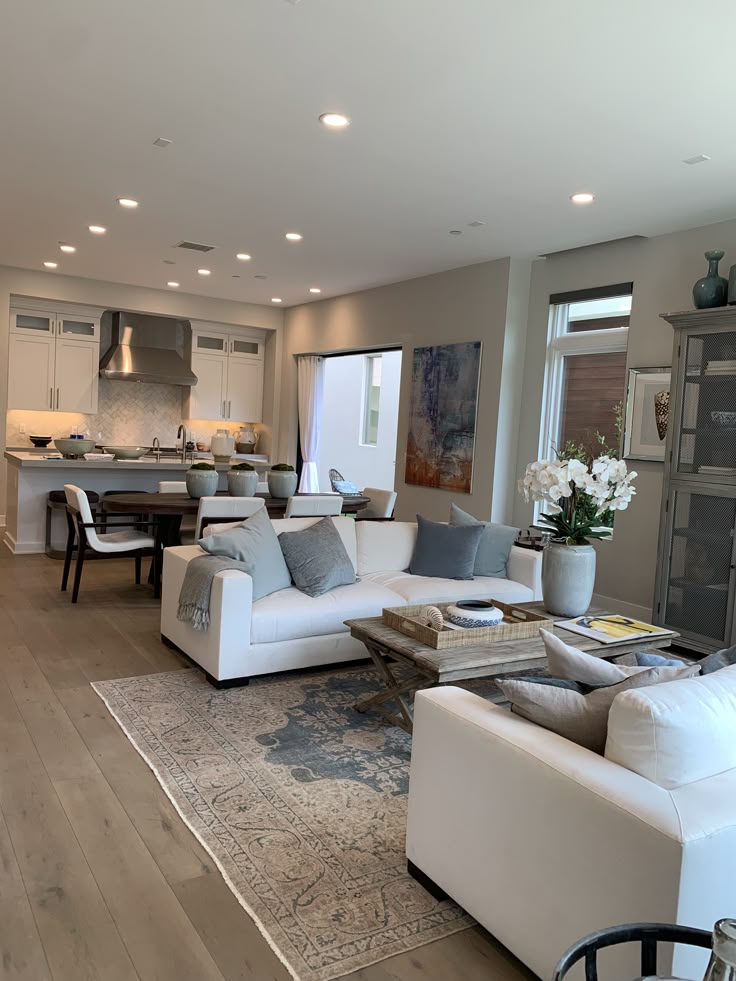
It’s tempting to line everything against the walls to open up the space, but that usually has the opposite effect.
Pulling furniture inward creates a more defined and functional seating area.
It makes the room feel like it has purpose instead of just empty space in the middle.
20. Step Back and Look at the Whole Space, Not Just Sections
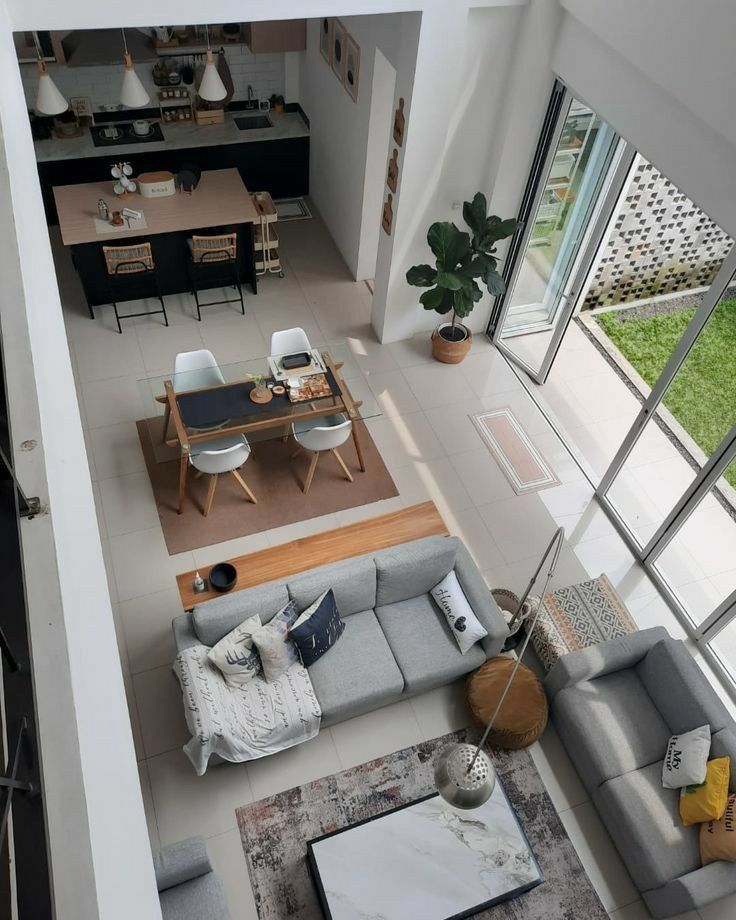
This is the part most people skip.
It’s easy to focus on making the kitchen look good, or the living room look good, but in an open layout, they need to work together.
Take a step back and look at everything at once.
If something feels off, it’s usually because one area isn’t connecting well with the other.
This post showed you the best open plan kitchen living room ideas.