18 Small Library Room Ideas That Make Reading Feel Like an Everyday Ritual
Looking for small library room ideas? See how to turn a spare room, narrow corner, or tiny space into a beautiful, practical home library with smart shelving, seating, lighting, and layout ideas.
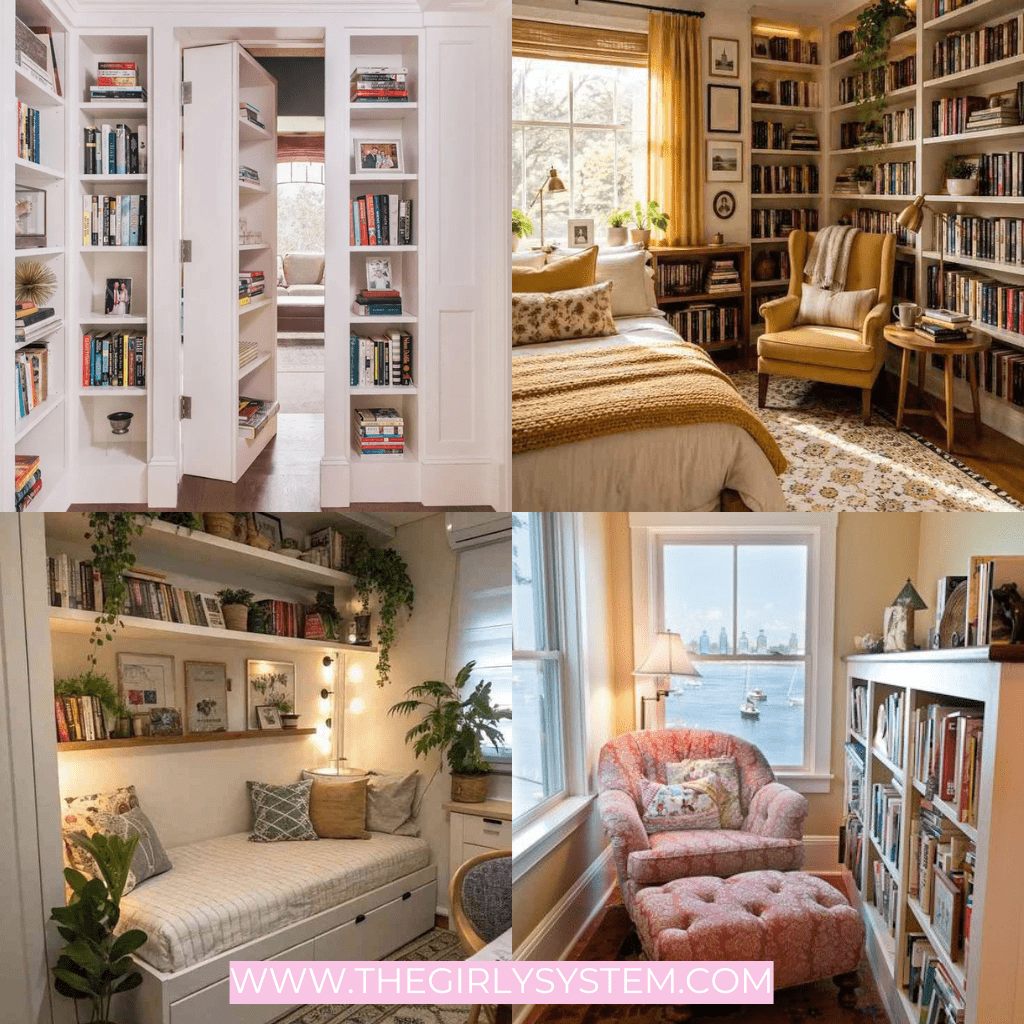
There’s a particular kind of satisfaction that comes from having a place for your books. It doesn’t have to be a grand room with wall-to-wall mahogany shelves and a rolling ladder. In fact, most of us are working with something much less dramatic: a spare bedroom, an unused corner, a narrow room, or one wall that could use a purpose.
That’s where small library room ideas get interesting. A limited footprint forces you to think about what you actually need rather than filling the room simply because you can. A good chair, shelves that use the available height, decent reading light, and a few personal touches can turn a surprisingly small room into the place you naturally gravitate toward when you want to read.
If you’re working with a small space, these are the ideas I’d actually consider.
Small Library Room Ideas
1. Take the Bookshelves All the Way to the Ceiling
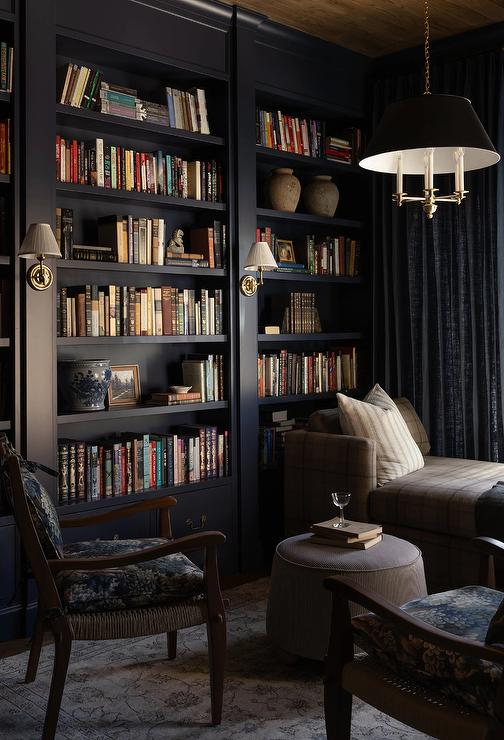
When floor space is limited, your walls need to do more work. Floor-to-ceiling shelving gives you considerably more room for books without taking up any additional floor area, and the vertical lines can make the ceiling appear higher.
The trick is deciding what belongs where. Keep the books you reach for constantly around eye level and use the upper shelves for titles you love but don’t pull down every week.
2. Give the Best Corner to the Reading Chair
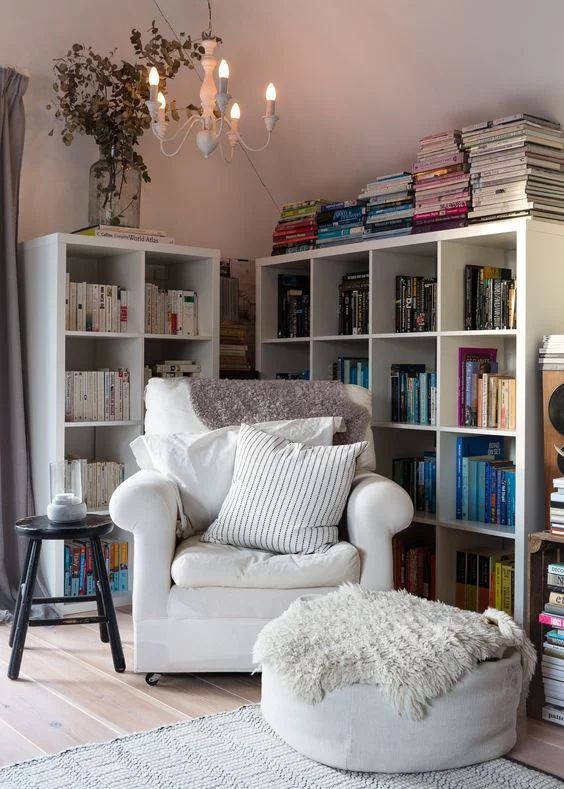
Don’t automatically put the chair wherever there’s an empty patch of floor. In a small library, the reading chair deserves the best spot in the room, preferably somewhere with natural light and enough clearance to sit comfortably without bumping into a bookshelf.
I’d rather sacrifice a little shelving than squeeze a good chair into an awkward corner. A library is ultimately a room for reading, not a room for proving how many books you can fit into it.
3. Turn a Window Into the Reading Nook
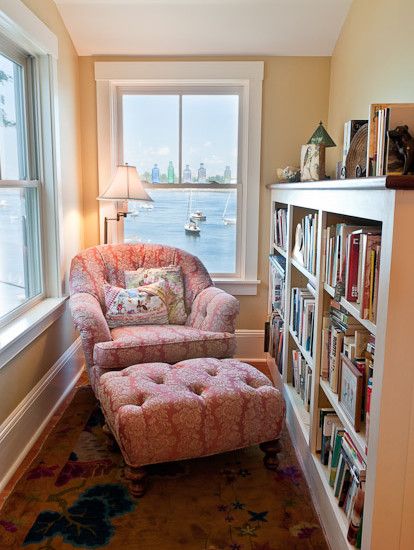
If there’s a window in the room, use it. A compact chair, bench, or built-in seat positioned nearby can give the library a natural focal point while taking advantage of daylight.
You don’t need much else around it. A small table for your current book and a reading lamp for the evening can be enough to make the window area feel intentional.
RELATED: 27 Reading Nook Ideas That’ll Make Staying In Feel Like the Better Plan
4. Frame the Door With Bookshelves
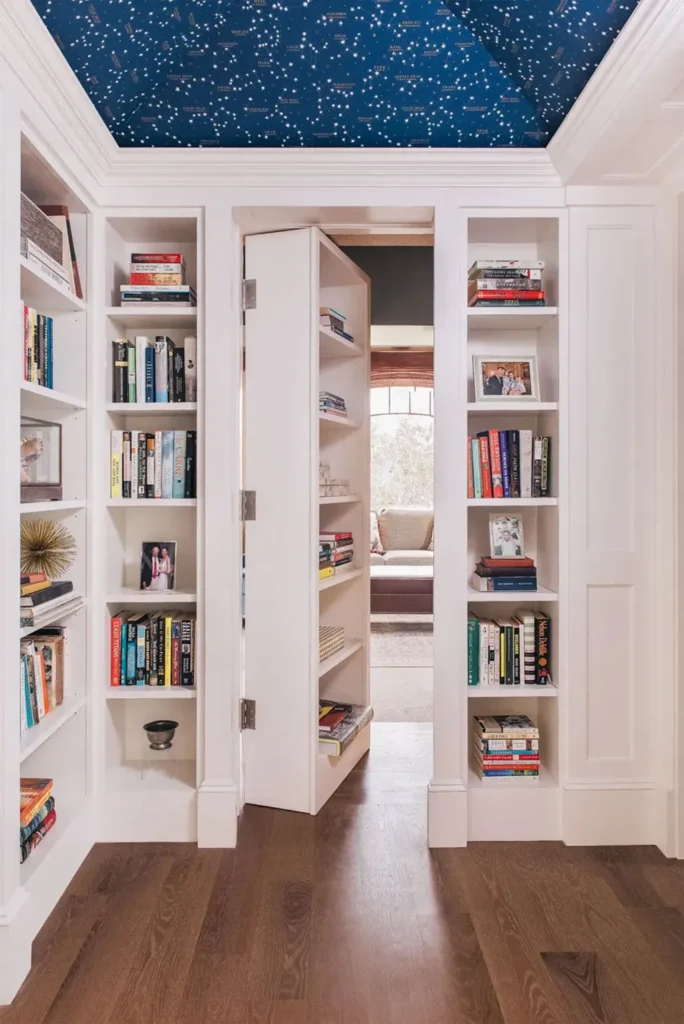
Here’s a clever solution for a wall you might otherwise overlook: build or place narrow bookcases on either side of the doorway and continue the shelving above it if the ceiling height allows.
You gain storage without taking away another usable wall. Just measure carefully around the door frame and make sure the shelving doesn’t make the entrance feel pinched.
5. Use One Narrow Bookshelf
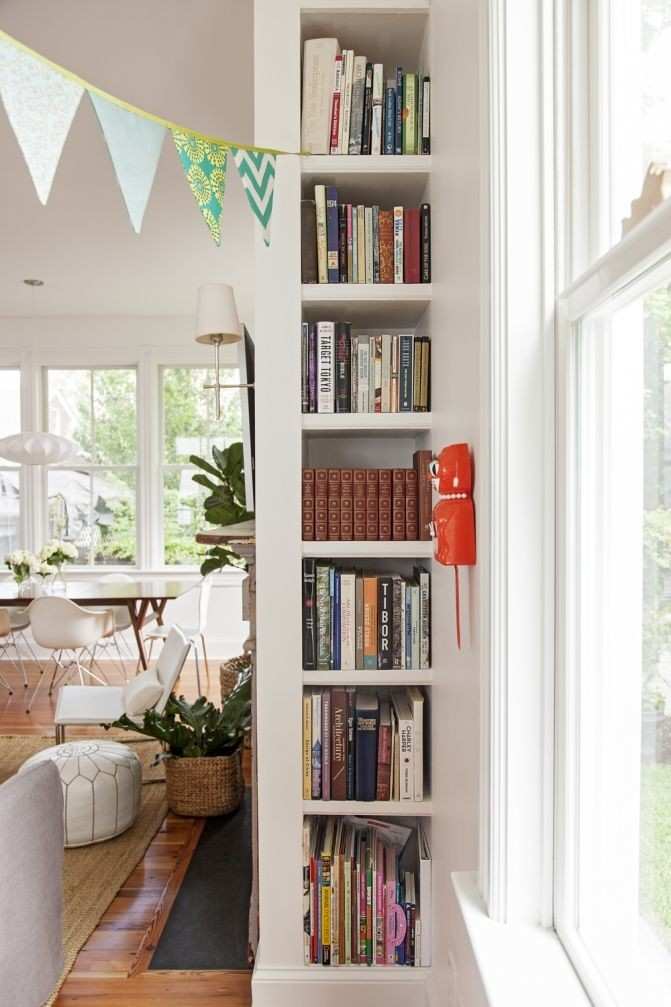
You don’t need an entire wall of shelving to make a small library feel like a library. One tall, narrow bookshelf can hold a surprising number of books while leaving most of the room available for a comfortable chair, a little table, or a desk.
I’d choose a bookshelf that takes advantage of height rather than width, especially if you’re working with a tight floor plan.
6. Make a Small Library Around a Daybed
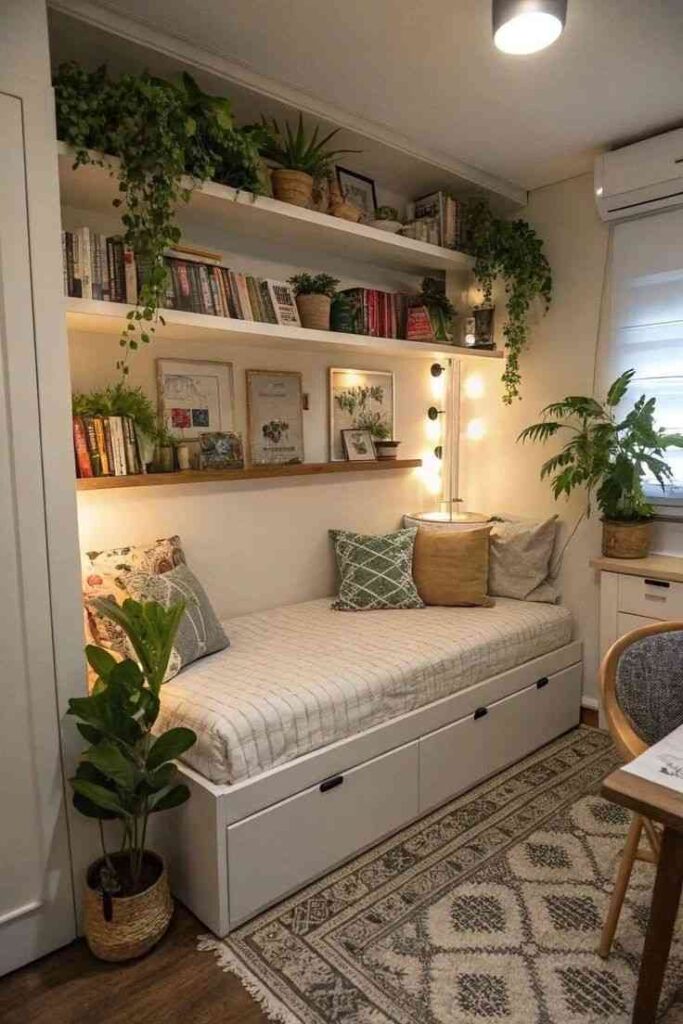
If you want the room to double as a guest space, a daybed is worth considering. It gives you somewhere to sit and stretch out with a book while still leaving the room flexible enough for an overnight guest.
I’d keep the surrounding furniture minimal. A wall of books, a small side table, and a good lamp can do most of the work.
7. Turn a Spare Bedroom Into a Library
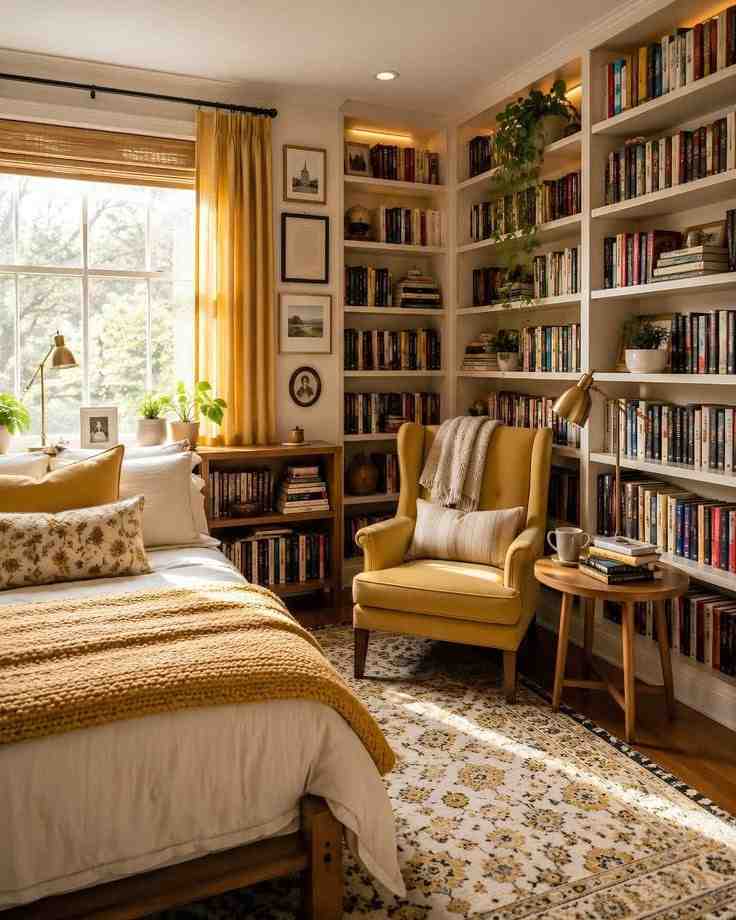
A spare bedroom is an obvious candidate for a home library, but you don’t need to strip it down to nothing. Keep a sleeper sofa or daybed if you need guest accommodation, then use the remaining walls for shelving.
If the room is particularly small, skip a large desk and choose a narrow writing table instead. You’ll have a library that can also handle journaling, correspondence, or the occasional laptop session.
8. Create a Library in a Narrow Room
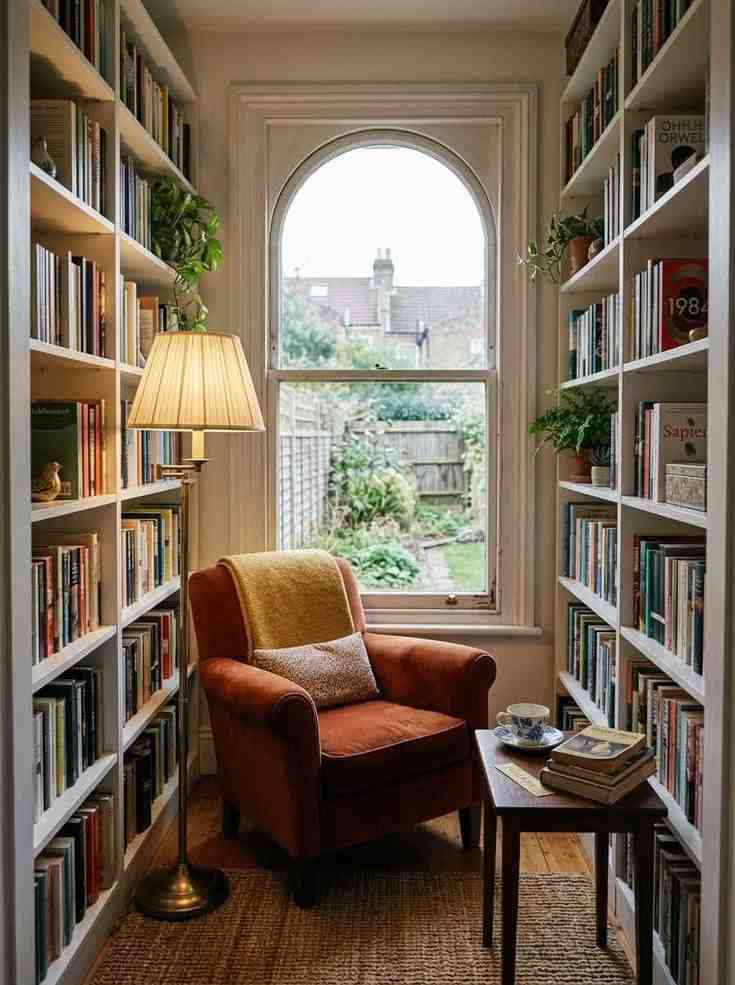
A narrow room doesn’t have to be a deal-breaker. Place shelving along the longer walls and keep the center relatively open so the room still has a clear path through it.
A compact chair at the far end can give the room a destination rather than making it feel like a corridor lined with books. The layout matters more here than the amount of furniture.
9. Create an Under-the-Stairs Library
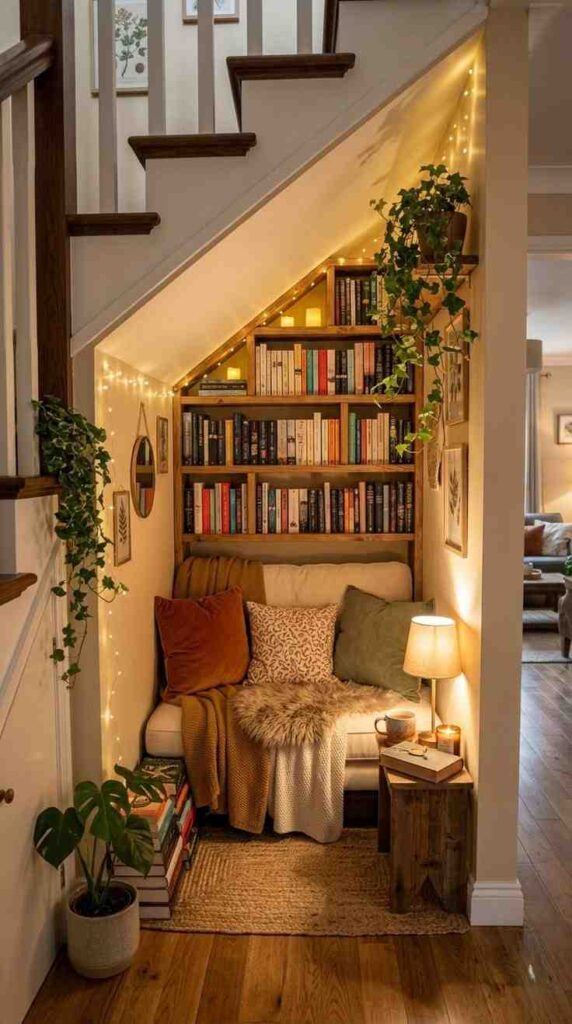
The space beneath a staircase is easy to overlook, but it can be an excellent place for a small library. Fit shelves into the slope of the stairs, using the taller section for larger books and the lower shelves for paperbacks, baskets, or a few decorative pieces.
If there’s enough room at the bottom, add a small chair and reading light to turn the storage area into an actual reading nook.
If the staircase is too narrow for seating, don’t force it, let the bookshelves make use of the awkward space and keep your main reading area elsewhere.
10. Try a Built-In Window Seat
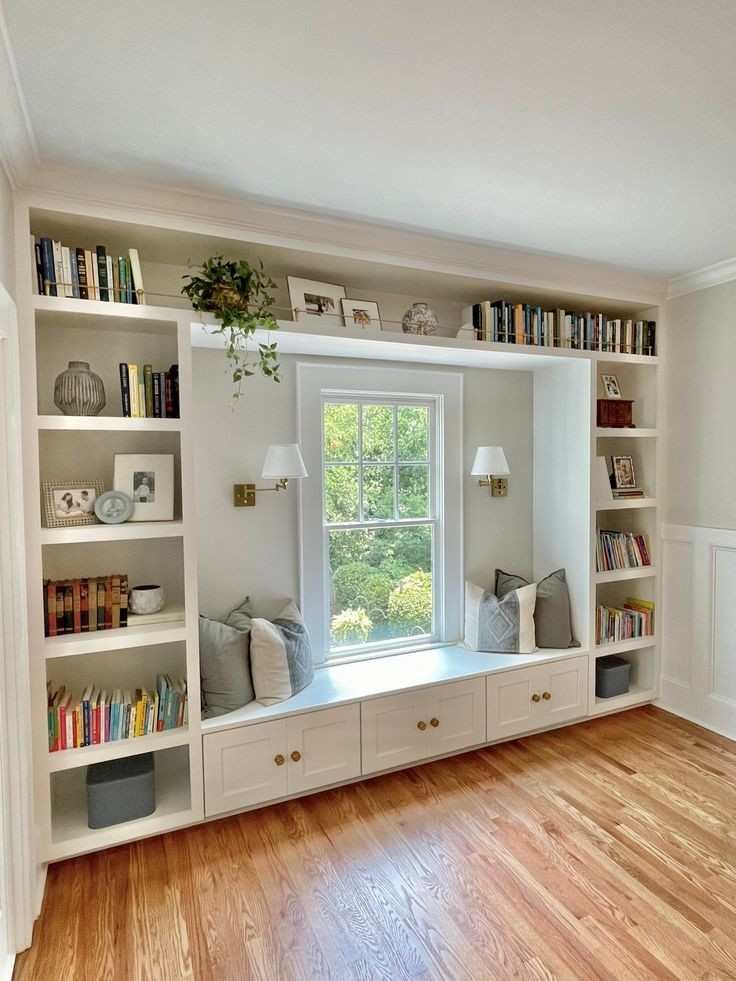
If you’re renovating and have room in the budget for built-ins, a window seat can solve two problems at once: seating and storage.
Drawers underneath can hold books, blankets, notebooks, or anything else that tends to accumulate around a reading spot. And unlike a freestanding chair, the seat doesn’t need additional floor space beyond the footprint of the built-in.
11. Put a Small Round Table Beside the Chair
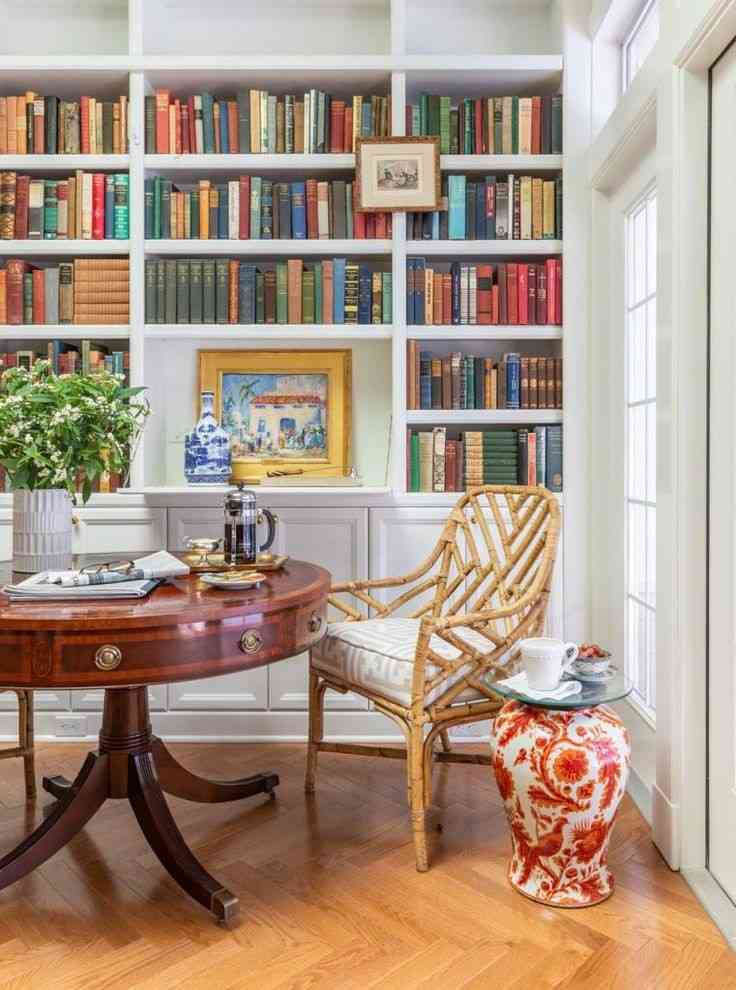
A reading chair needs somewhere to put your book. That’s about it.
A small round table is often enough for a book, a mug, glasses, and perhaps a small lamp. It takes up much less visual and physical space than a conventional coffee table, which is exactly what a compact library needs.
12. Mount the Reading Light on the Wall
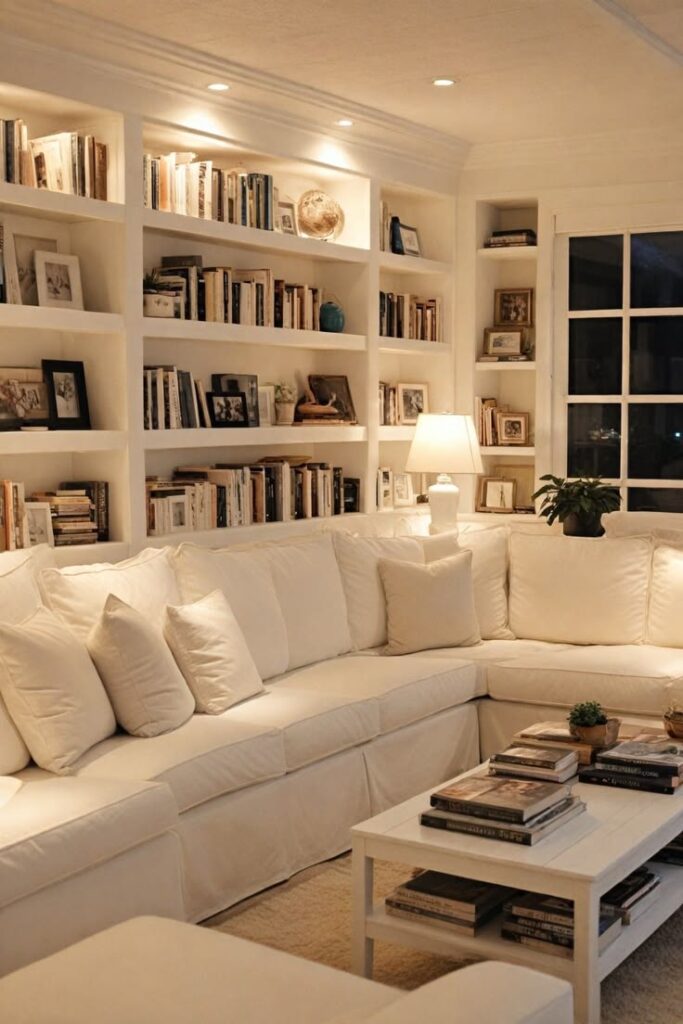
Floor lamps are useful, but they can become another thing to navigate around in a small room. A wall-mounted sconce beside the reading chair gives you focused light without claiming valuable floor space.
If you’re renovating, plan the electrical outlet before the shelves and furniture go in. A little planning here can save you from running a cord across the room later.
13. Let the Books Supply the Color
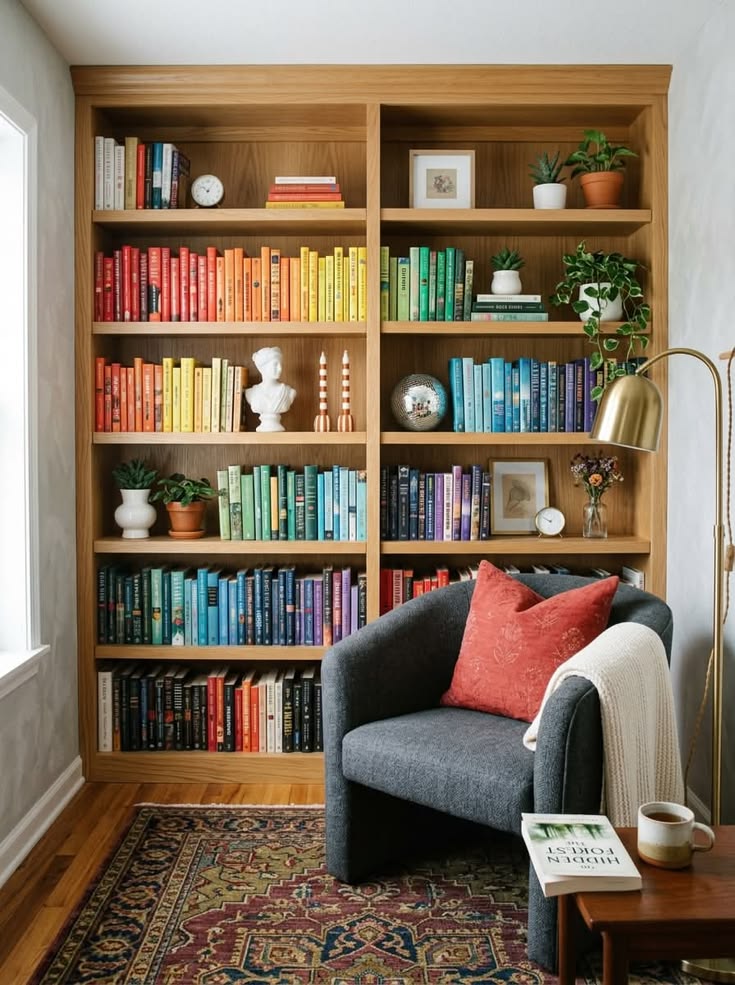
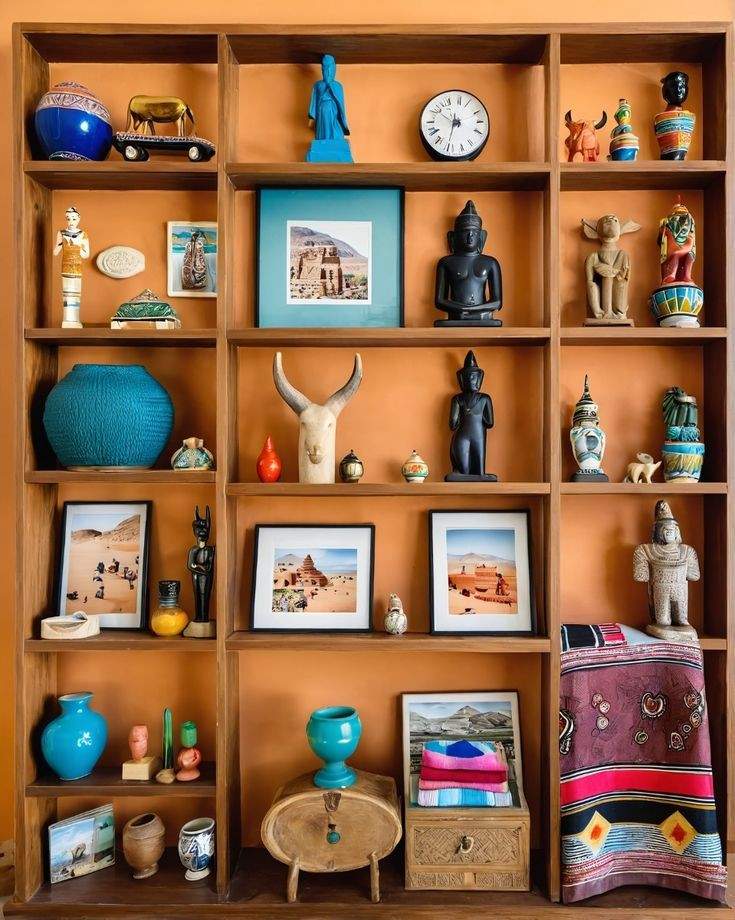
You may not need much decorative color in a small library because your books already provide plenty. Different spine colors, jackets, and aged paper create a constantly changing backdrop.
This is particularly useful if you’re trying to keep the room simple. Choose a relatively restrained wall color and let the collection provide the visual variety.
14. Paint the Bookshelves the Same Color as the Walls
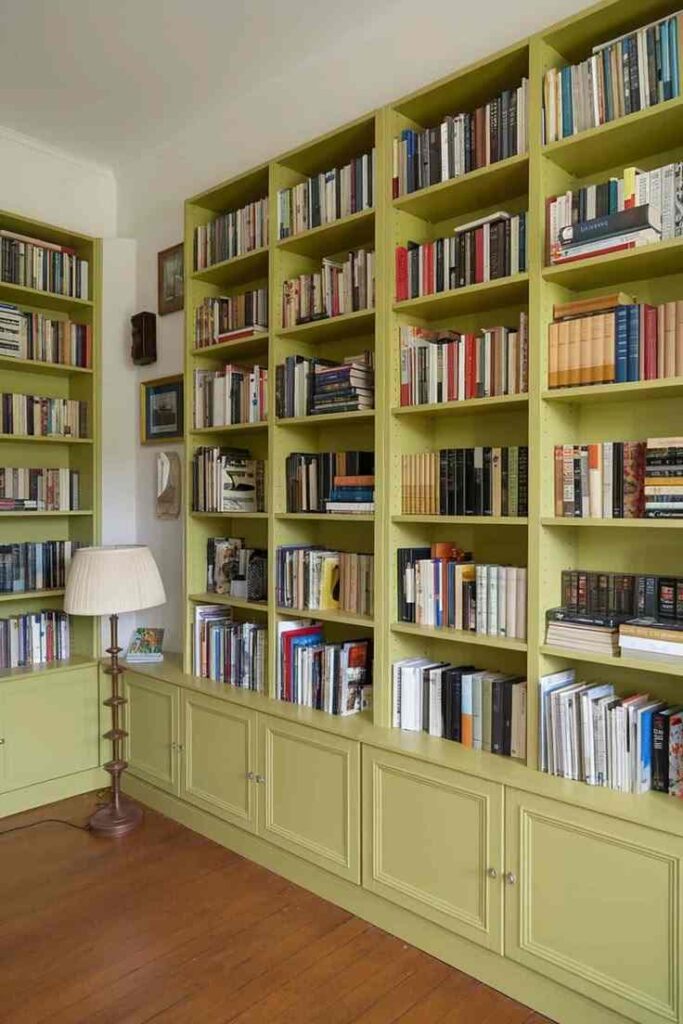
Painting the shelving and walls in the same color can make a small library feel more unified. Instead of seeing the shelves as separate pieces of furniture, you get one continuous wall of storage.
The effect is especially useful in rooms where the shelves occupy most of the available wall. Your books then become the main visual feature rather than the shelving itself.
15. Put Your Favorite Books at Eye Level
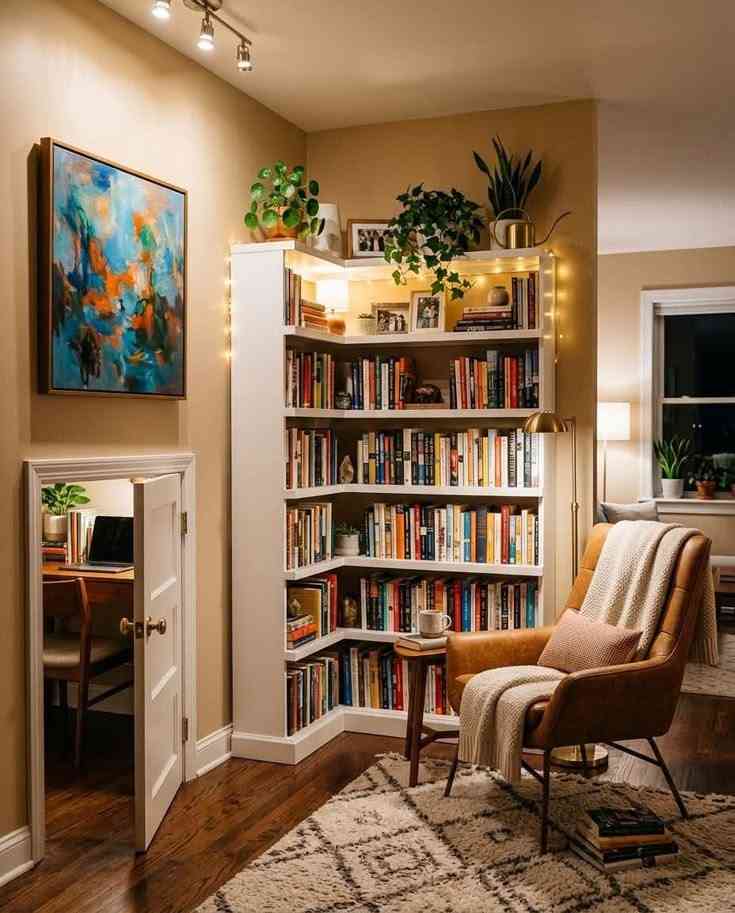
Book organization doesn’t have to be purely aesthetic. Keep the books you reach for regularly somewhere easy to see and reach.
Save the highest shelves for books you consult less often or collections you want to keep together. A library becomes much easier to live with when the organization reflects your habits instead of just looking tidy in a photograph.
16. Make an Alcove Into a Mini Library
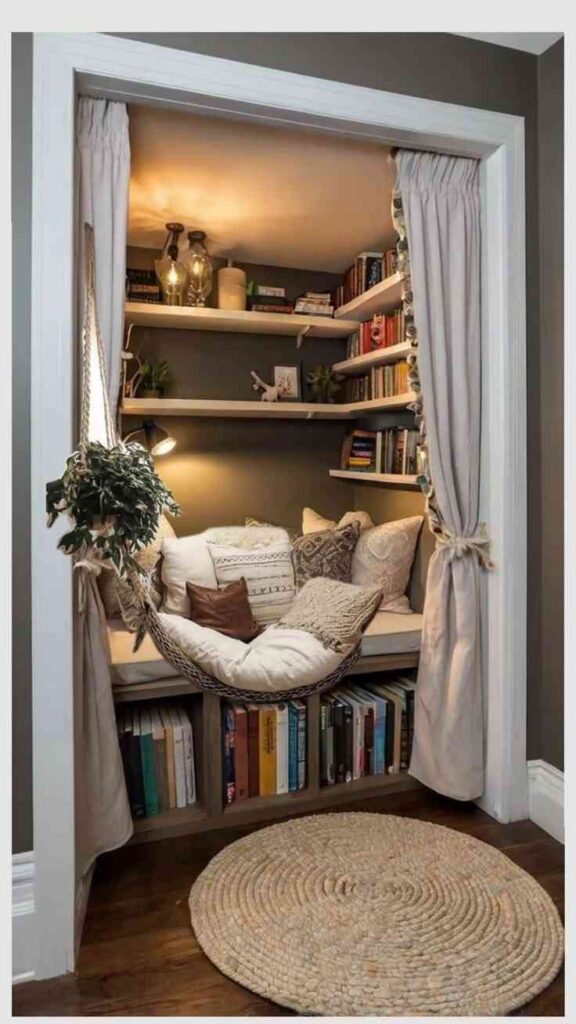
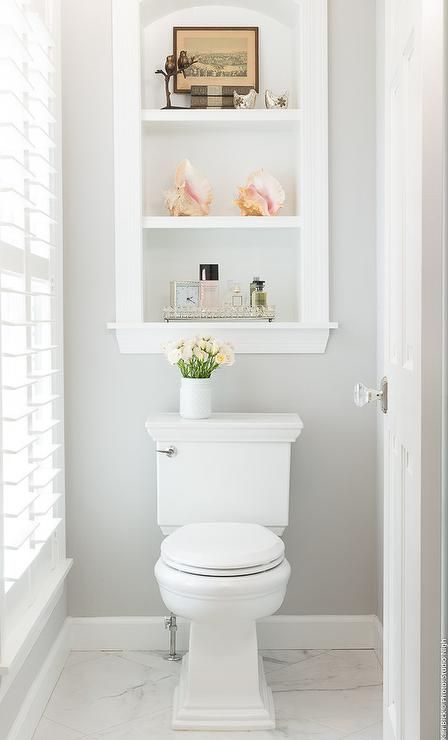
That strange recess you never knew what to do with might be the perfect place for books. Add shelving that fits the opening, and you’ve created storage without taking over the rest of the room.
If the alcove is wide enough, add a small chair nearby. If it isn’t, let the shelving be the feature and keep the reading seat elsewhere.
17. Make the Library Look Like Someone Reads There
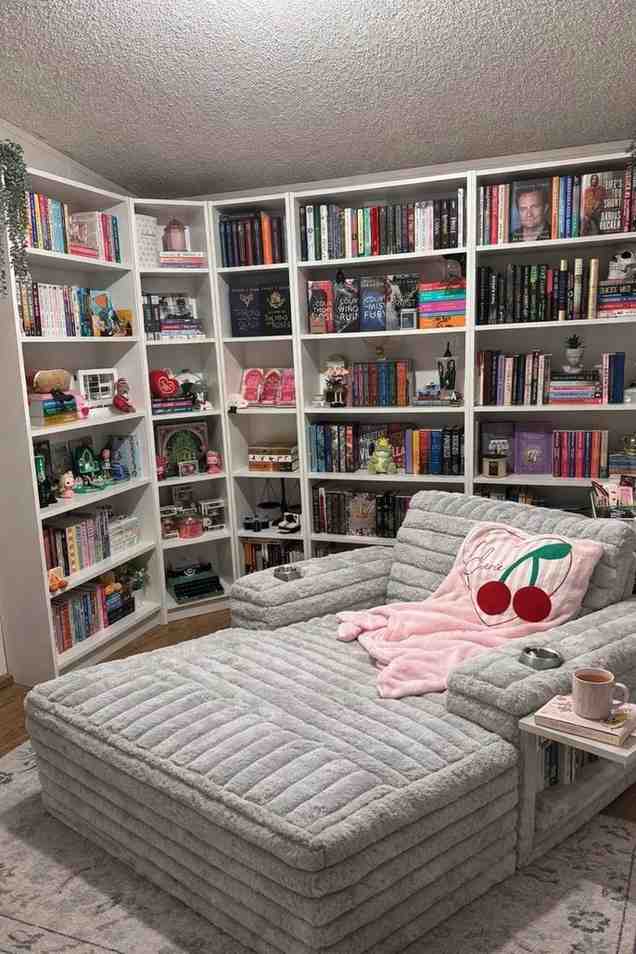
This is the idea I’d keep above everything else.
Leave a book on the side table. Keep a notebook near the chair. Put the lamp where you actually need it. Let a few favorite titles face outward instead of arranging every spine with military precision.
A small library becomes far more appealing when it reflects the person who uses it. You’re creating a place to read, not a showroom where the books are forbidden from being opened.
18. Add a Small Desk for Reading and Writing
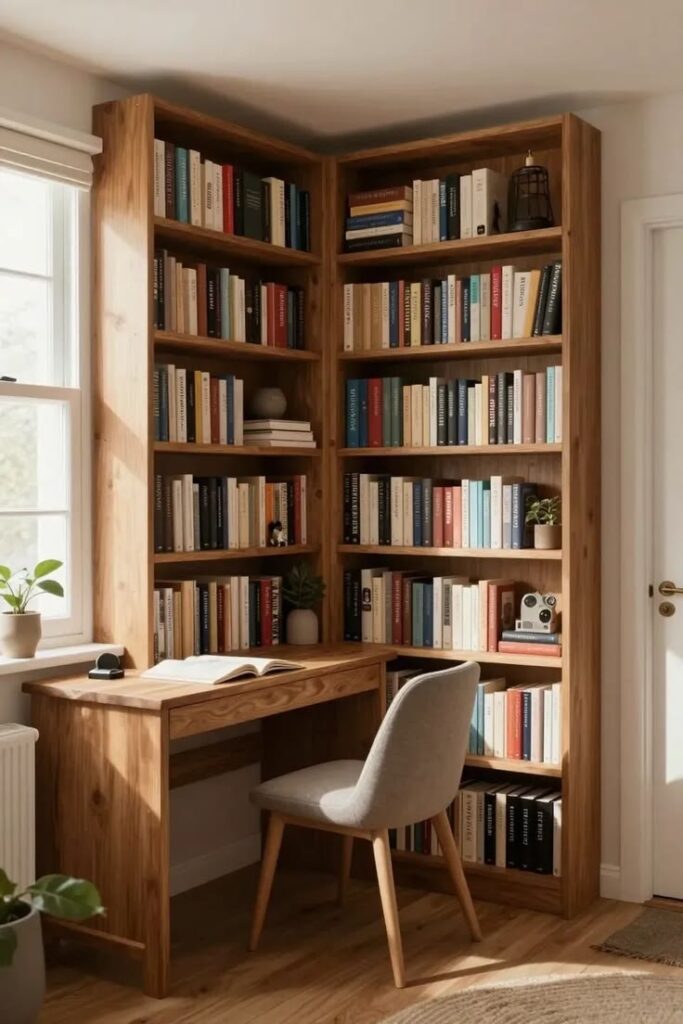
For readers who like to take notes, journal, study, or write, a small desk can make the library much more useful. Look for a narrow writing desk rather than a full office workstation.
Place it against a wall that would otherwise be difficult to use. That way, the desk supports the library rather than taking over the room.