28 Coastal Living Room Ideas That Make Your Home Feel Like a Breezy Escape
Looking for coastal living room ideas that actually feel stylish and livable? These beautiful coastal living room ideas will help you design a bright, relaxed space with furniture inspiration, decor tips, and details you’ll want to copy.
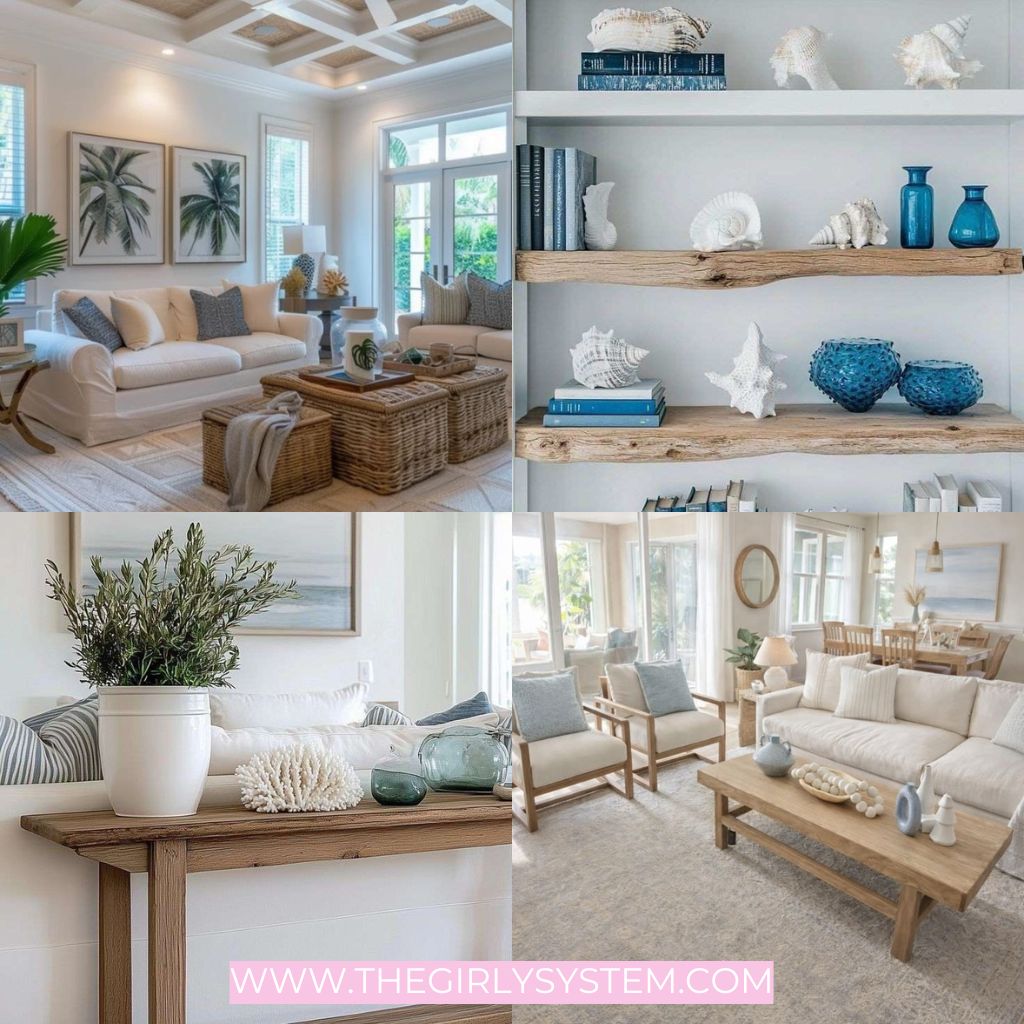
Coastal living rooms have a way of making a home feel lighter, calmer, and far more inviting, but pulling off the look well is where people get stuck.
The goal isn’t to recreate a beach souvenir shop or copy a perfect room that looks impossible to live in
The best coastal spaces feel natural, collected, and easy to spend time in.
Maybe you love the bright East Coast beach house look with crisp slipcovered furniture and layered neutrals. Maybe you’re drawn to the softer California version with warm woods, relaxed textures, and a slightly more modern edge.
Either way, coastal design works because it creates a room that feels breathable, open, and genuinely enjoyable to come home to.
If your living room currently feels heavy, disconnected, or just missing personality, these coastal living room ideas will help you shape a space that actually feels like the version you’re imagining.
Coastal Living Room Ideas
1. Start With a Slipcovered Sofa
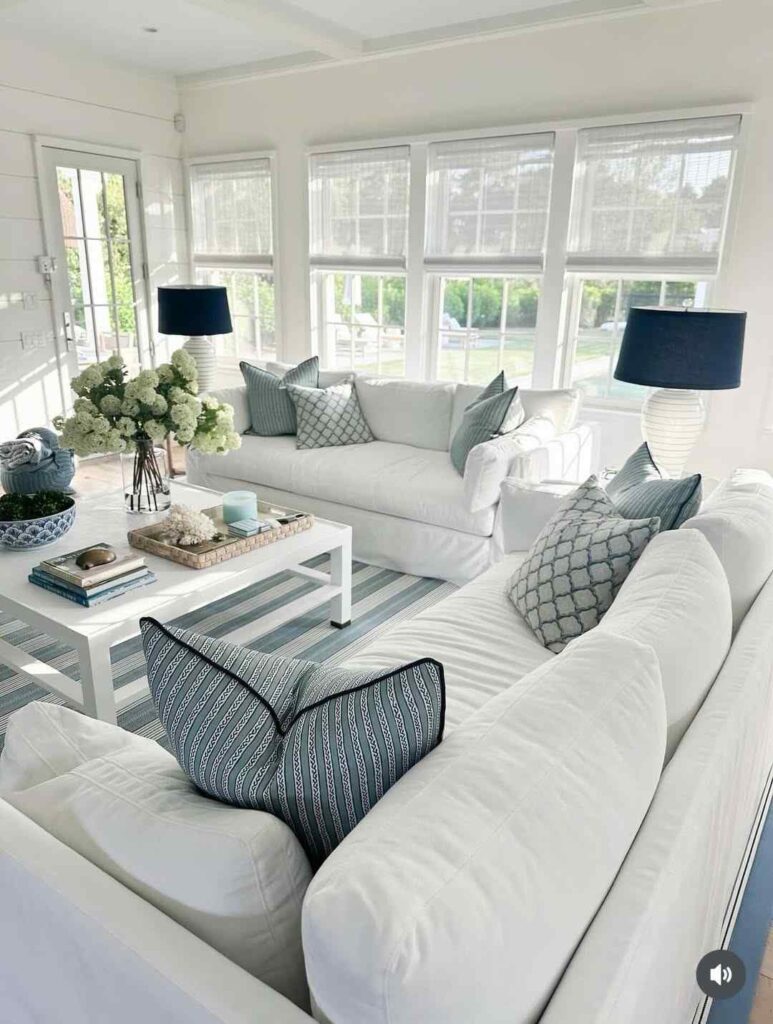
If I were designing a coastal living room from scratch, this is where I’d start every single time.
A large slipcovered sofa instantly sets the tone because it tells the room to relax. I’m picturing soft ivory or sandy beige fabric, slightly rumpled cushions, and a shape that feels inviting instead of stiff and showroom-perfect.
It creates the kind of seating people naturally sink into, which is exactly what makes coastal interiors feel believable instead of overly curated.
2. Layer Different Shades of White Instead of Using Just One
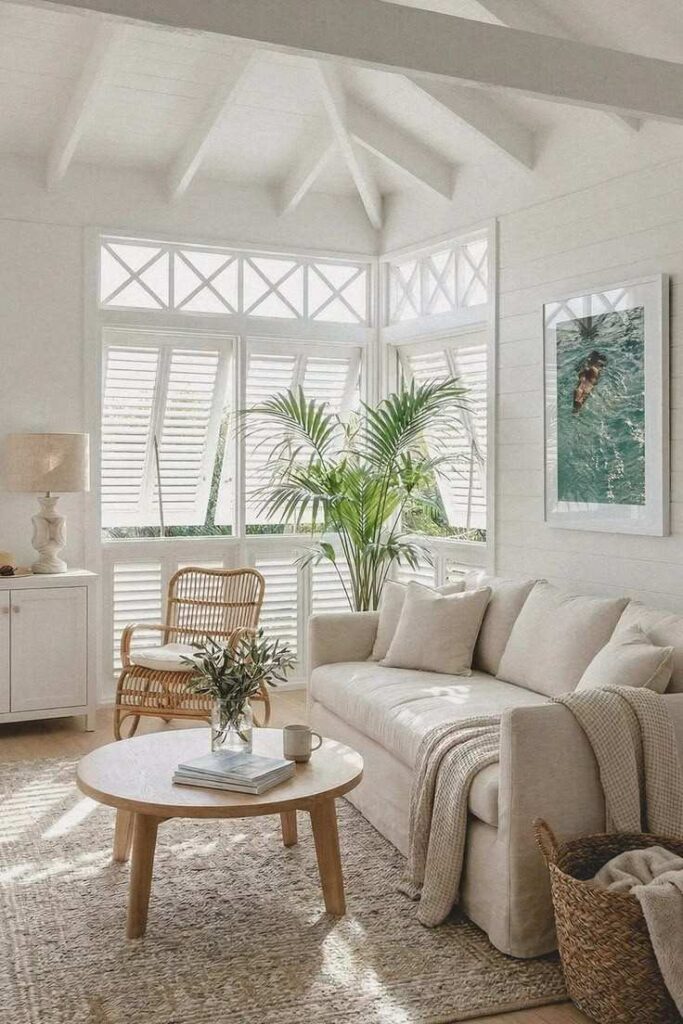
One of the fastest ways to make a coastal room feel flat is painting everything the exact same bright white and calling it finished.
Real coastal spaces feel layered because the whites aren’t identical, think creamy upholstery, soft off-white curtains, warmer ivory walls, maybe chalky ceramic decor layered throughout.
That variation gives the room dimension and keeps it from looking sterile. The goal is softness, not a dentist’s office.
3. Add a Large Jute Rug That Grounds the Entire Room
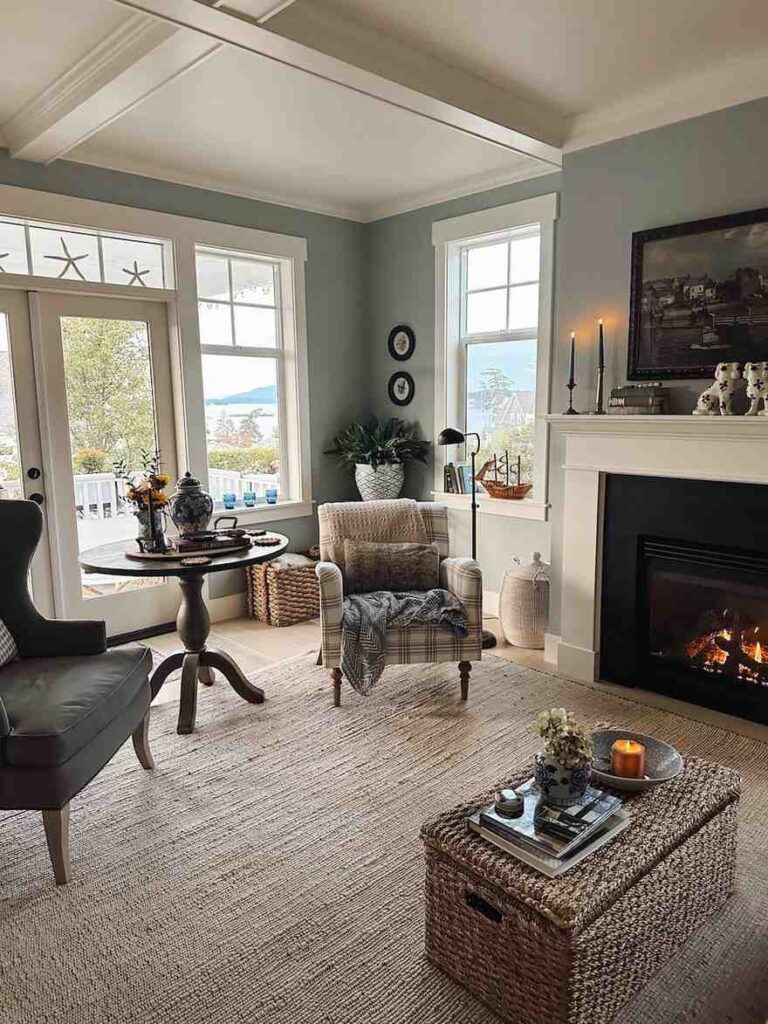
A lot of living rooms feel unfinished because the furniture looks like it was dropped into place instead of being intentionally arranged.
A large jute rug fixes that instantly while bringing in the kind of natural texture coastal spaces rely on.
Picture a pale linen sofa layered over chunky woven fibers with a weathered wood coffee table anchoring the center.
Suddenly, the room feels connected, relaxed, and far more thought-out.
4. Bring in Coastal Decor in a Way That Feels Personal
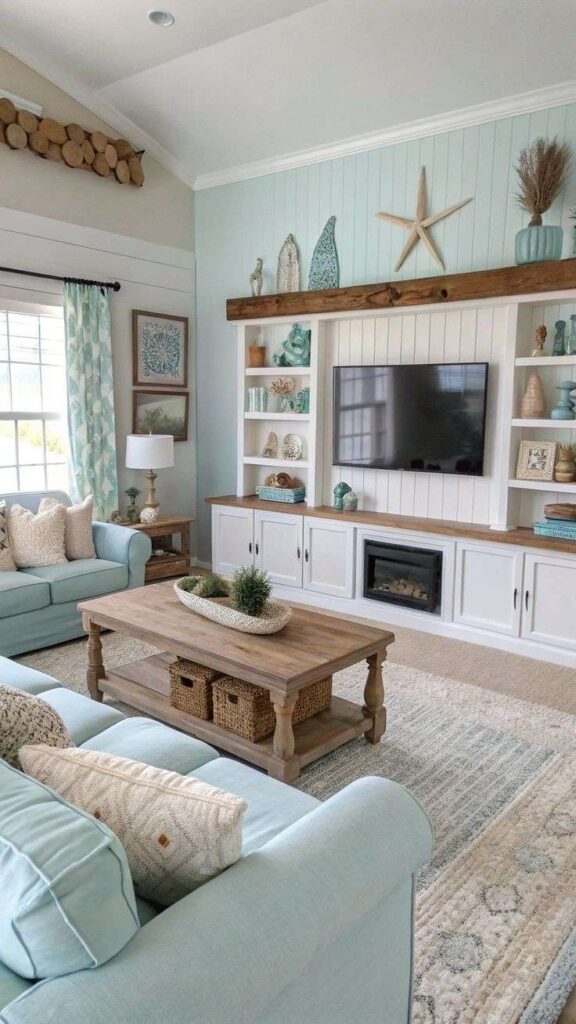
Coastal decor absolutely has a place here, it just comes down to how you style it.
If you genuinely love coral accents, starfish decor, seashell objects, or beach-inspired pieces, use them in a way that feels like it just fits in.
I’m picturing a beautifully styled coffee table with a sculptural coral object, a stack of design books, and soft ceramics, or open shelving with a few collected shell pieces that actually feel like part of your story.
Coastal design works best when the room reflects what you love, not a rigid set of decorating rules.
5. Use Linen Curtains That Let the Room Breathe
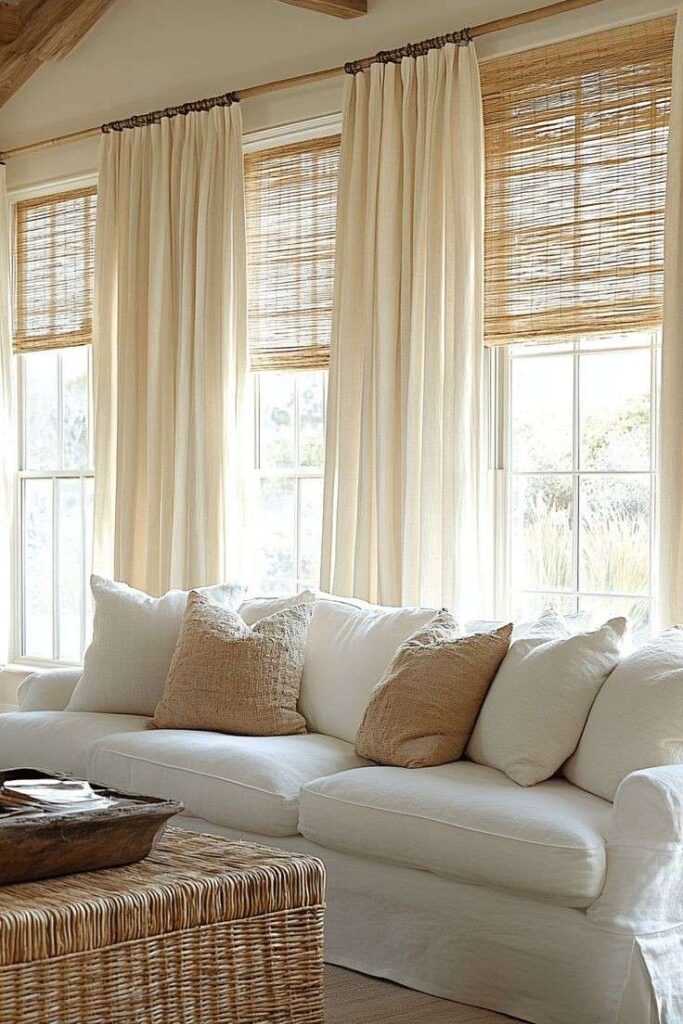
The wrong curtains can completely change the personality of a room.
Heavy dark panels instantly make a coastal space feel boxed in, while airy linen curtains create movement and softness that completely shifts the mood.
That detail alone can make the entire room feel more alive.
6. Bring in Pale Wood Furniture
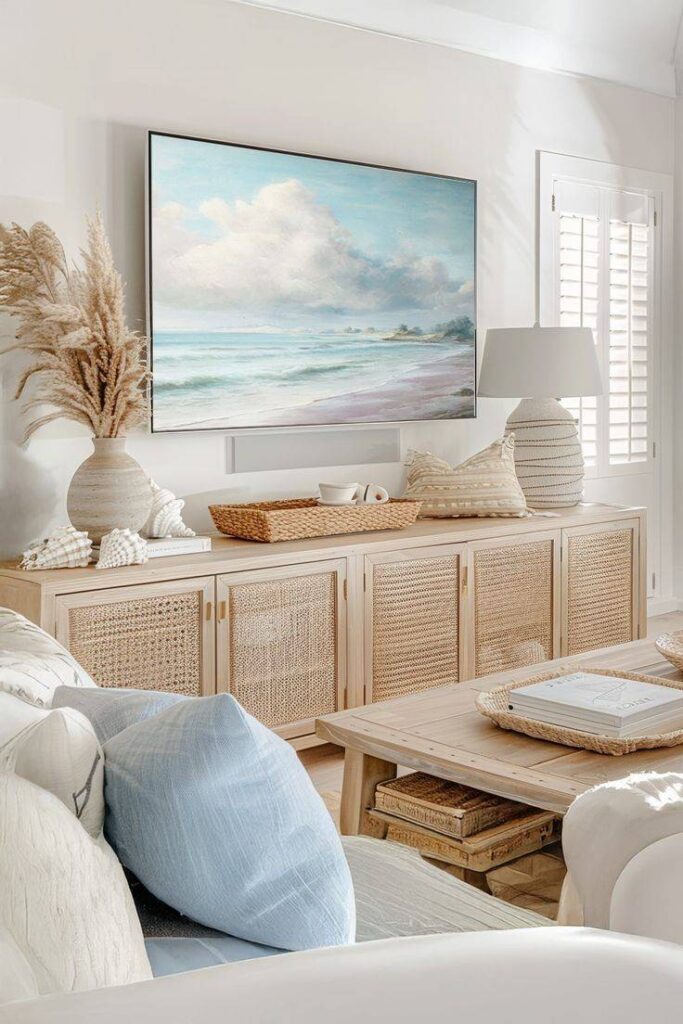
Dark espresso furniture tends to fight against the lightness that coastal rooms need. Swapping in pale oak, whitewashed wood, or natural unfinished tones changes the atmosphere immediately.
I’m picturing a driftwood-style coffee table, light wood side tables, maybe a console with subtle texture that feels collected instead of polished and formal.
It gives the room that breezy, sun-worn quality that people are usually trying to create.
7. Build Around a Soft Blue Accent Instead of an Entire Blue Theme
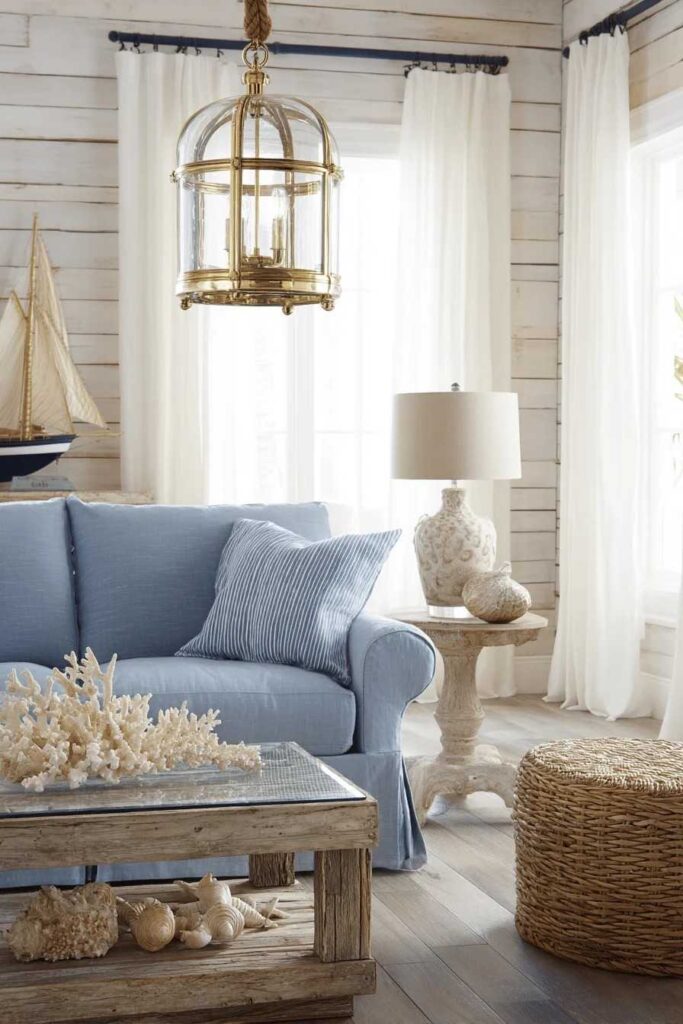
A lot of people hear coastal and immediately think every single item needs to be navy blue.
Please don’t do that. Coastal blue works so much better when it shows up strategically, a faded blue chair, a striped pillow, maybe artwork with soft ocean tones, rather than turning the room into a nautical costume.
Small doses feel intentional and much more current.
8. Add a Woven Light Fixture
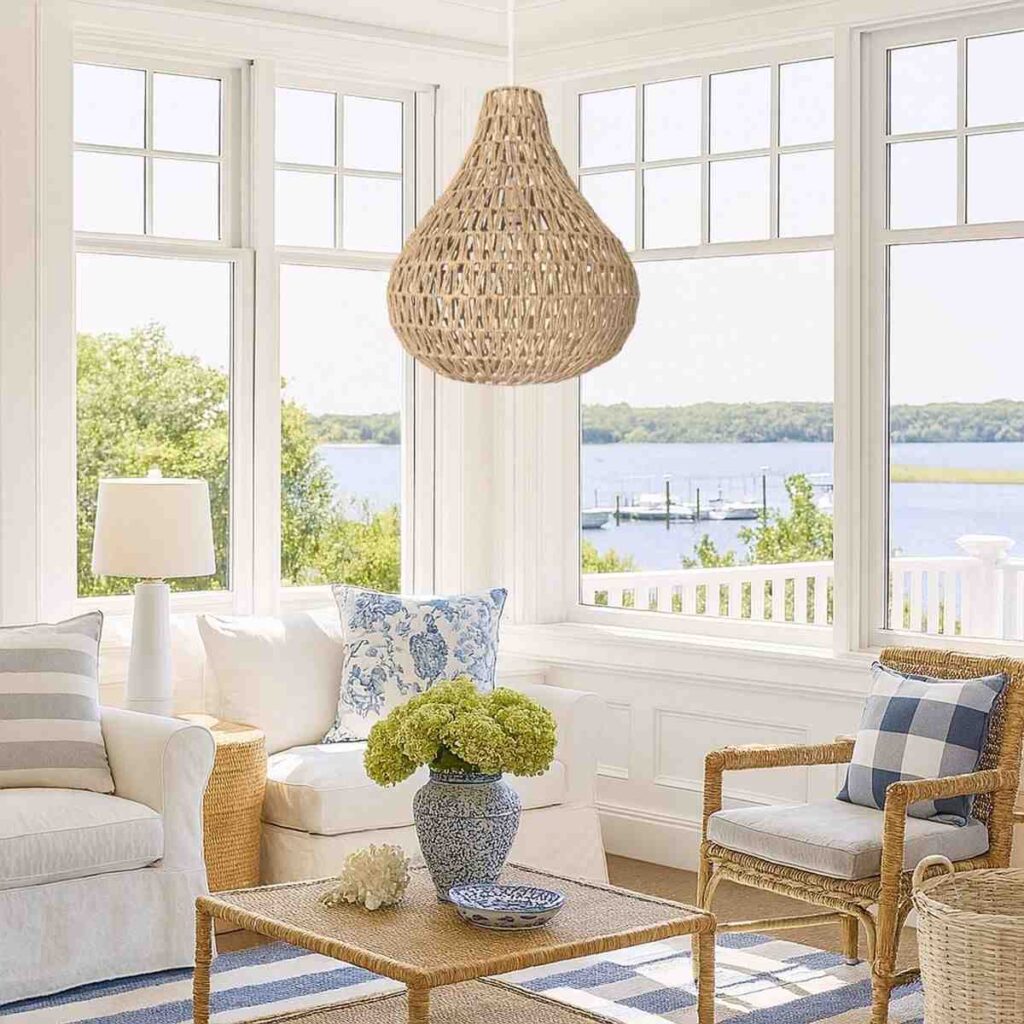
Lighting gets overlooked constantly, which is wild because it changes the room faster than most decor swaps.
A woven pendant or textured lamp instantly introduces that natural material mix coastal interiors need.
I’m picturing a relaxed living room with linen upholstery, soft wood finishes, and then a sculptural woven fixture overhead pulling everything together.
Standard builder-grade lighting just doesn’t give the same energy.
9. Create a Coffee Table Setup That Looks Like Someone Actually Lives Here
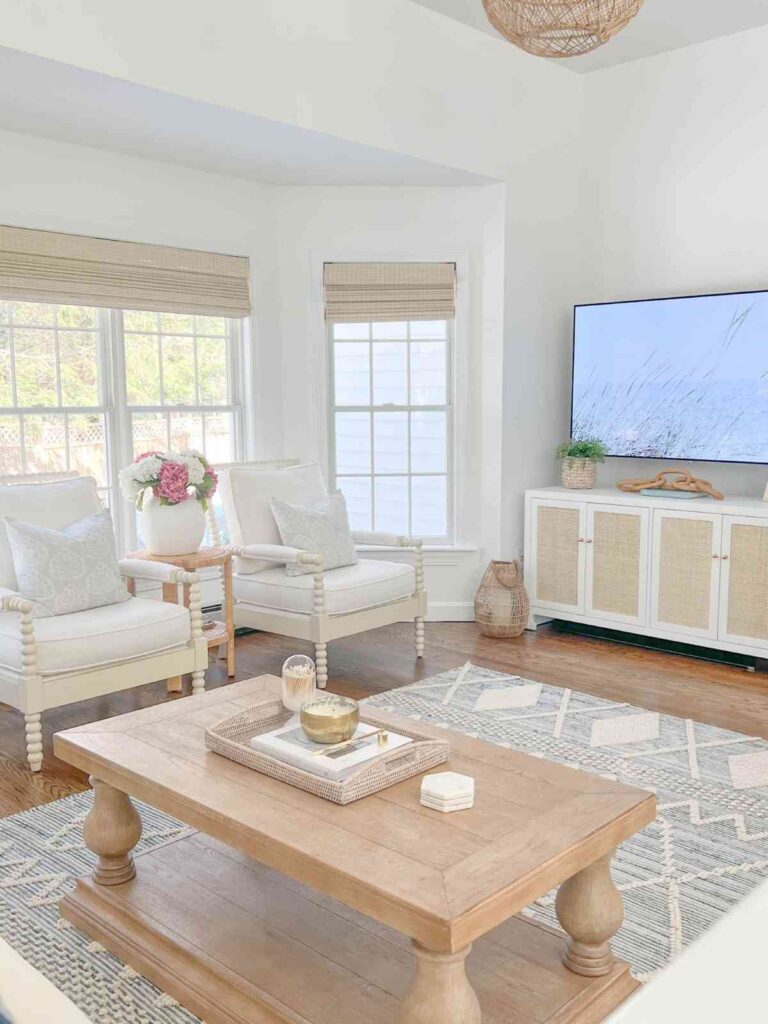
The fastest way to make a room feel lifeless is styling every surface like a staged furniture catalog.
A better coastal coffee table setup feels casual and personal, maybe a stack of oversized design books, a ceramic bowl, one sculptural accent, and a candle you genuinely use.
10. Use Oversized Art Instead of Tiny Beach Print Clusters
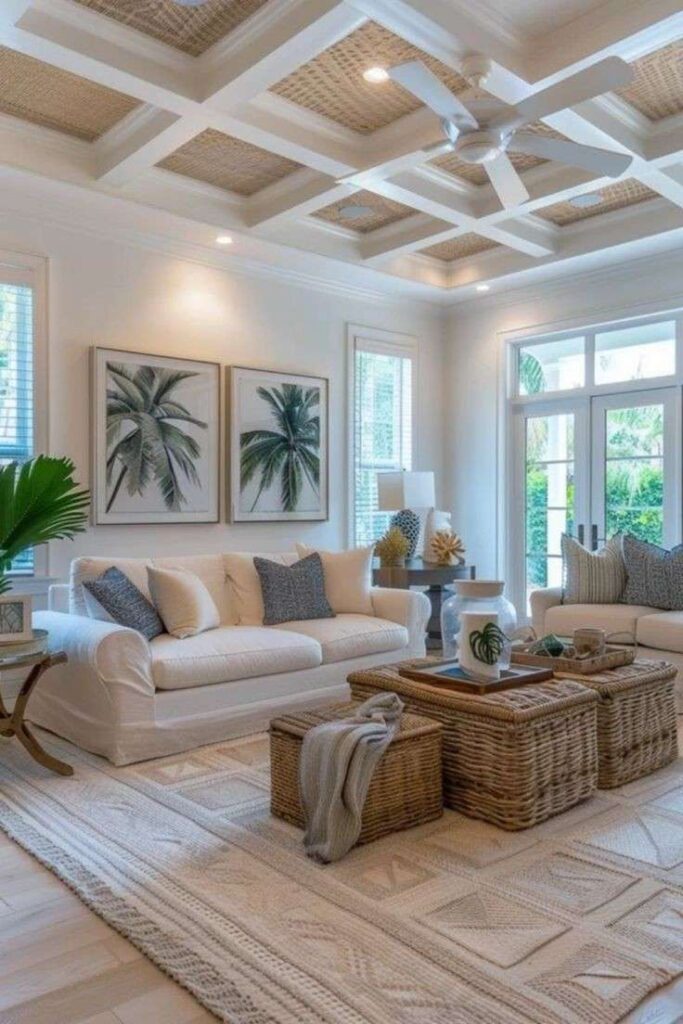
Tiny matching wall art sets almost always make a room feel more generic.
A single oversized coastal-inspired piece creates a much stronger visual anchor and instantly elevates the space.
Think abstract ocean tones, textured neutral artwork, shoreline photography, or something painterly that adds softness without becoming literal beach decor.
Bigger almost always feels more intentional here.
11. Add a Reading Corner Near the Best Natural Light
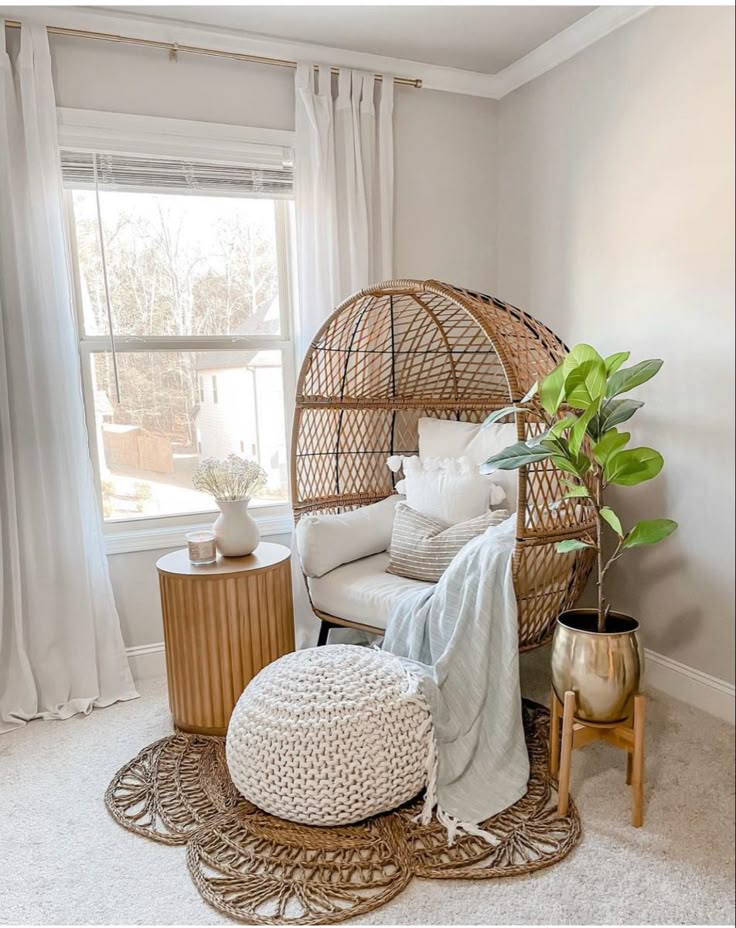
The most inviting coastal living rooms feel usable, not just decorated.
A comfortable reading chair near a bright window instantly gives the room a lifestyle moment that feels real.
I’m picturing a soft upholstered chair, a woven side table, a lamp nearby, maybe a casually folded throw draped across the arm.
It makes the space feel lived in in the best possible way.
12. Choose Performance Fabrics If You Actually Want to Enjoy the Room
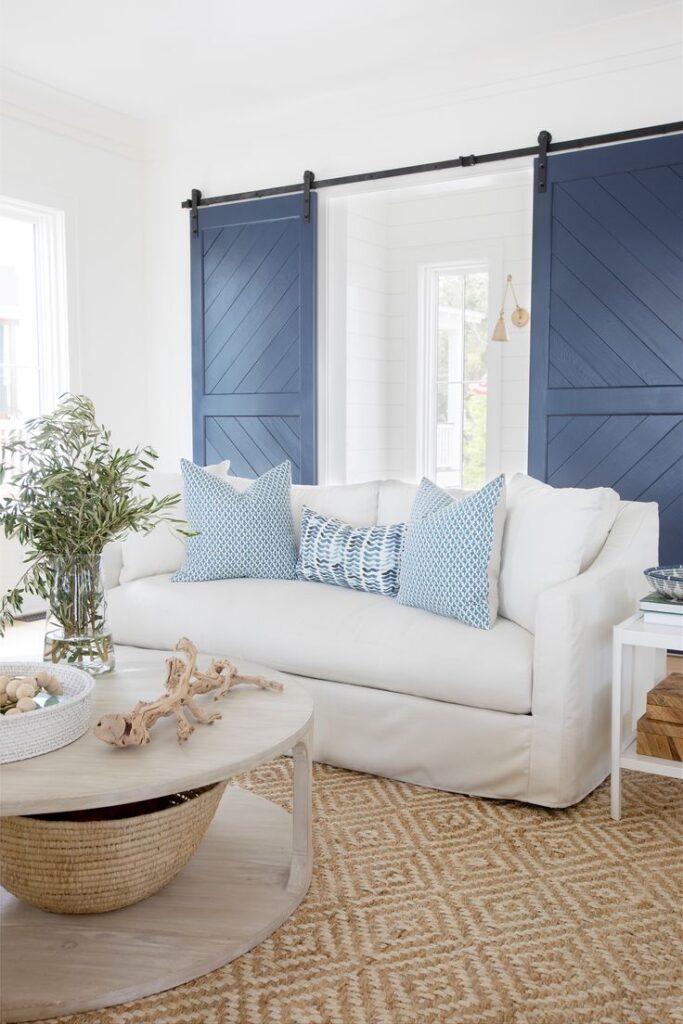
White upholstery looks incredible until real life enters the chat.
Coffee spills, denim transfer, pets, kids, snacks, and beautiful rooms still need to function.
Performance fabrics let you create that airy coastal look without making everyone nervous to sit down.
Design is supposed to support how you live, not make you anxious.
13. Style Open Shelving
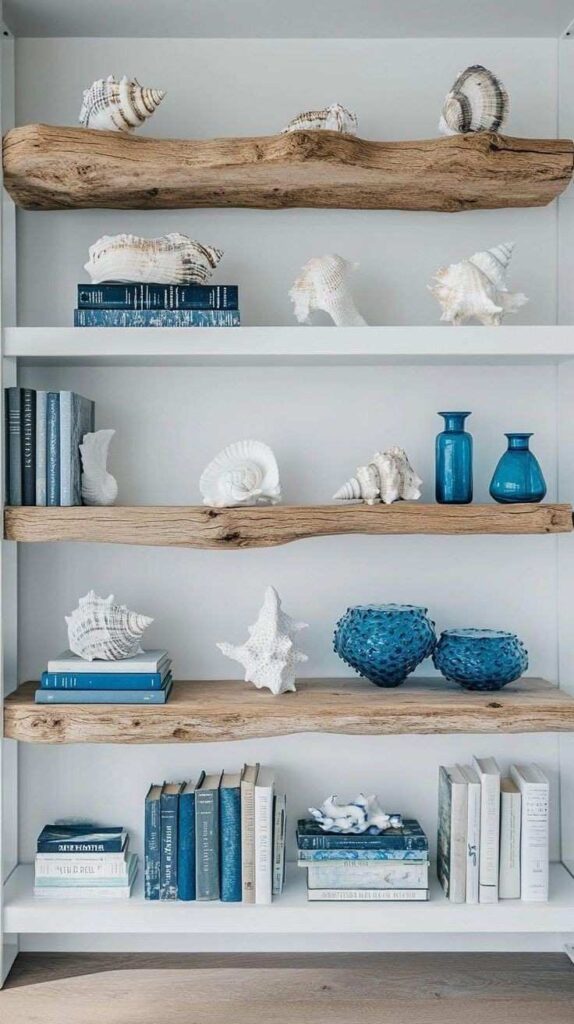
Open shelves can either make a room feel collected and thoughtful or deeply fake.
The trick is resisting the urge to over-style every inch with identical decorative objects.
Coastal shelving looks best when it mixes practical books, woven storage, ceramic pieces, framed photos, and a few sculptural accents that feel naturally accumulated over time.
If it looks like everything arrived in one shopping cart, it loses charm fast.
14. Bring in Glass to Bounce Light Around the Room
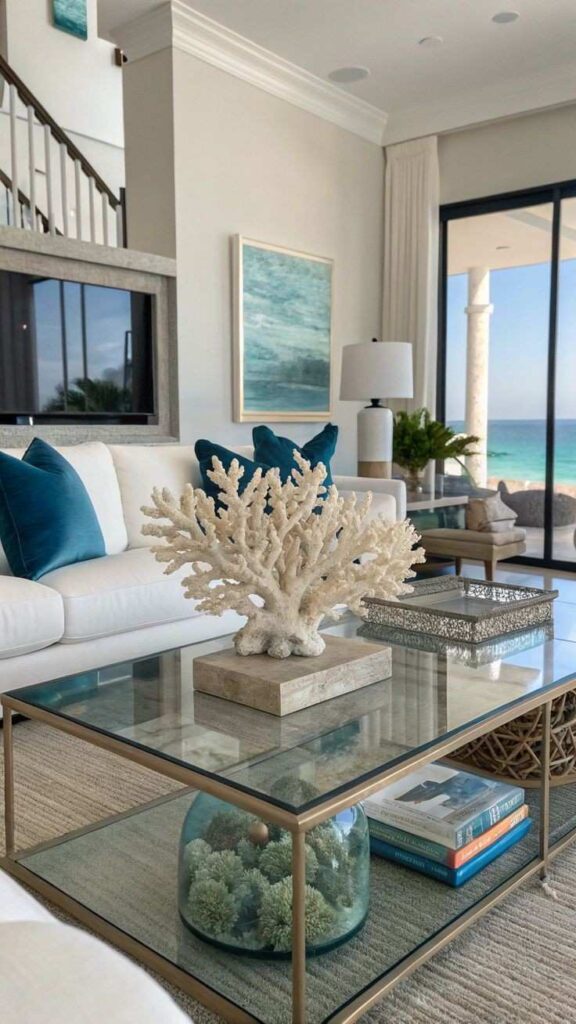
One thing coastal spaces do incredibly well is reflect natural light, and glass helps with that more than people realize.
A glass lamp base, side table, oversized vase, or even a subtle mirrored accent can make the room feel brighter and visually lighter.
Especially if your living room doesn’t get dream-level beach house sunlight, this trick helps fake some of that airy openness.
15. Try a Driftwood-Style Coffee Table
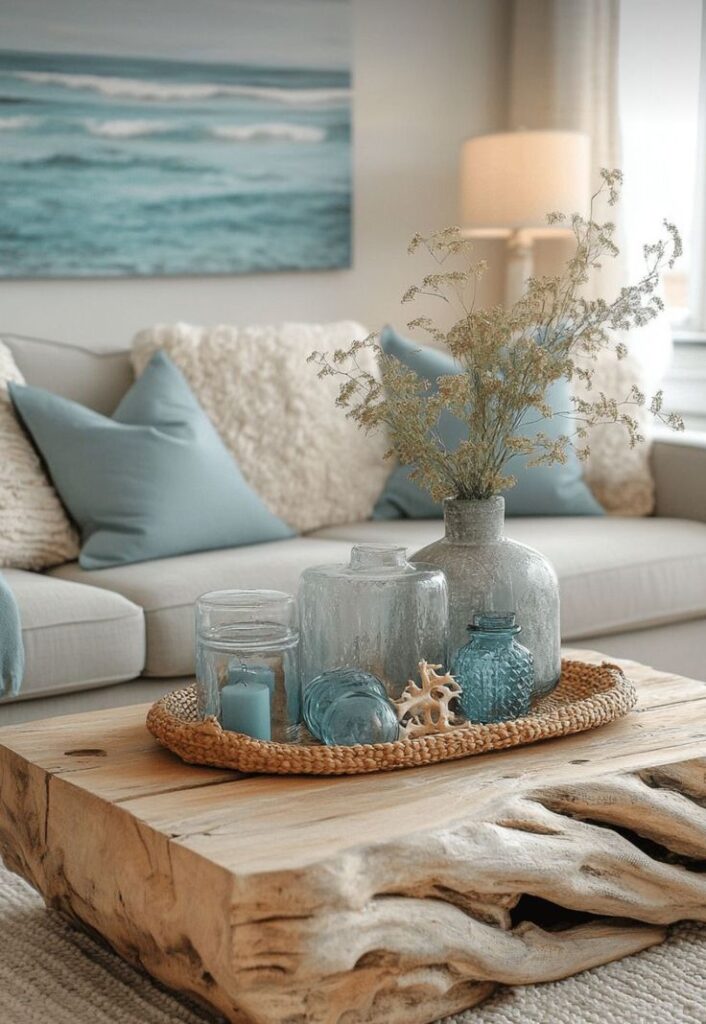
A polished modern coffee table can sometimes feel too sleek for the relaxed atmosphere that coastal design needs.
A driftwood-style piece instantly adds texture, character, and that slightly weathered look that makes the room feel more lived-in.
I’m imagining something imperfect in the best way, not distressed for the sake of it, but naturally textured enough to feel believable.
16. Add Woven Storage That Solves Real-Life Clutter
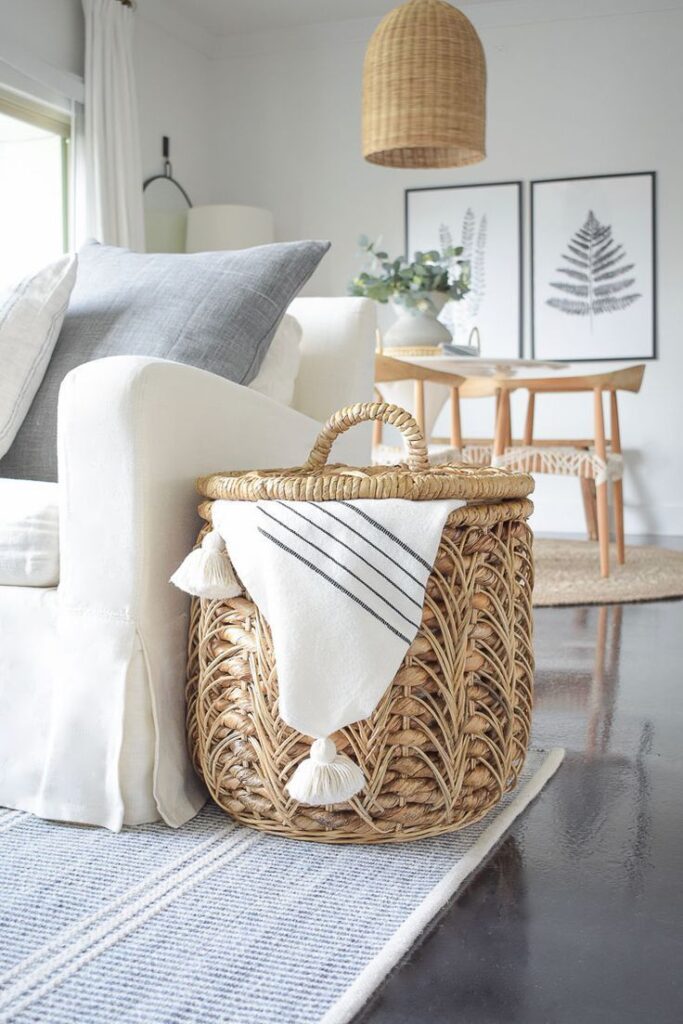
Blankets need somewhere to go.
So do remotes, random chargers, dog toys, and all the small things that somehow multiply in a living room.
Woven baskets fit seamlessly into coastal interiors because they solve the clutter issue while contributing to the aesthetic instead of interrupting it.
Functional decor is always more satisfying than decorative clutter.
17. Use a Large Ottoman
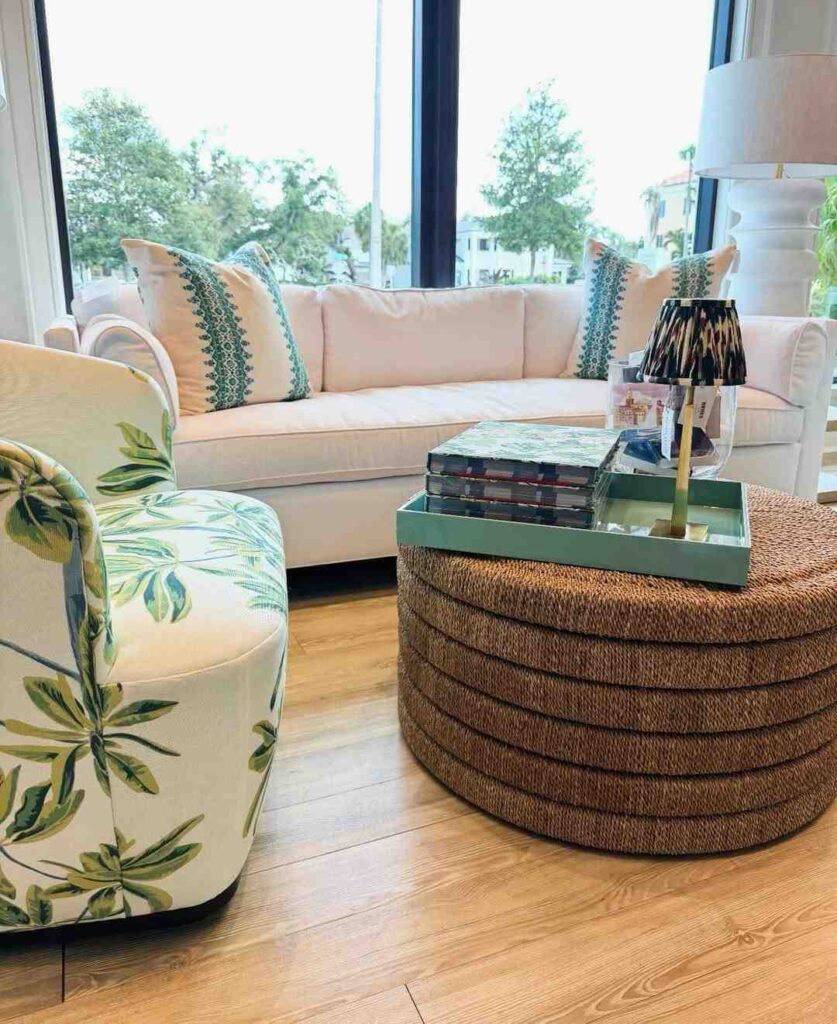
If your space feels too rigid, swapping the coffee table for an oversized upholstered ottoman changes the whole mood.
It immediately makes the room feel softer, more casual, and far more welcoming.
Add a tray for drinks or decor, and suddenly you have something beautiful that also doubles as extra seating when people come over. Coastal design works best when comfort is part of the layout.
18. Mix Stripes Carefully Instead of Turning the Room Nautical
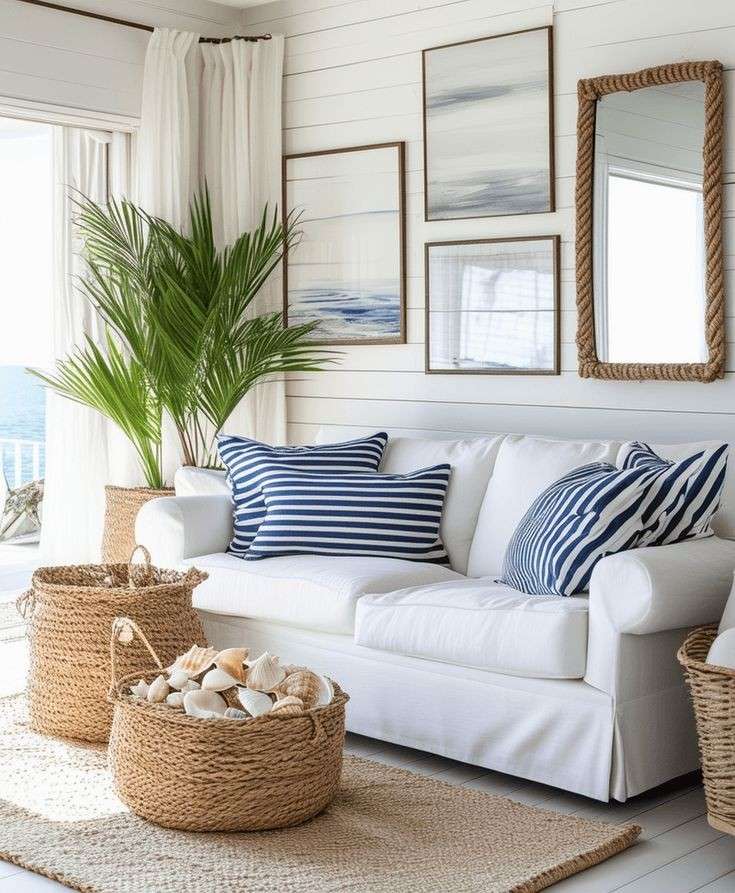
Yes, stripes absolutely belong in coastal interiors, but there’s a difference between tasteful and theme park.
A subtle striped pillow, upholstered accent chair, or woven throw can add just enough visual movement without making the room look like it belongs inside a seafood restaurant.
The key is restraint. Let stripes be part of the story, not the entire plot.
19. Add Architectural Details if the Room Feels Too Plain
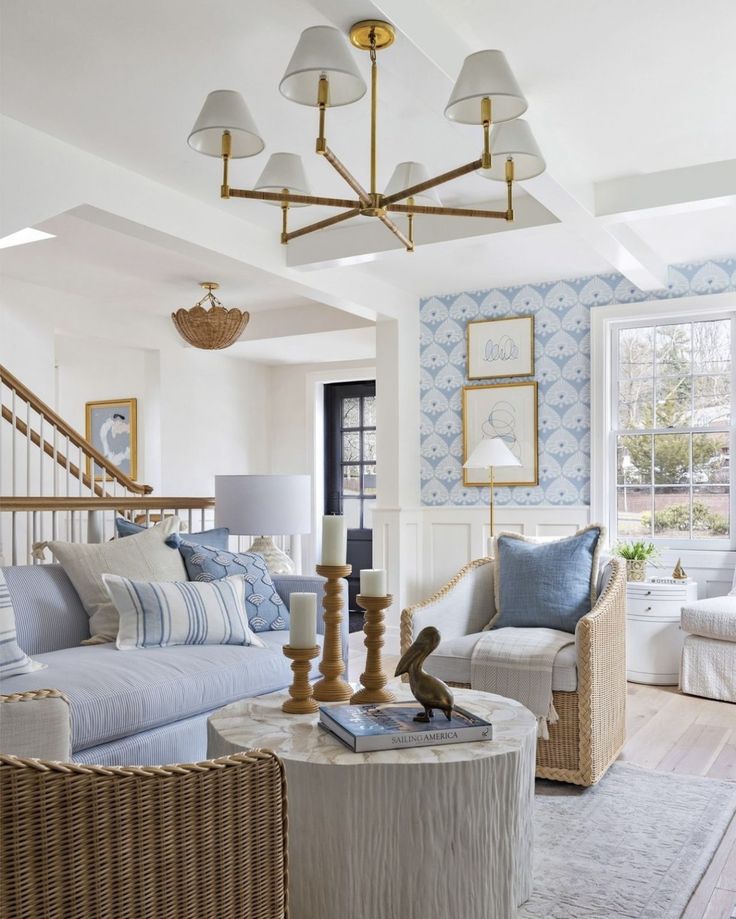
Sometimes the issue isn’t your furniture, it’s that the room itself feels forgettable.
Coastal interiors often look elevated because the architecture is doing part of the work, whether that’s subtle wall molding, board and batten, ceiling beams, or even simple trim upgrades.
Picture a soft neutral living room with textured walls, linen seating, and pale woods layered throughout.
Even basic furniture starts looking far more expensive when the room has character built in.
20. Keep the Color Palette Soft
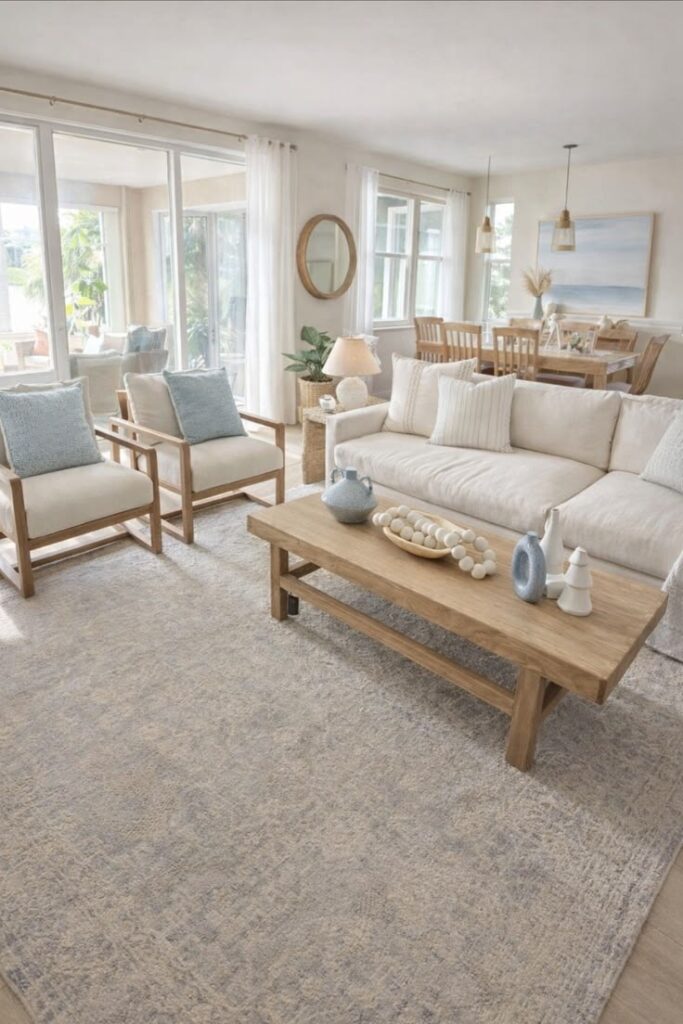
A strong coastal living room doesn’t rely on twenty different colors fighting for attention.
The most successful versions usually stick to a thoughtful palette: sandy beige, creamy whites, faded blues, weathered greens, maybe a touch of soft gray.
Imagine walking into a room where nothing visually shouts, but everything works together in a way that instantly makes your shoulders drop.
That kind of restraint is what makes coastal spaces feel so easy to be in.
21. Use Lamps Instead of Depending Only on Overhead Lighting
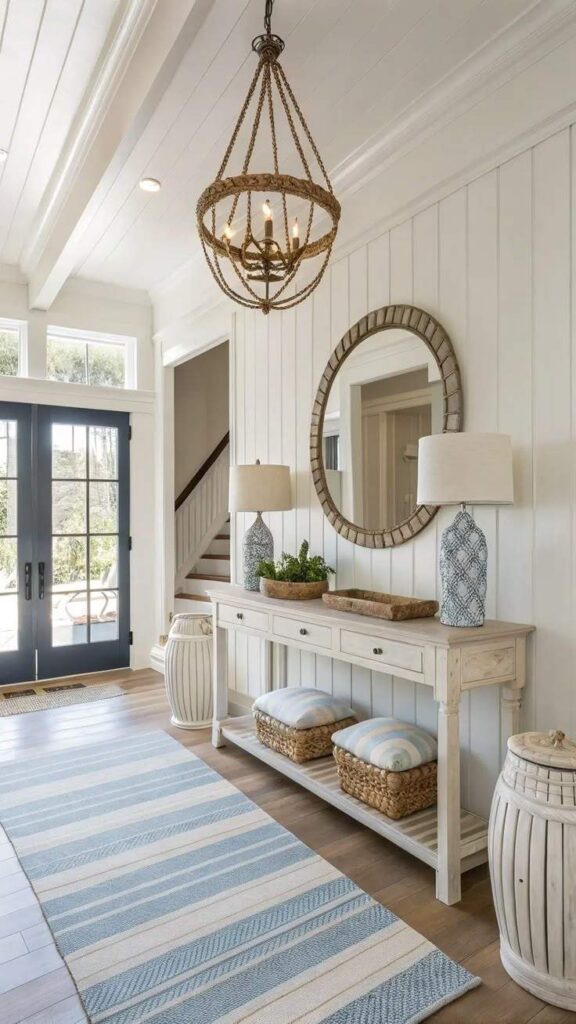
Overhead lighting alone can make even a well-designed room feel harsh and unfinished.
Coastal spaces tend to feel softer because the lighting is layered, table lamps in the corners, maybe a floor lamp near a reading chair, warm pools of light instead of one ceiling fixture blasting the whole room.
I’m always going to recommend this because it makes the room feel far more thoughtful at night, which is when you actually spend time in your living room.
22. Bring in Ceramic Decor That Feels Handmade
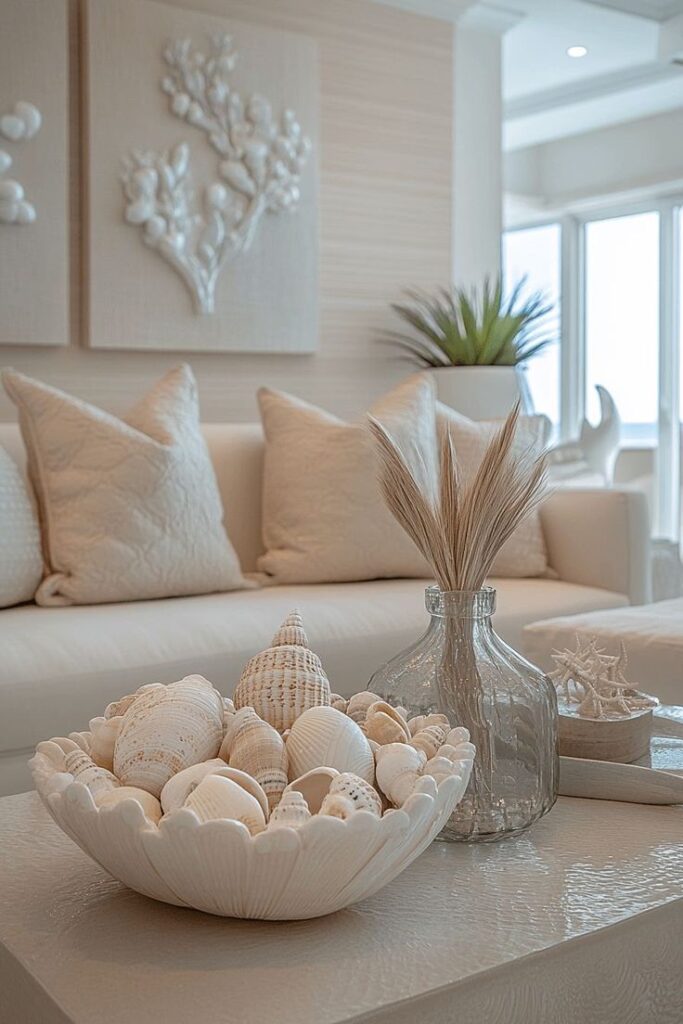
The quickest way to make coastal decor feel generic is to fill shelves with mass-produced filler objects that could belong in literally any style of home.
Handmade-looking ceramics bring in texture, shape, and that collected quality coastal spaces need.
Go for oversized matte vases, imperfect bowls, sculptural pieces with organic curves, items that feel chosen rather than purchased just to fill a gap.
23. Add Greenery That Feels Casual
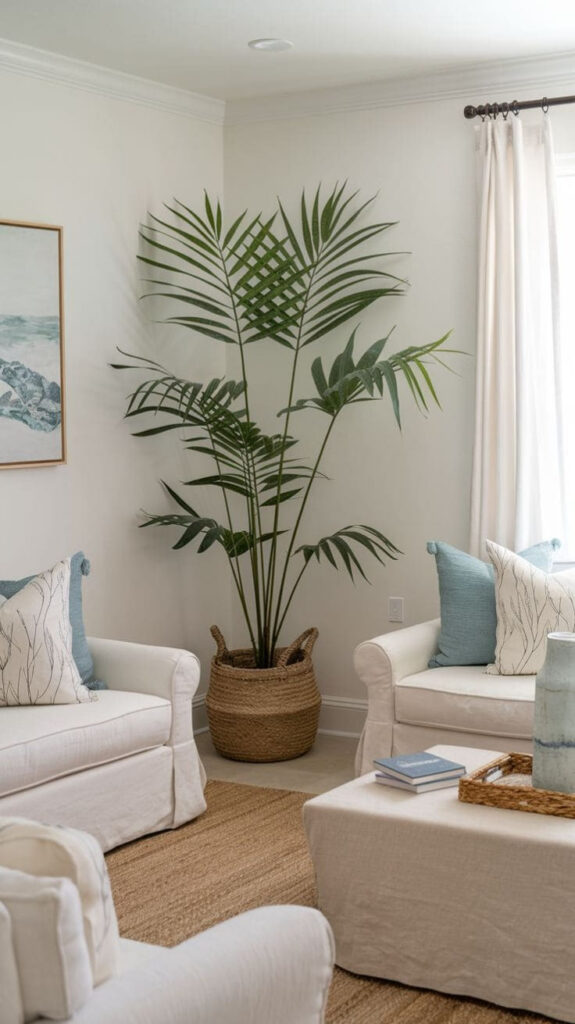
Not every coastal room needs giant tropical plants trying to make a dramatic statement.
Sometimes a few olive branches, airy stems in a ceramic vase, or simple greenery placed naturally around the room works far better.
If the greenery looks like it belongs there effortlessly, you’ve done it right.
24. Add a Bench Behind the Sofa in Open Layouts
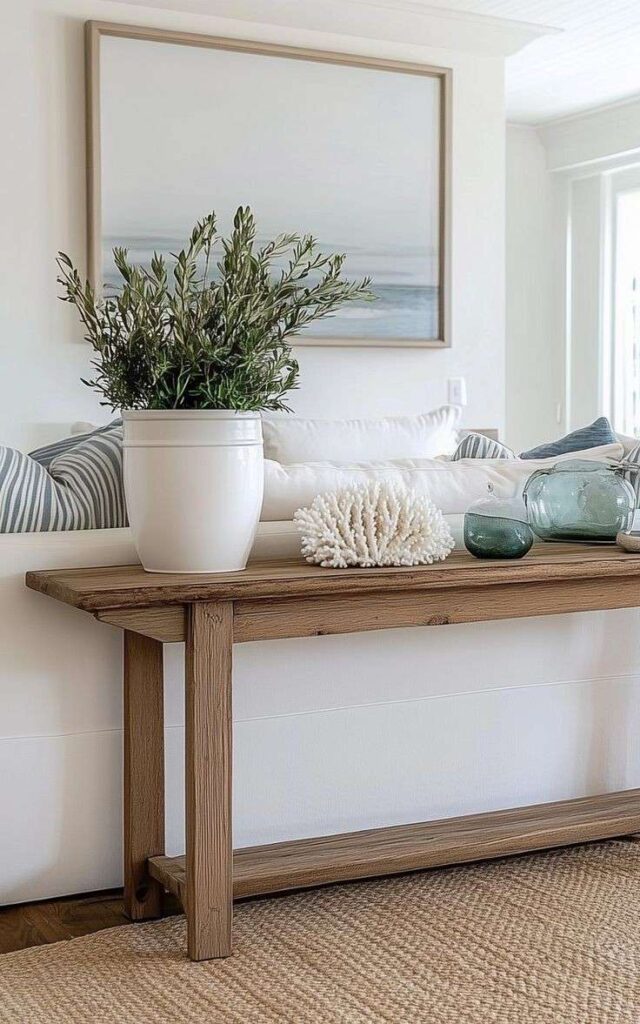
This is one of those designer moves that instantly makes a room feel more intentional.
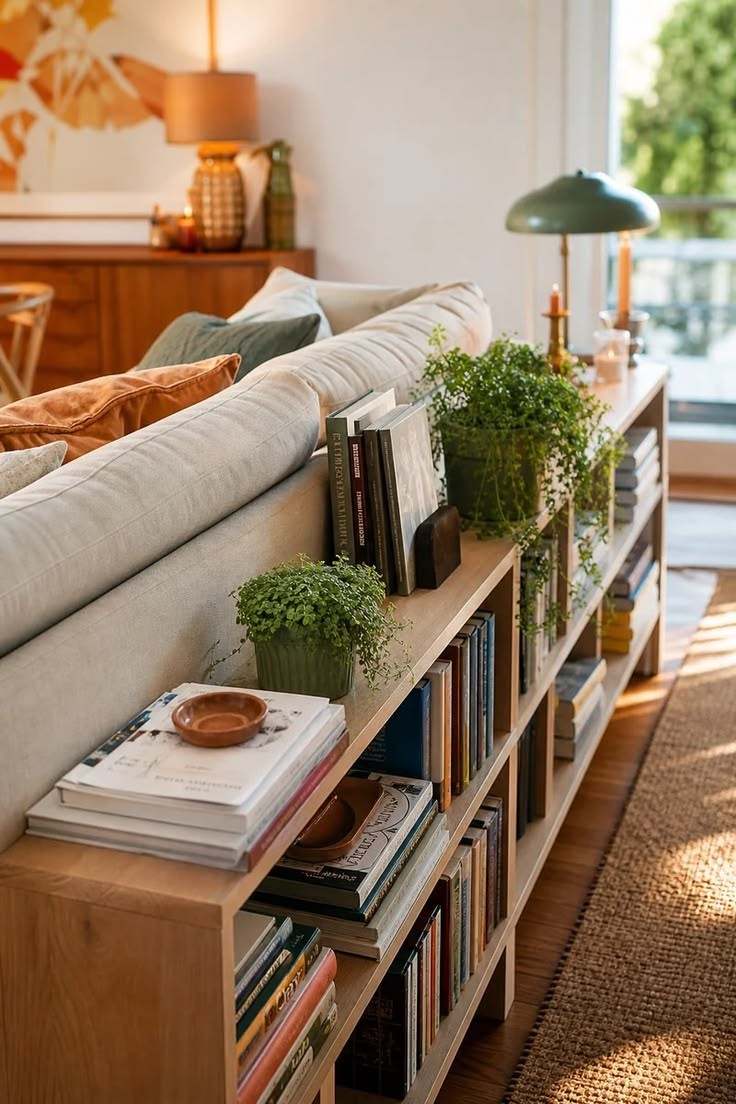
If your living room opens into another area, a bench behind the sofa helps define the space while adding another styling surface that doesn’t feel bulky.
Try a slim wood bench with a few books, a woven basket underneath, maybe a ceramic accent on one end.
25. Mix New Furniture With Pieces That Have Some History
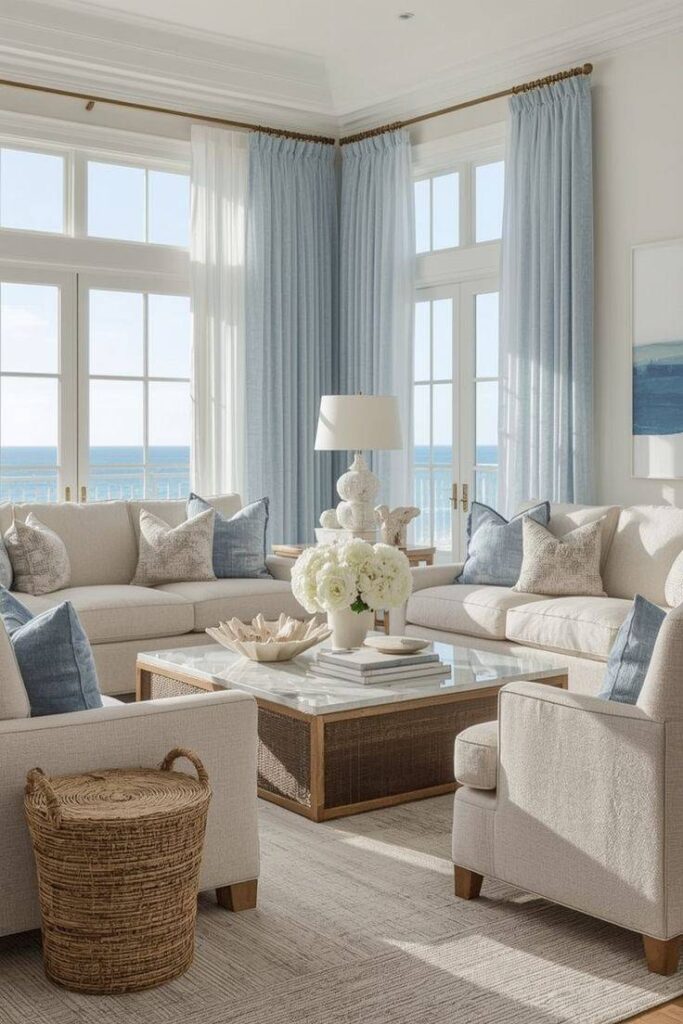
A room where every single item looks freshly delivered tends to feel flat, no matter how expensive the furniture is.
Coastal interiors feel strongest when they mix newer foundational pieces with something that looks collected, a weathered side table, an antique mirror, a vintage stool, or even a slightly imperfect wooden chest.
That contrast gives the room personality.
It feels like a home with a story instead of a showroom display.
26. Try the Coastal Grandmother Look if You Love Timeless Spaces
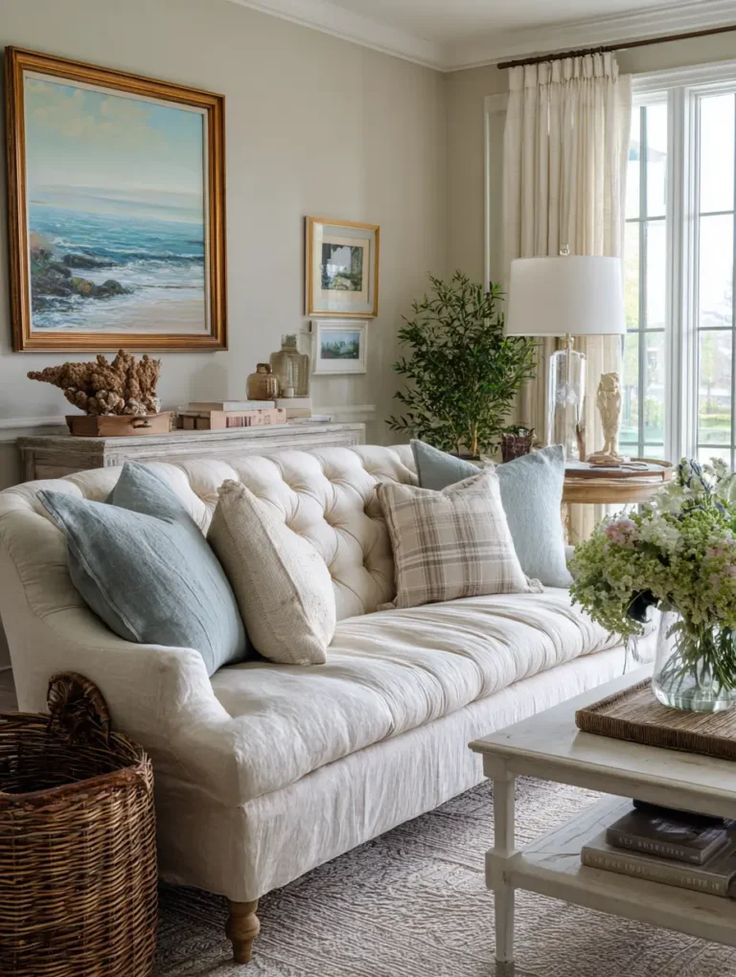
Yes, the name got internet-famous, but the design formula genuinely works.
Think slipcovered seating, books stacked casually, soft lamps instead of cold overhead lighting, woven textures, classic neutrals, and pieces that feel lived with rather than trendy.
I’m picturing the kind of room where you’d actually want to spend an entire rainy afternoon reading instead of a hyper-styled space you’re scared to touch.
If you love comfort with taste, this direction is a safe bet.
27. Use Round Shapes to Break Up Boxy Furniture Layouts
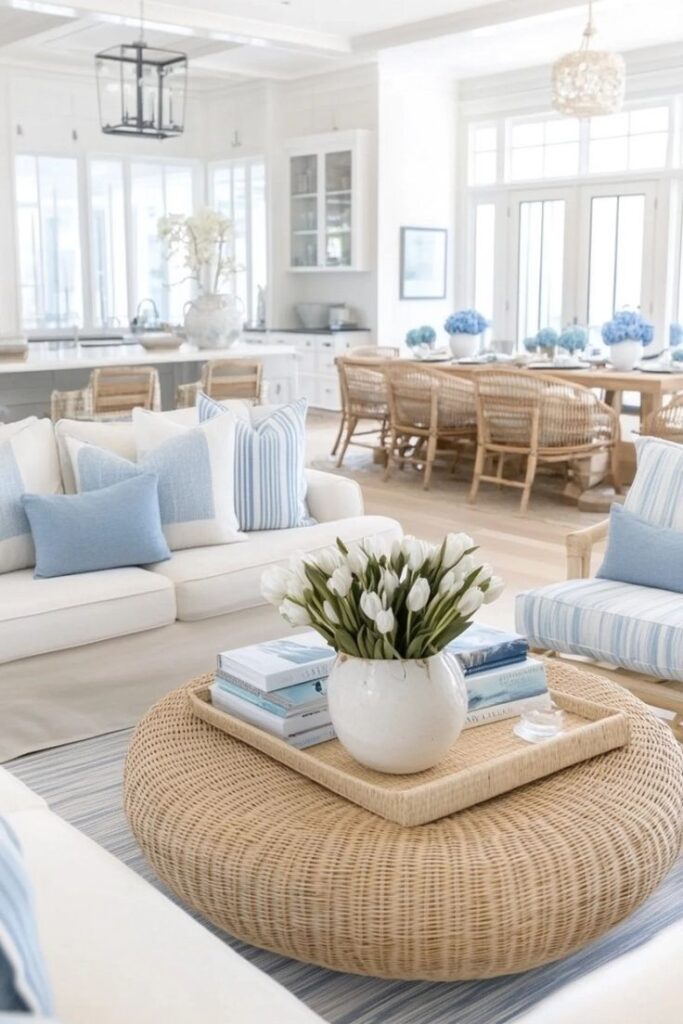
A lot of living rooms accidentally become a collection of rectangles, a rectangular sofa, a rectangular coffee table, a rectangular media unit, a rectangular rug.
That kind of repetition can make the room feel stiff fast.
Coastal spaces benefit from softer forms, whether that’s a round coffee table, curved accent chair, circular mirror, or even rounded ceramic decor.
Those shapes make the room feel more fluid and less visually rigid.
28. Keep the Mantel Simple
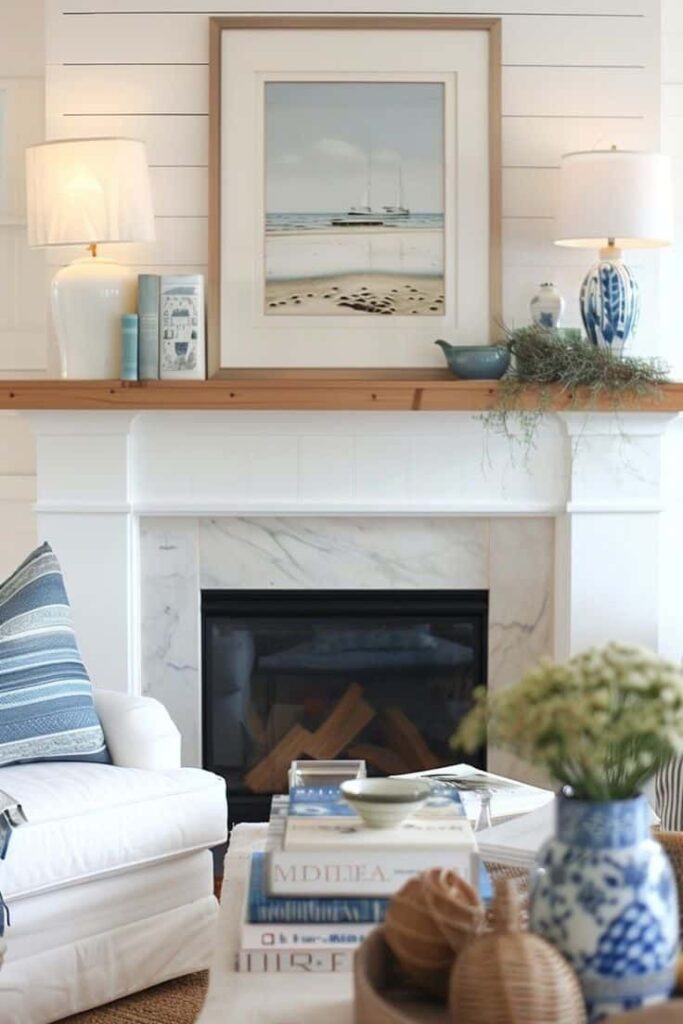
Mantels are one of the easiest places to overdecorate, especially in themed interiors.
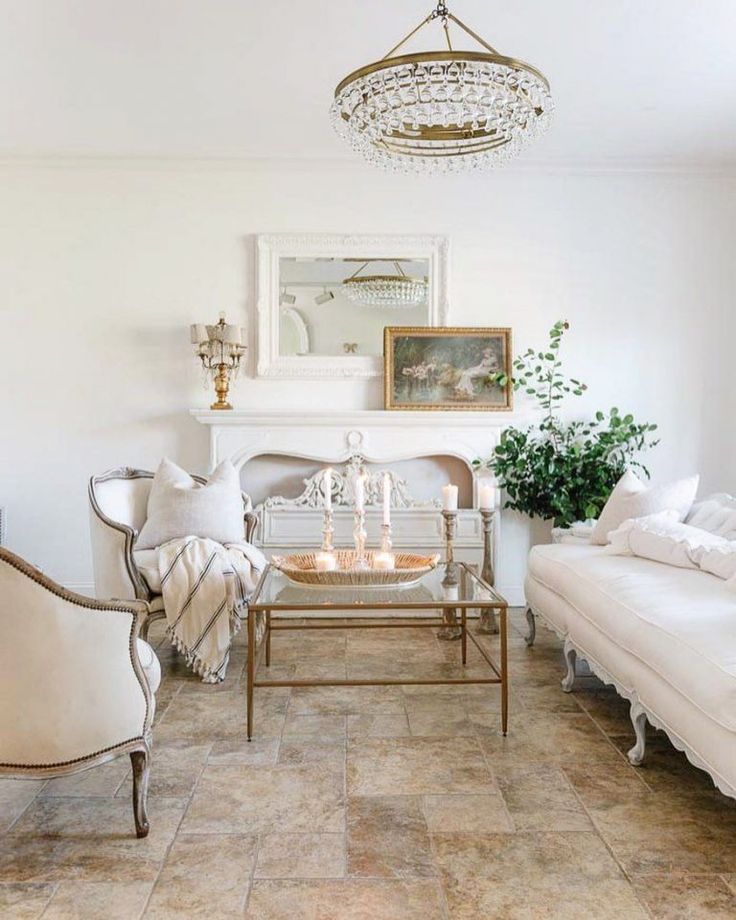
A coastal mantel usually looks far better when it’s edited, a large mirror, one sculptural piece, maybe candlesticks or a textured vase, and that’s it.
I’m always going to choose restraint here because clutter makes even beautiful decor feel less elevated. Let the bigger pieces breathe.
This post showed you the best Coastal Living Room Ideas.