15 Japandi Bedroom Ideas That Feel Calm and Effortlessly Beautiful
Discover the best Japandi bedroom ideas for creating a calm, cozy, and clutter-free retreat. These stunning Japandi bedrooms blend Scandinavian comfort with Japanese simplicity.
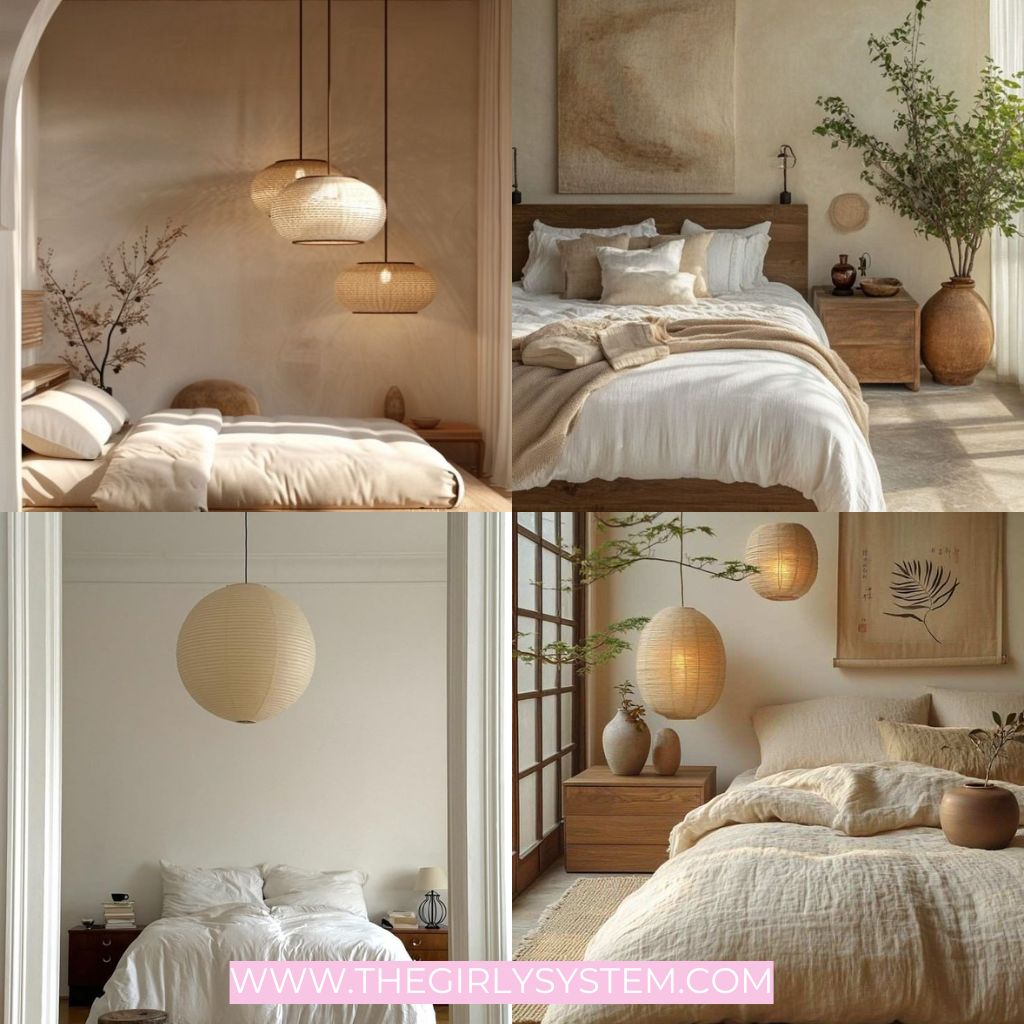
There’s a reason Japandi bedrooms keep showing up everywhere.
They offer something many modern bedrooms are missing: a sense of calm.
While most decorating trends encourage adding more, Japandi design takes a different approach. It focuses on thoughtful materials, clean lines, and pieces that serve a purpose. The result isn’t a bedroom that feels empty or stark. It feels warm, grounded, and incredibly inviting.
By blending Japanese simplicity with Scandinavian comfort, Japandi style creates spaces that feel effortless to live in. Natural wood, soft textures, muted colors, and design choices work together to create a bedroom that feels less like a place to store furniture and more like a true retreat.
Whether you’re planning a complete makeover or simply looking for inspiration, these Japandi bedroom ideas will help you create a space that feels peaceful, beautiful, and refreshingly uncluttered.
Japandi Bedroom Ideas
1. Choose a Low Platform Bed That Nearly Floats Above the Floor
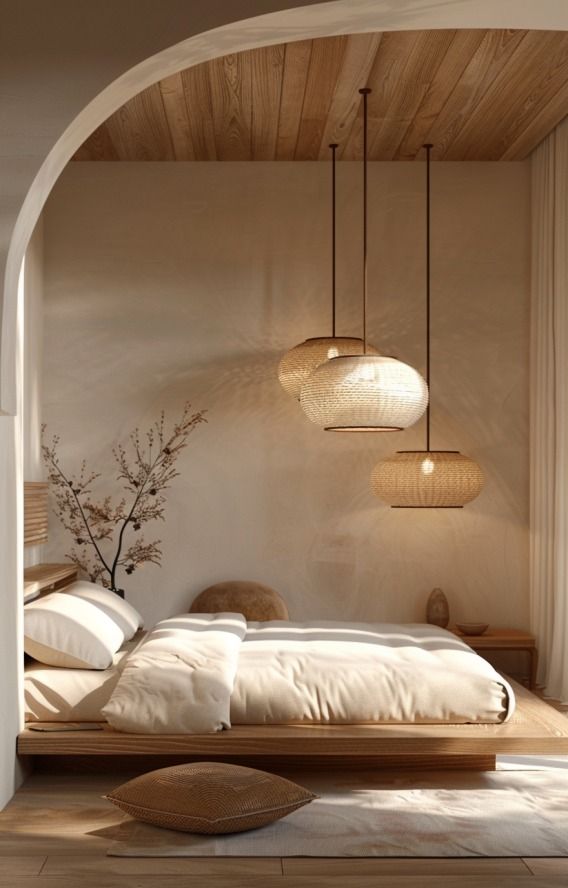
One of the easiest ways to instantly make a bedroom feel more Japandi is to lower the visual center of gravity.
Western bedrooms often prioritize tall bed frames, oversized headboards, and bulky furniture that dominates the room. Japandi design moves in the opposite direction. A low platform bed creates an entirely different relationship between the furniture and the architecture around it.
There’s also something psychologically grounding about sleeping closer to the floor. The room feels quieter and more connected to the natural materials surrounding it. Instead of demanding attention, the bed becomes part of the overall landscape of the room.
When paired with soft linen bedding and warm wood tones, a low platform bed creates the kind of understated luxury that feels impossible to date.
2. Create a Wood Slat Accent Wall Behind the Bed
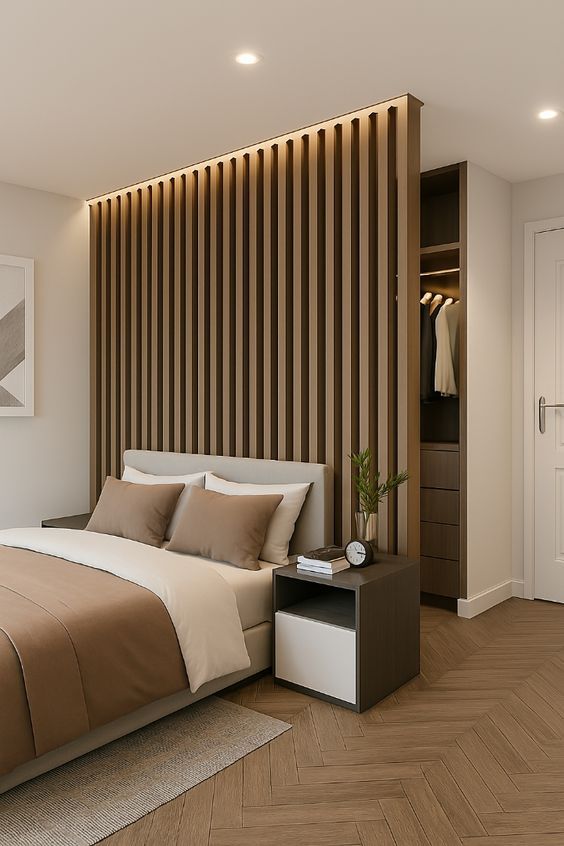
Feature walls often get a bad reputation because they’re frequently overdone. Bold paint colors, busy wallpaper, and trendy murals can quickly overwhelm a bedroom.
Wood slat walls are different.
They add architectural interest while still feeling restrained, which is exactly what Japandi design does best. Vertical slats introduce texture, rhythm, and depth without relying on color or pattern.
The effect becomes especially beautiful when morning light hits the wood and creates subtle shadows throughout the day.
A wood slat wall also helps anchor the bed without requiring a massive headboard. The wall itself becomes the focal point, allowing the rest of the room to remain calm and uncluttered.
3. Replace Traditional Nightstands With Floating Shelves
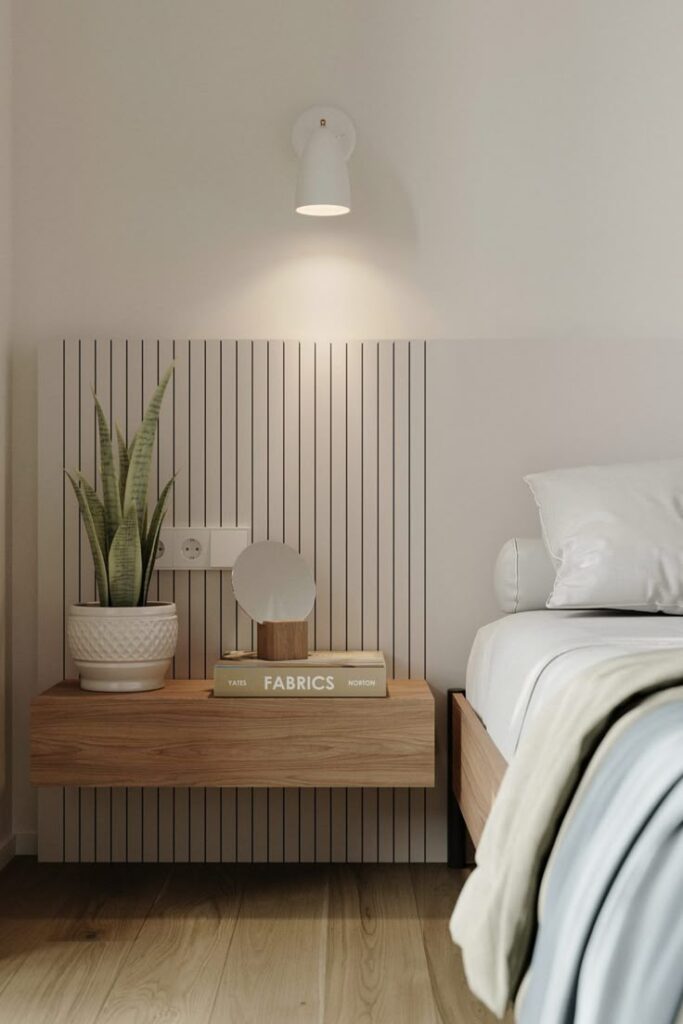
Many bedrooms are filled with furniture that’s there simply because that’s how bedrooms have always been arranged.
The classic nightstand falls into this category.
Floating shelves create a lighter, more architectural look while eliminating visual bulk around the bed. They provide enough space for a lamp, a book, and a glass of water without introducing another heavy piece of furniture into the room.
Suddenly, the floor becomes more visible. The room feels less crowded. Cleaning becomes easier. Even small bedrooms benefit from the illusion of additional space.
Sometimes removing furniture creates a stronger design statement than adding it.
4. Try a Tonal Color Palette From Floor to Ceiling
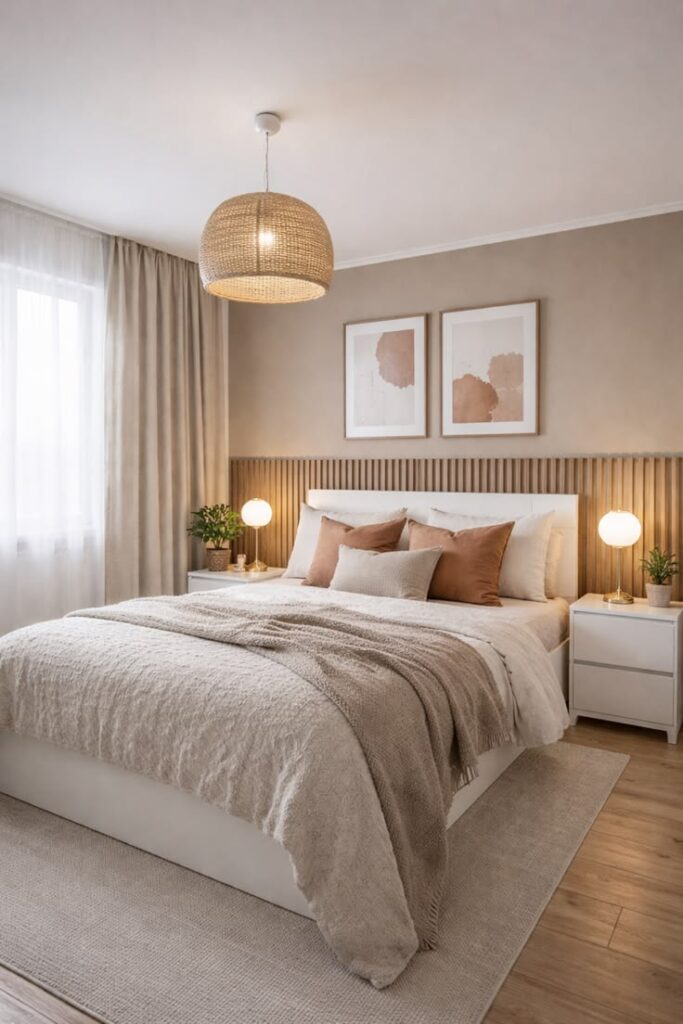
Many homeowners believe contrast is what makes a room interesting.
Japandi bedrooms prove otherwise.
Tonal spaces create visual quiet because the eye isn’t constantly jumping between competing colors.
This approach also highlights texture, craftsmanship, and natural materials more effectively. Instead of noticing paint colors, you begin noticing how sunlight moves across linen or how wood grain adds character to the room.
The atmosphere feels seamless, which is exactly why these bedrooms photograph so beautifully and feel even better in person.
5. Use Paper Lantern Lighting Instead of Statement Chandeliers
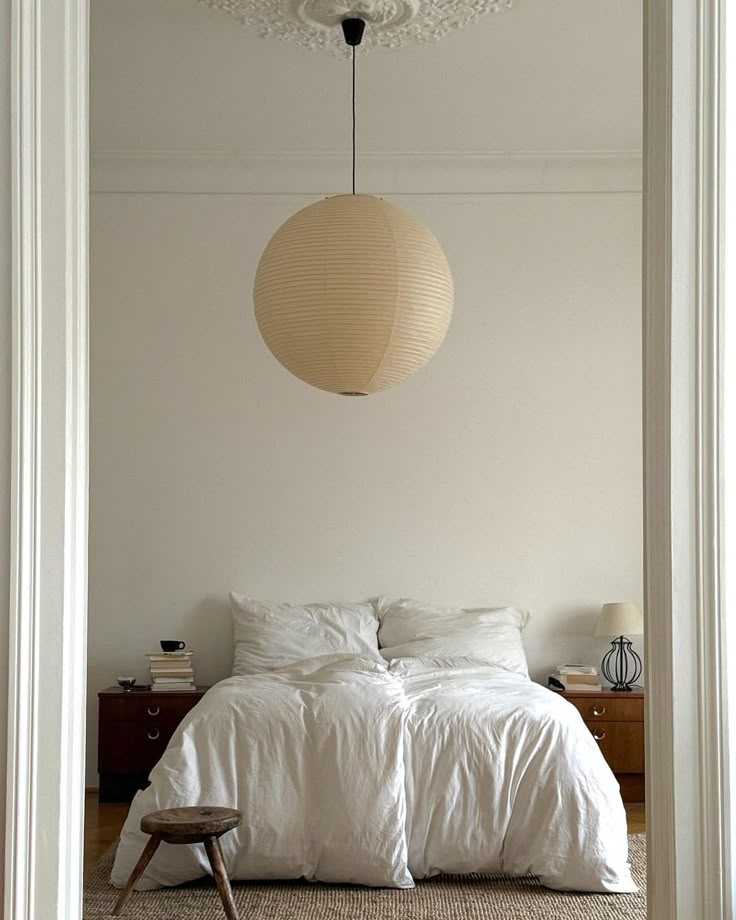
There’s something refreshing about lighting that doesn’t try to steal the show.
Paper lantern pendants have become one of the most recognizable elements of Japandi interiors because they create softness in a way few fixtures can.
Unlike crystal chandeliers or sculptural statement lighting, paper lanterns diffuse light gently throughout the room. The glow feels warm, even, and calming.
During the day, they appear almost sculptural against neutral walls. At night, they transform the mood entirely.
It’s proof that dramatic design doesn’t always need dramatic materials.
6. Layer Multiple Shades of Beige Instead of Adding Bold Color
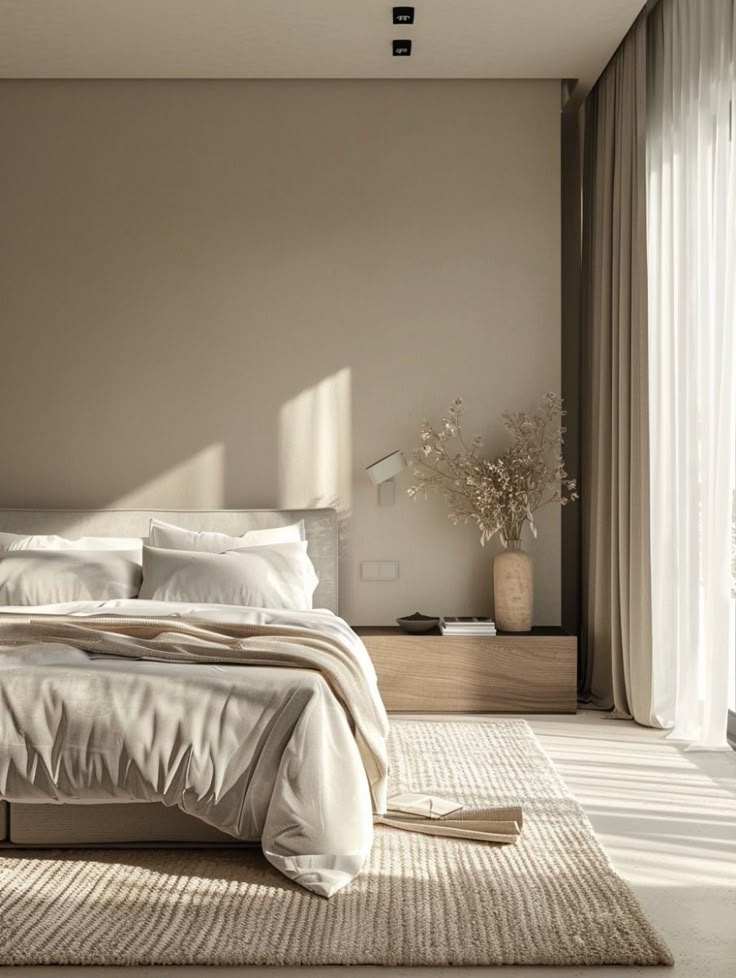
People often assume neutral bedrooms lack personality.
Usually, they’re looking at the wrong neutral bedrooms.
A successful Japandi space rarely relies on one shade of beige. Instead, it layers dozens of subtle variations, sand, stone, mushroom, oat, flax, ivory, clay, and taupe.
These shifts may seem minor individually, but together they create incredible depth.
It’s similar to the way nature works. A beach isn’t one color. A desert isn’t one color. Natural landscapes feel beautiful because they contain endless tonal variation.
Japandi bedrooms borrow this same principle.
7. Skip the Headboard Entirely
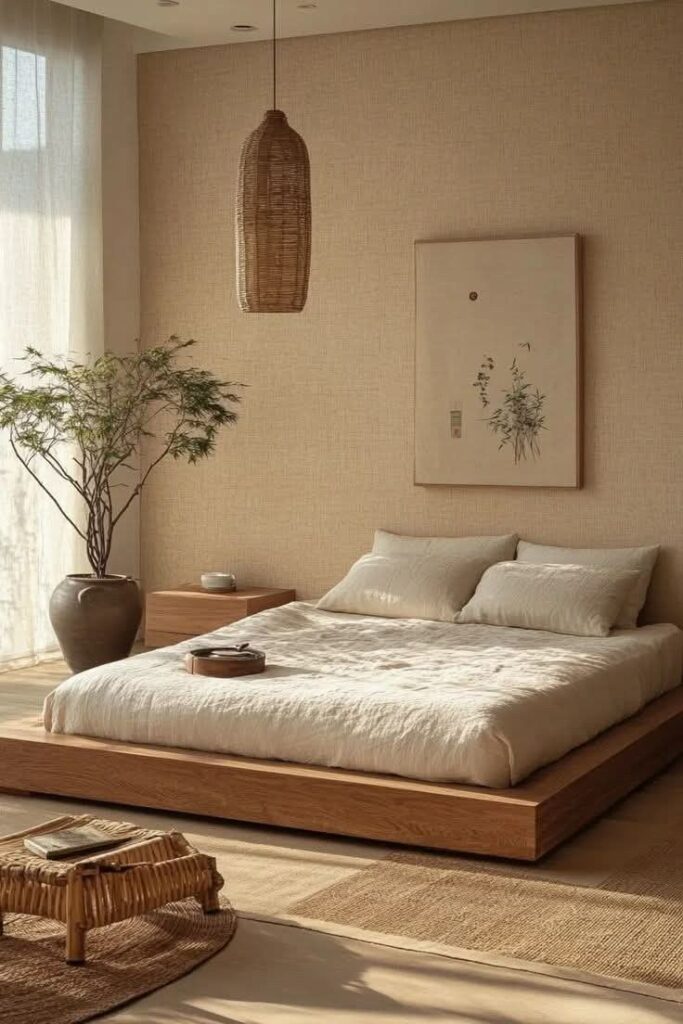
Headboards have become bigger and bigger over the years, often becoming the dominant feature in a bedroom.
Japandi style questions whether they’re necessary at all.
Removing the headboard creates a cleaner silhouette and allows architectural details to take center stage. Perhaps the focus shifts to a wood slat wall, textured plaster finish, or a beautiful piece of oversized artwork.
The room immediately feels less formal.
There’s also something refreshingly confident about choosing restraint when everyone else is choosing more. A bedroom doesn’t need oversized furniture to feel complete.
Sometimes the absence of something becomes the most interesting design decision in the room.
8. Add Floor Cushions for a Japanese-Inspired Reading Corner
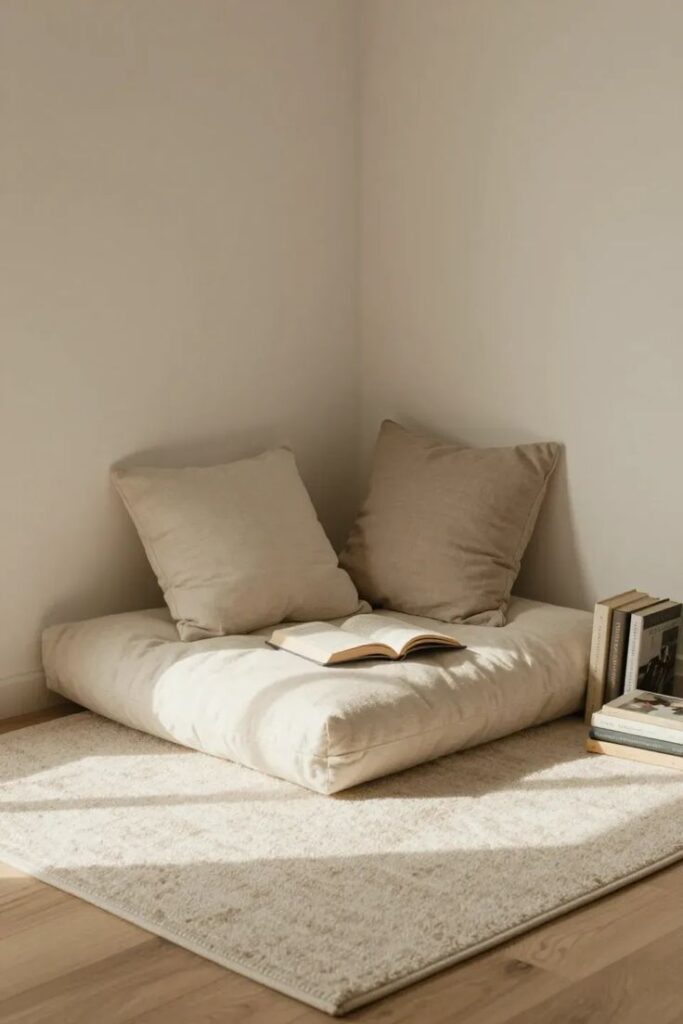
Most bedrooms have awkward corners that never quite find a purpose.
Instead of filling them with decorative furniture, consider creating a floor-level seating area.
Large linen floor cushions, a small side table, and soft lighting can transform an unused corner into a peaceful reading retreat. The setup feels relaxed, informal, and distinctly inspired by traditional Japanese interiors.
The space becomes somewhere you drink tea, journal, read, or simply sit without scrolling your phone.
Not every corner needs to be optimized for productivity. Some deserve to exist purely for enjoyment.
9. Style a Single Oversized Branch Like Sculpture
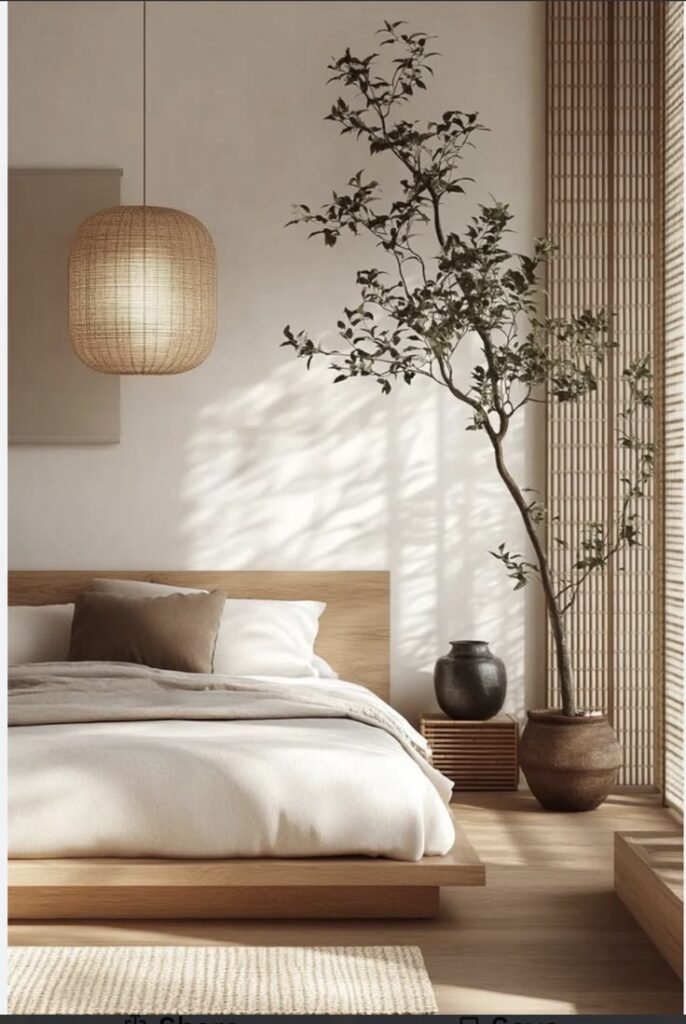
Many people bring nature indoors by purchasing more plants.
Japandi interiors often take a more artistic approach.
A single flowering branch, olive branch, or sculptural stem displayed in a ceramic vessel creates a remarkable impact. Because there’s only one arrangement, your attention naturally focuses on its shape and movement.
Instead of decorating with greenery, you’re highlighting nature as art.
10. Incorporate Shoji-Inspired Screens
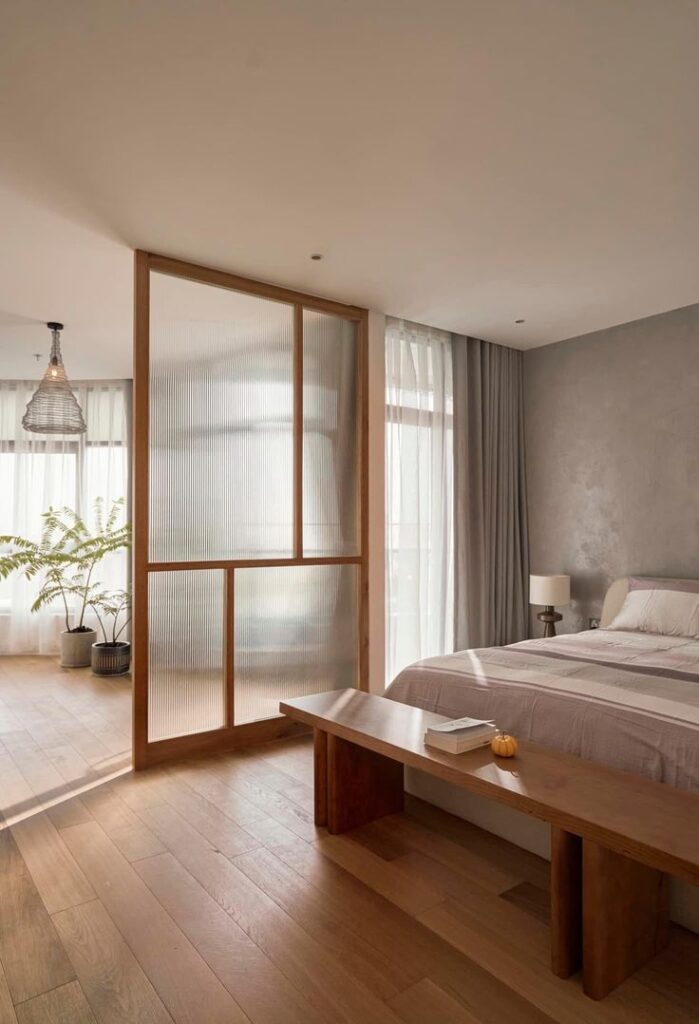
Shoji screens have influenced interior design for centuries, and for good reason.
They soften spaces without fully dividing them.
In a bedroom, a shoji-inspired screen can conceal a dressing area, define a reading nook, or simply add architectural character to an otherwise plain wall.
What makes them so appealing is their balance between openness and privacy.
They filter rather than block. Suggest rather than conceal.
11. Let Linen Bedding Stay Slightly Wrinkled
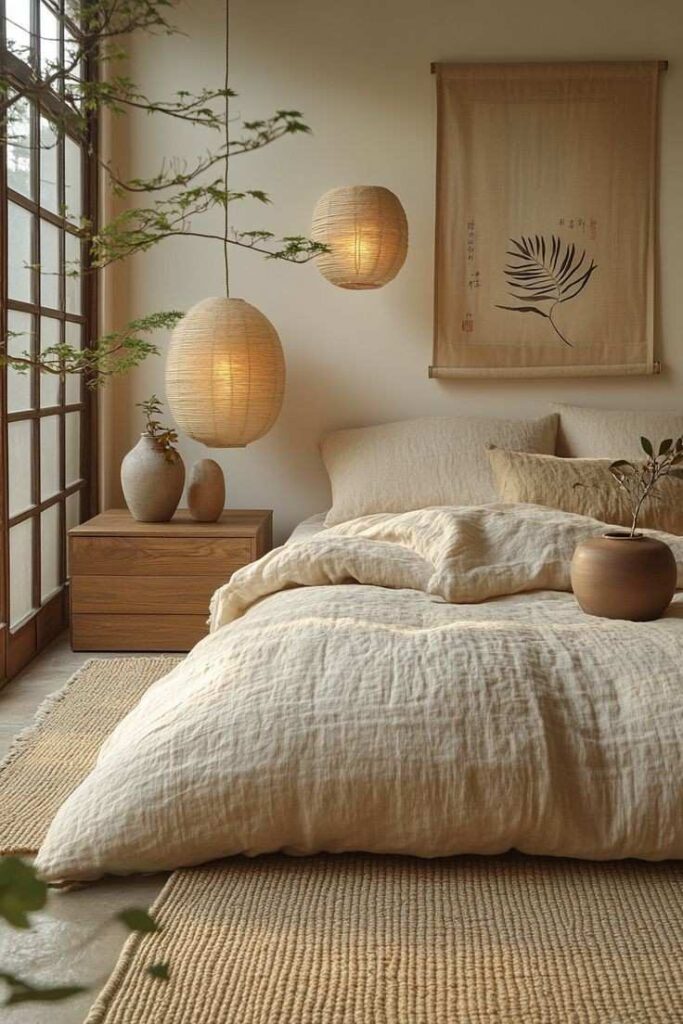
Perfectly pressed bedding often feels more appropriate for a hotel than a home.
Japandi bedrooms embrace a different kind of beauty.
Natural linen develops softness, texture, and character over time. The gentle wrinkles aren’t flaws. They’re evidence that the room is actually being lived in.
This philosophy aligns closely with Japanese design principles that celebrate imperfection rather than hide it.
A bedroom should never feel too precious to enjoy.
12. Mix Black Accents Into an Otherwise Soft Room
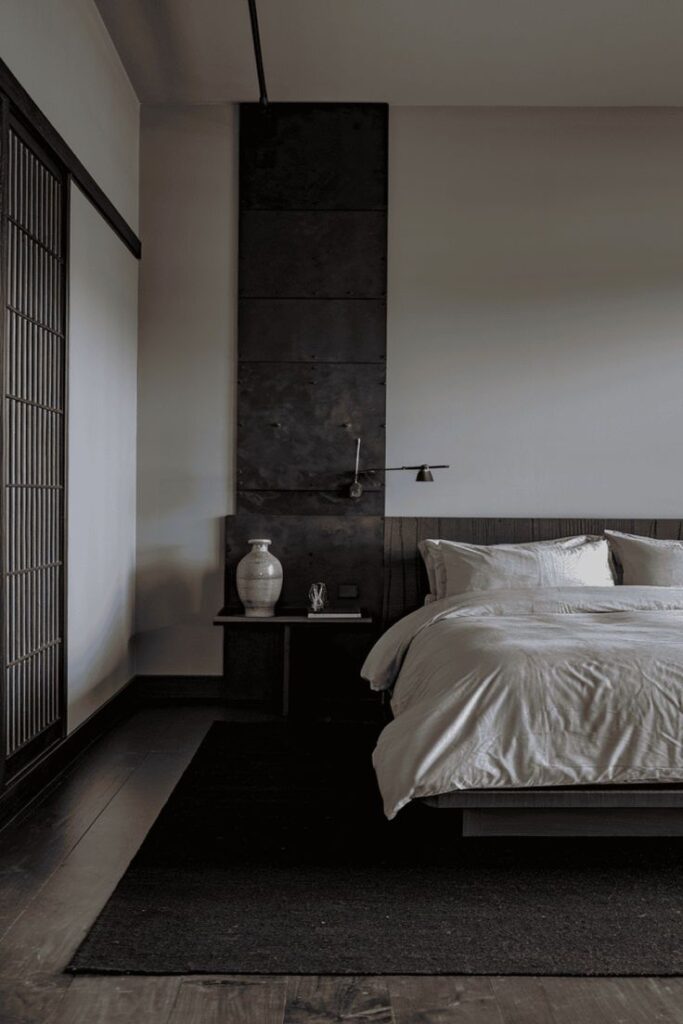
A common mistake in neutral bedrooms is making everything blend together.
Without contrast, the room can lose definition.
A few carefully placed black accents, a lamp, picture frame, chair, or pendant light, provide visual structure. They create moments of punctuation within an otherwise soft palette.
Think of black as the outline that helps everything else come into focus.
13. Choose Wall-Mounted Lighting Beside the Bed
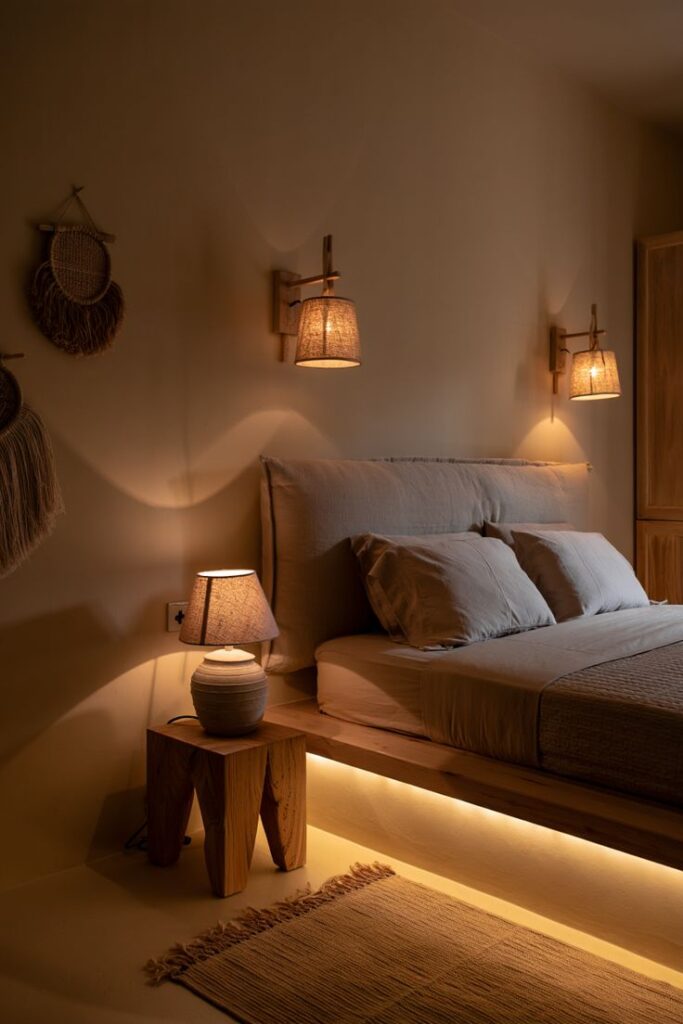
Table lamps consume more visual space than people realize.
Wall-mounted sconces free up surfaces while creating a cleaner look around the bed. They also reinforce one of the core principles of Japandi design: making every element work harder.
As a bonus, wall-mounted lighting often creates a boutique hotel atmosphere that’s difficult to achieve with traditional bedside lamps.
14. Hang One Oversized Piece of Minimal Artwork
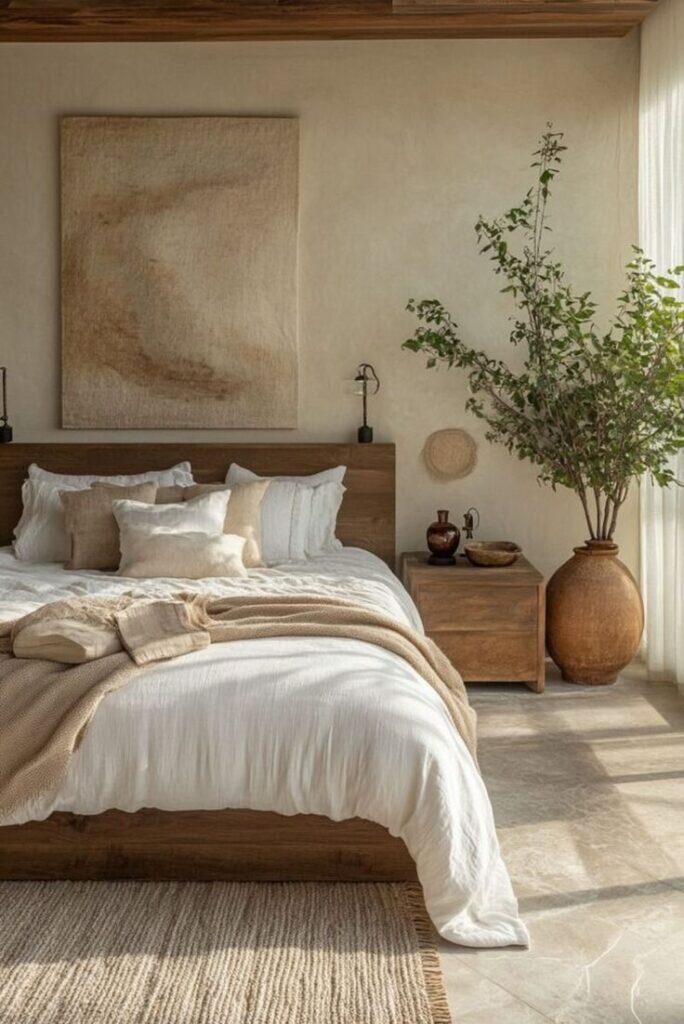
Gallery walls have dominated decorating trends for years, but they often work against the quiet atmosphere that Japandi design is trying to create.
Instead of filling an entire wall with frames, consider choosing one oversized piece that has room to breathe.
The artwork doesn’t need to be complicated. In fact, the simpler it is, the better. Abstract brushstrokes, minimalist landscapes, line drawings, and monochromatic pieces tend to work beautifully because they contribute to the room’s atmosphere without overwhelming it.
Rather than scattering attention around the room, it gives the eye a single destination.
The result feels curated rather than decorated. And there’s a meaningful difference between those two things.
15. Use a Natural Fiber Rug That Almost Disappears
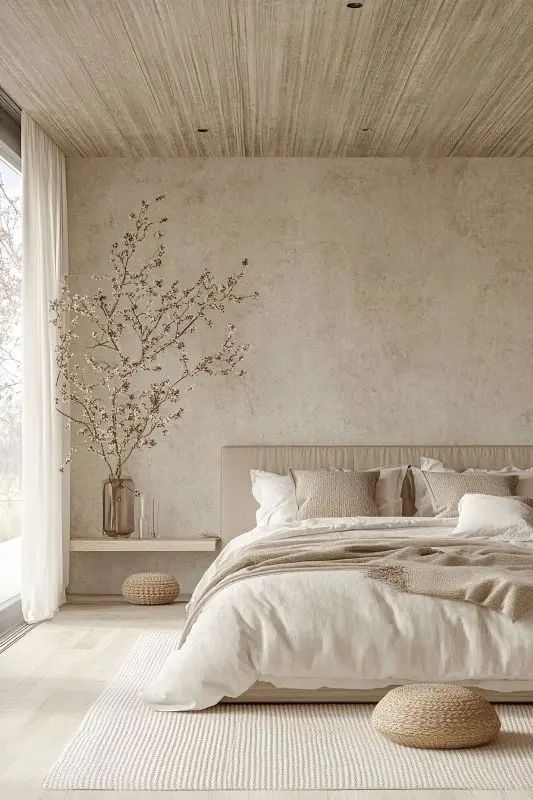
Most people think rugs are supposed to stand out.
Japandi bedrooms often prove the opposite.
A large jute, wool, sisal, or woven natural fiber rug can define the room while remaining visually quiet. Instead of becoming the focal point, it creates a subtle foundation that allows furniture, light, and materials to shine.
This is one of the reasons Japandi interiors feel so peaceful. Every element isn’t fighting for attention.
Japandi interiors take a more selective approach.
This post showed you the best Japandi Bedroom Ideas.