22 Rectangle Body Shape Outfits That Make the Most of Your Silhouette
Forget the usual body-shape rules. Rectangle body shape outfits can be about proportion, personal style, and knowing which silhouettes feel right to you.
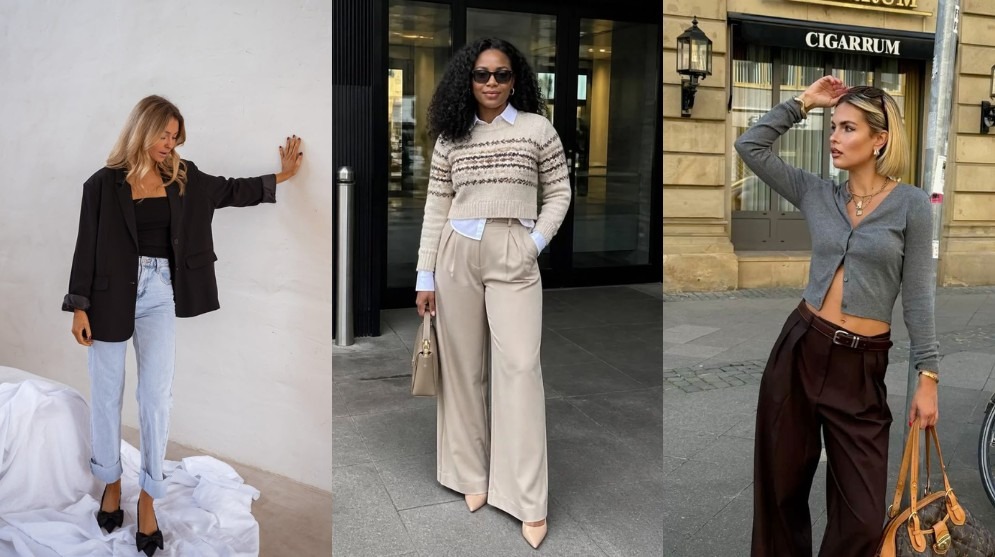
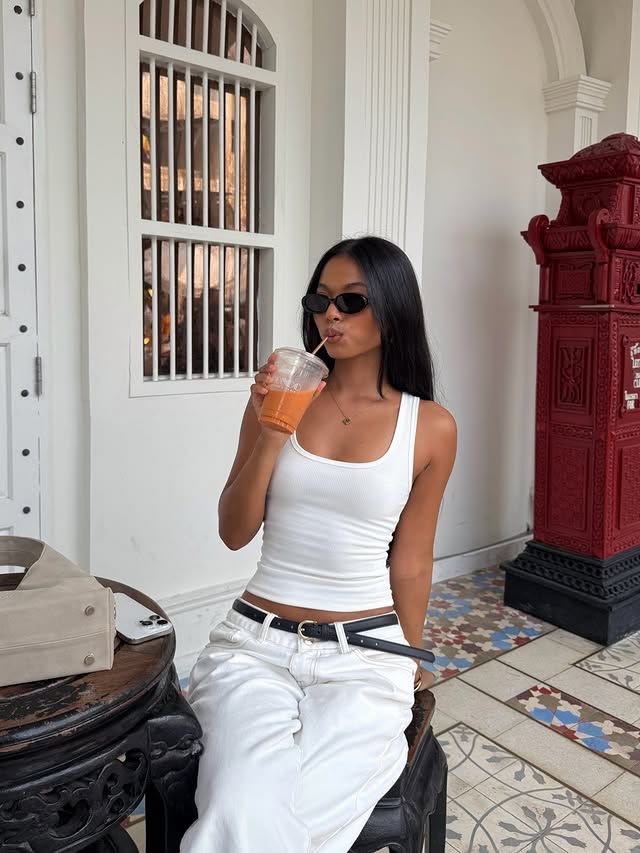
I’ve never been convinced that dressing for a rectangle body shape should mean reaching for a belt every time you get dressed.
The advice around rectangle body shapes can get strangely repetitive. Make the waist look smaller, create the illusion of curves, add definition here, and take volume away there. It can make getting dressed feel more like correcting your proportions than figuring out what actually looks good on you.
A more useful approach is to see what happens when different proportions meet. A sharper shoulder, a fuller skirt, a longer line, or a little more structure can completely change the way an outfit reads. Some days call for definition, others work better when the silhouette is left alone. Ahead, the most interesting outfit combinations put those possibilities to work.
Rectangle Body Shape Outfits
1. Fitted Knit + Wide-Leg Trousers
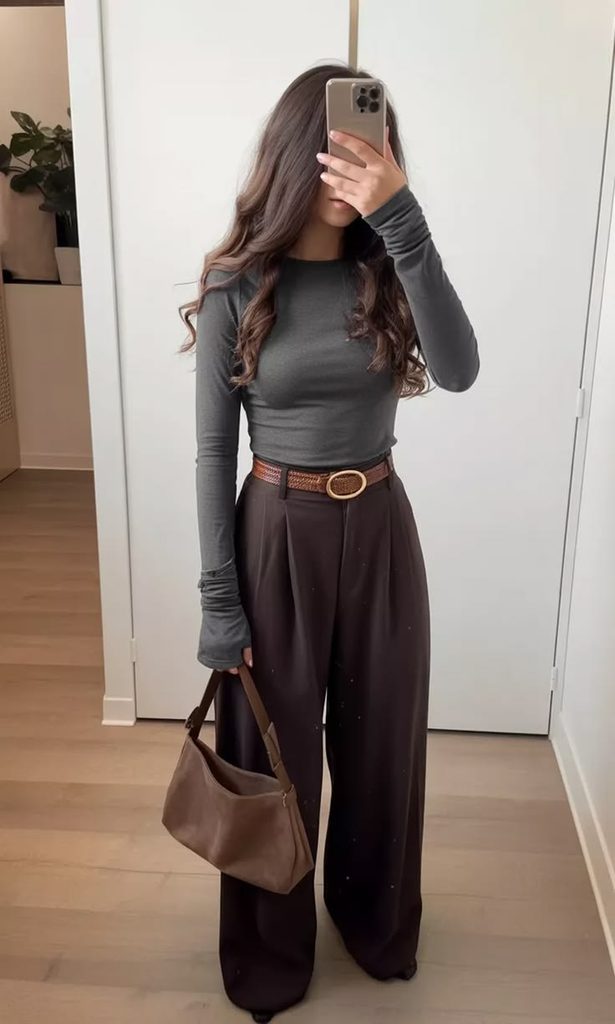
This is the outfit I’d reach for when I want my waist to have a little more presence without making the entire look feel cinched. Keep the knit close to the body and tuck it properly into high-rise trousers, the contrast with a generous trouser leg does more than a skinny belt ever could.
One thing I’d avoid: a long, loose sweater over the same trousers. It removes the point where the proportions change, and suddenly the whole outfit is just fabric.
2. Cropped Jacket + Straight-Leg Jeans
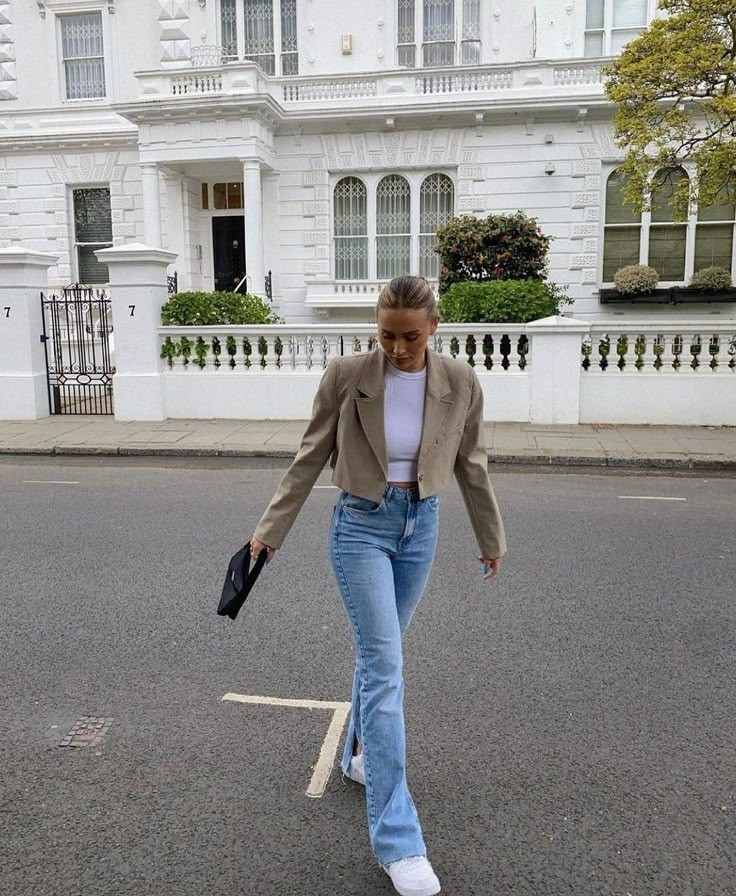
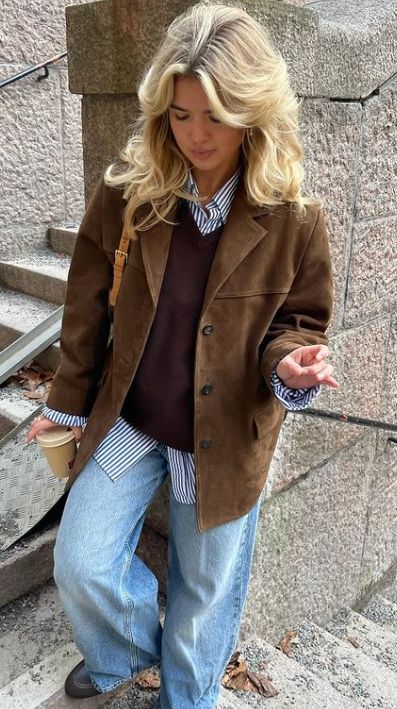
Here’s where jacket length matters more than people think. A jacket that stops around the waist gives straight-leg jeans a starting point, so you get definition without having to tuck, belt, or otherwise fuss with the outfit.
I’d wear it open over a fitted top, buttoning everything up can make the middle feel visually heavy.
3. Belted Midi Dress + Knee-High Boots
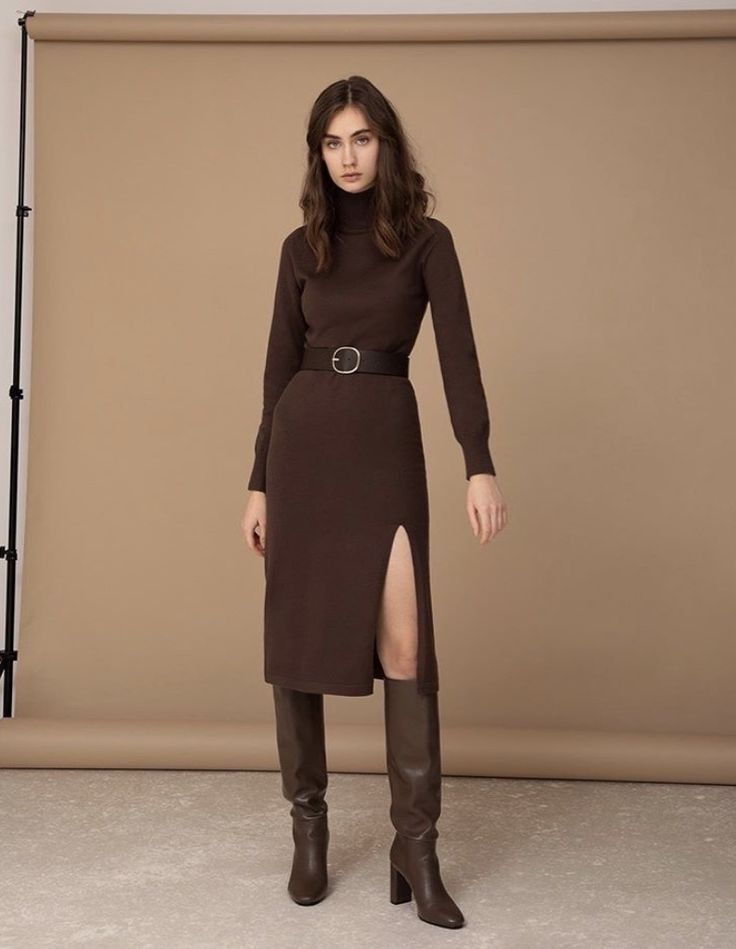
If you like wearing a belt, make it look like part of the dress rather than an accessory you added at the last minute. A midi with some shape through the skirt gives the belt somewhere to lead into, while tall boots keep that line going instead of chopping the outfit at the ankle.
My preference: a belt in the same color family as the dress when you want the waist to feel subtle, and a contrast belt when you actually want it to be the focal point.
4. Column Dress + Structured Bag
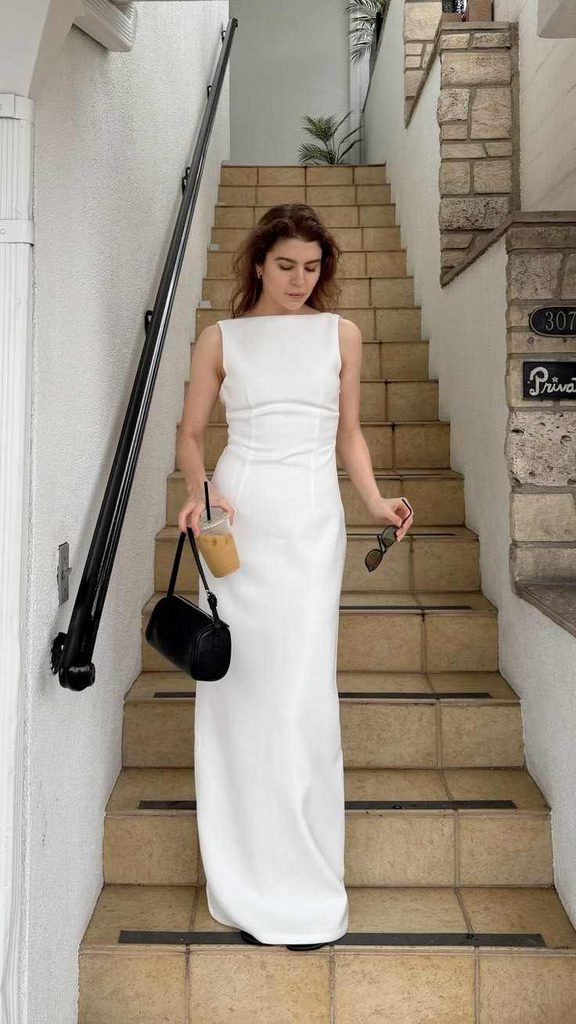
Not every rectangle body shape outfit needs visible waist definition. A long column dress can actually look more deliberate when the silhouette remains straight from shoulder to hem.
I’d add structure through the accessories instead, a firm bag, substantial earrings, or a sharp shoe, so the outfit has shape without forcing the dress into a different silhouette.
5. Peplum Top + Straight Jeans
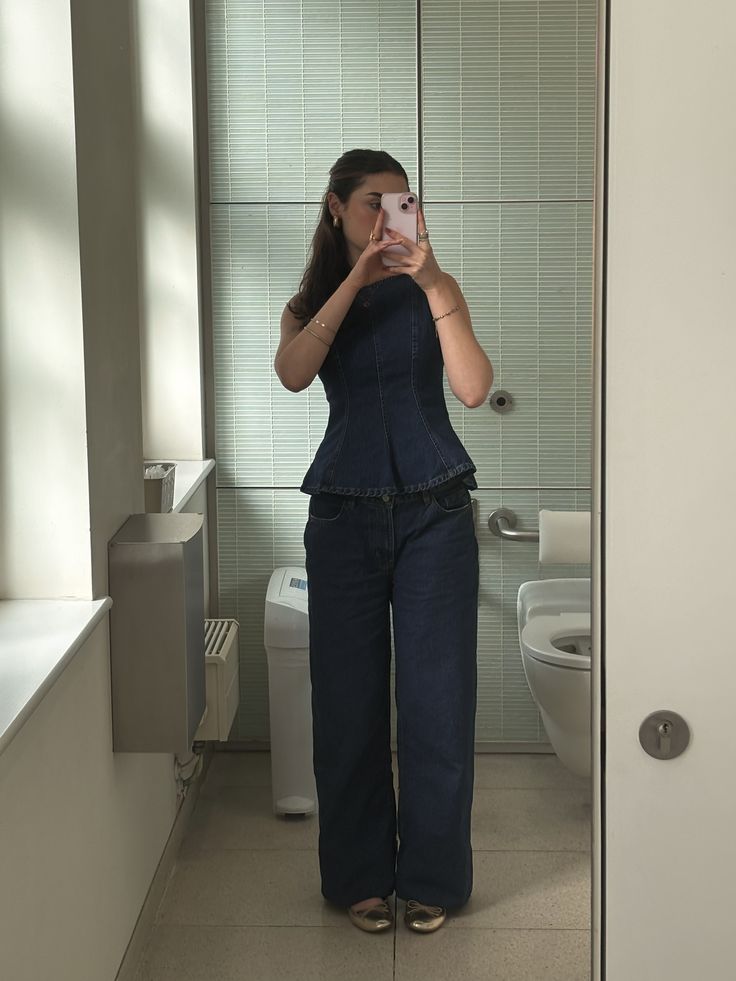
I’d bring the peplum back into the conversation, but only the right kind. Look for one where the flare begins fairly close to the natural waist instead of dropping low on the hips, then keep the jeans straight so the volume doesn’t compete with itself.
If the top already has plenty going on, skip the oversized earrings and statement necklace, the shape is enough.
6. Cropped Cardigan + High-Rise Trousers
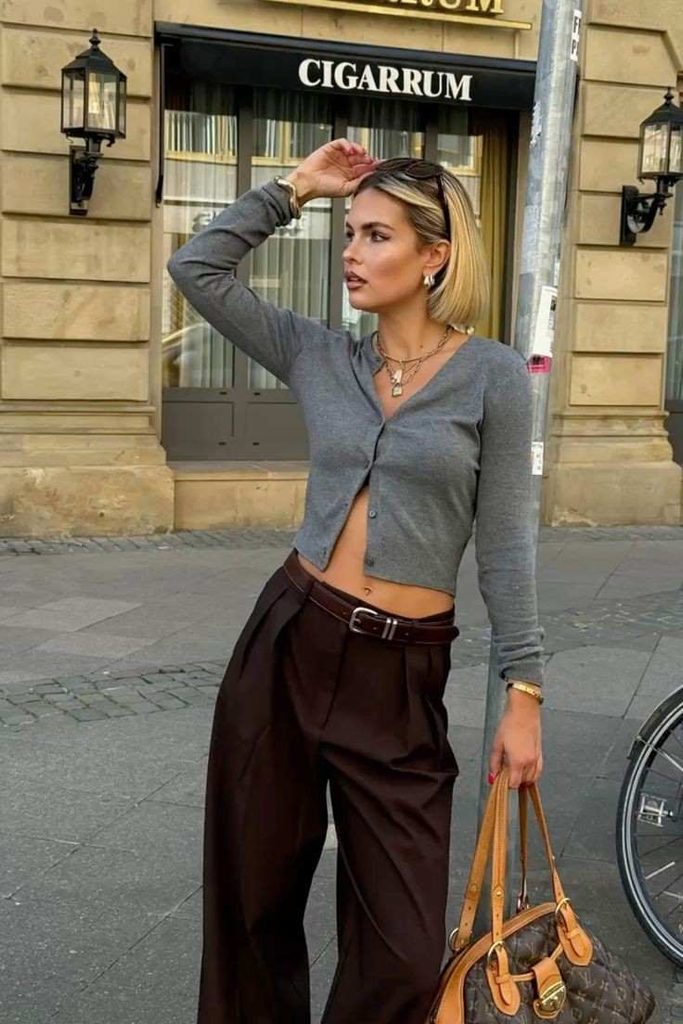
A cropped cardigan gives high-rise trousers a natural partner because the two pieces meet at roughly the same point on the body. I’d button the cardigan rather than automatically wearing it open, particularly if the trousers have a relaxed leg.
A small shoulder bag or short necklace keeps the visual focus close to the upper half.
7. Slip Skirt + Fitted Sweater
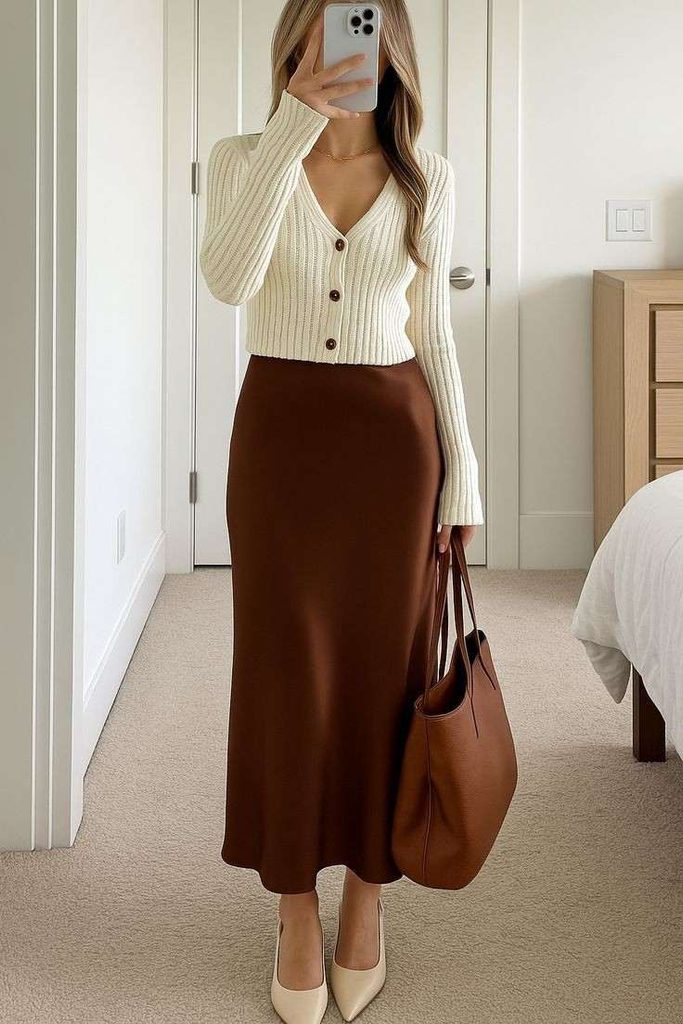
If you own a slip skirt but always feel that it looks a little too flimsy on its own, this is the combination to try. A fitted sweater gives the fluid skirt some contrast, while a loose front tuck keeps the waist from looking overly engineered.
I’d choose a shoe with a little weight, a loafer, ankle boot, or substantial flat, rather than something too delicate.
8. Oversized Blazer + Fitted Tank + Slim Jeans
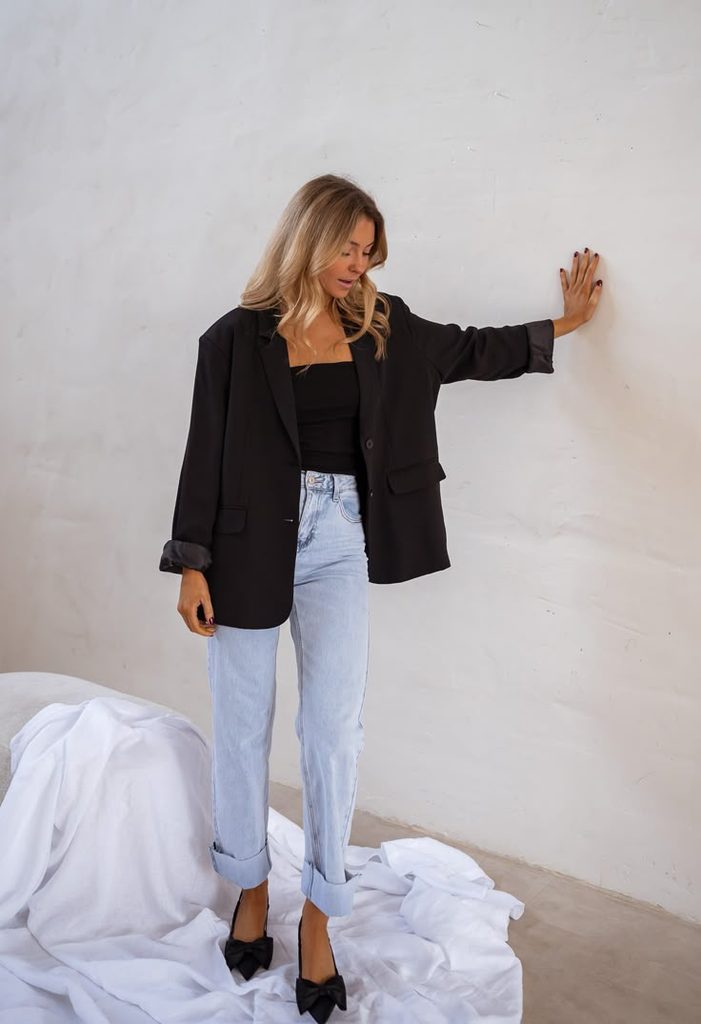
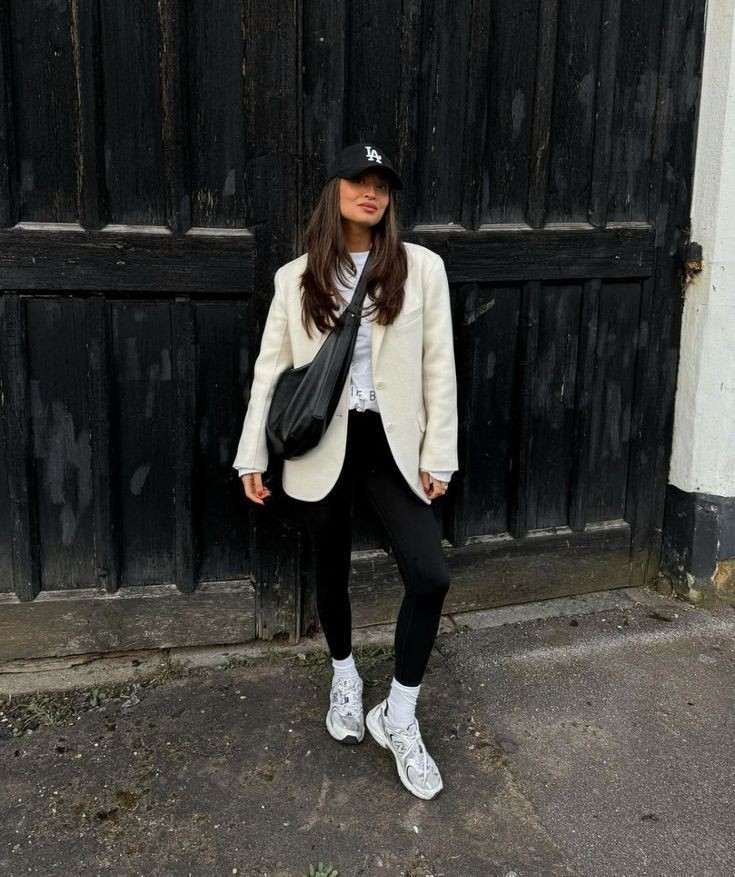
Don’t automatically assume oversized tailoring is working against you. The volume through the shoulders can give the upper half more presence, while a fitted tank creates a narrow layer underneath and slim jeans keep the bottom half from becoming equally broad.
The important part is the opening: wear the blazer open so the tank creates a visible center line instead of letting the jacket become one large block.
9. Wrap Top + Tailored Trousers
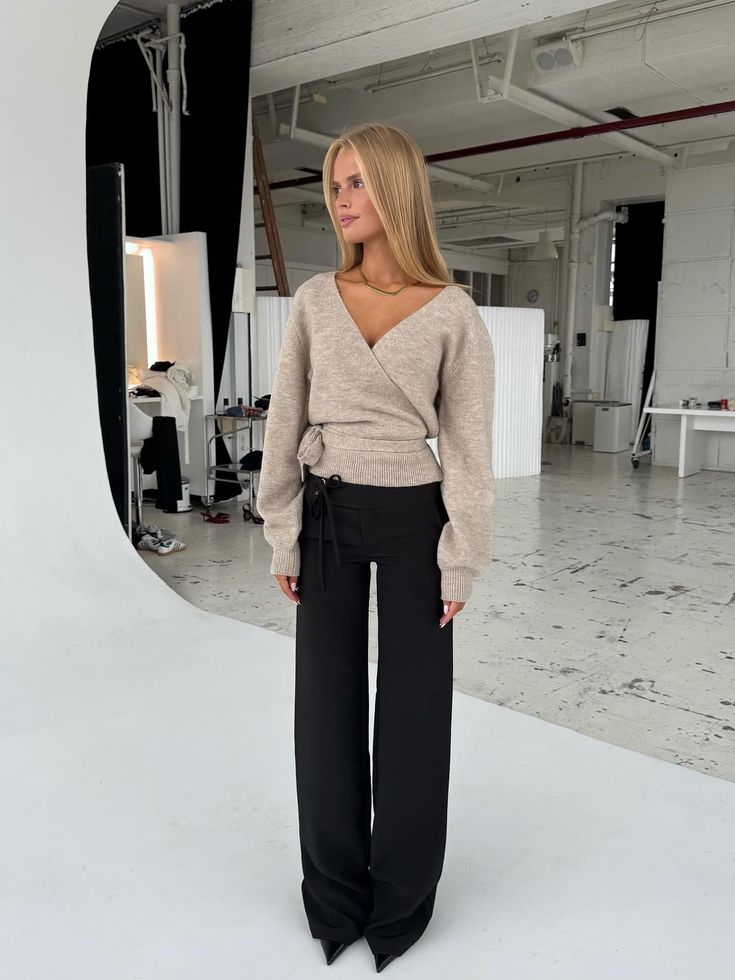
If you’re bored with straight-on silhouettes, a wrap top is an easy change of direction. The diagonal line across the torso gives the eye somewhere to move, and tailored trousers keep the lower half clean enough that the top remains the interesting part.
I’d leave the neckline relatively open rather than adding a necklace that competes with the wrap.
10. A-Line Skirt + Close-Fitting T-Shirt
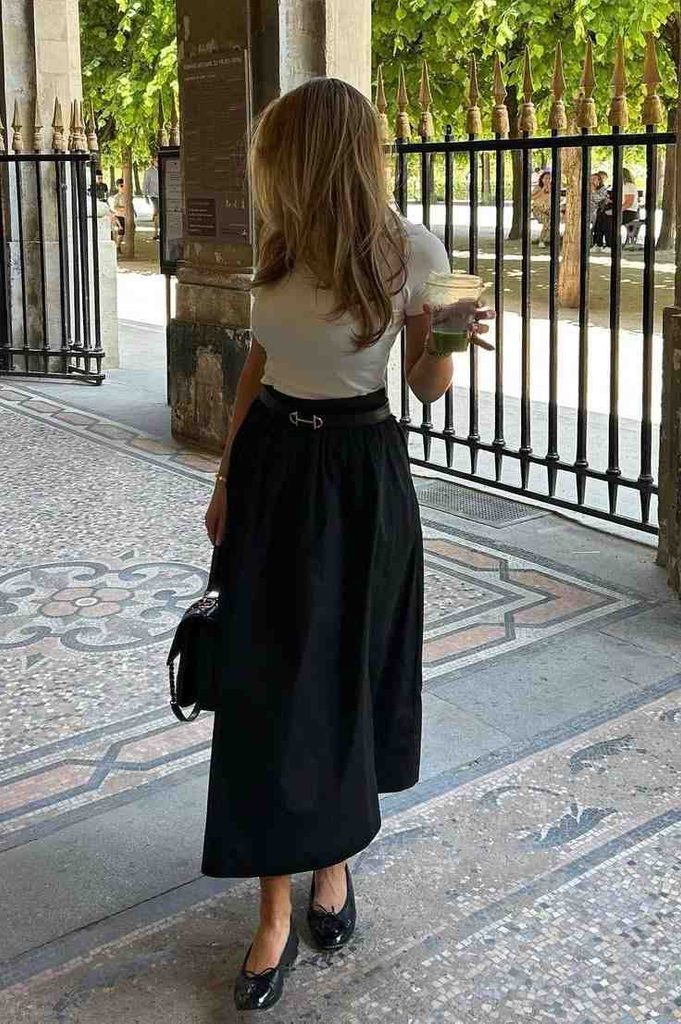
This is one of those outfits where the skirt should do the talking. Choose an A-line that has enough room to move away from the hips, then keep the T-shirt close and uncomplicated.
If you don’t love a full tuck, try a shorter tee that meets the waistband instead, you get the same proportion without constantly adjusting your shirt.
11. Monochrome Trouser Suit
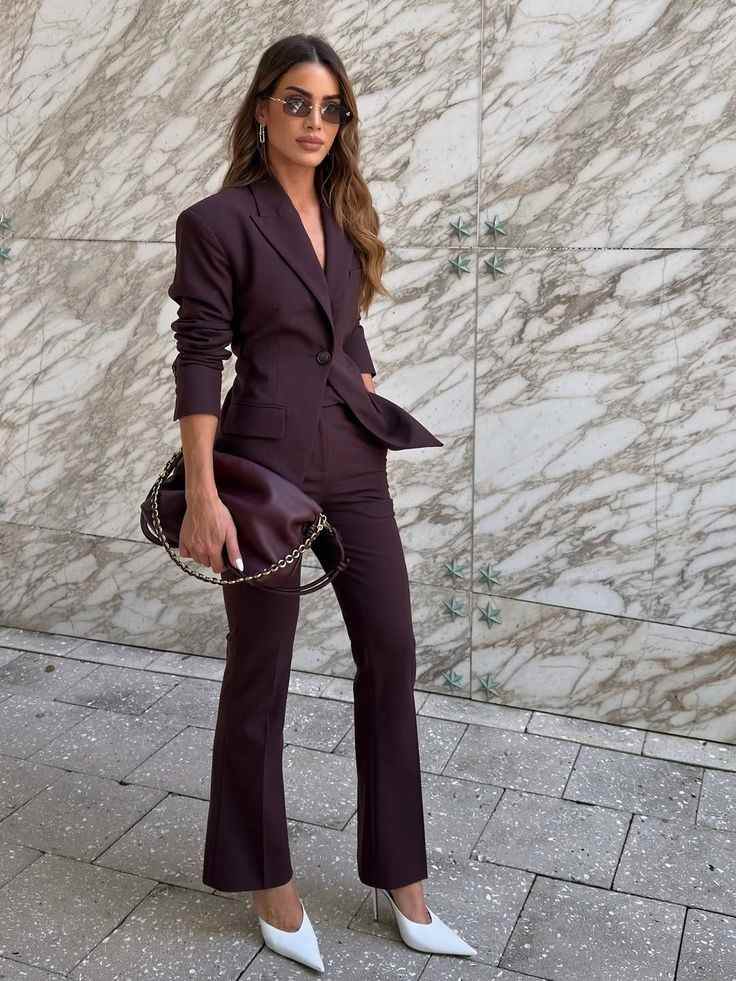
A matching suit is proof that you don’t need to break up your body into separate sections to create a strong silhouette. Keeping the jacket and trousers in one color gives you a long visual line, while tailoring through the shoulders prevents the outfit from becoming a single flat column.
I’d introduce contrast with the shoe rather than another color through the middle.
12. Shirt Dress + Tall Boots
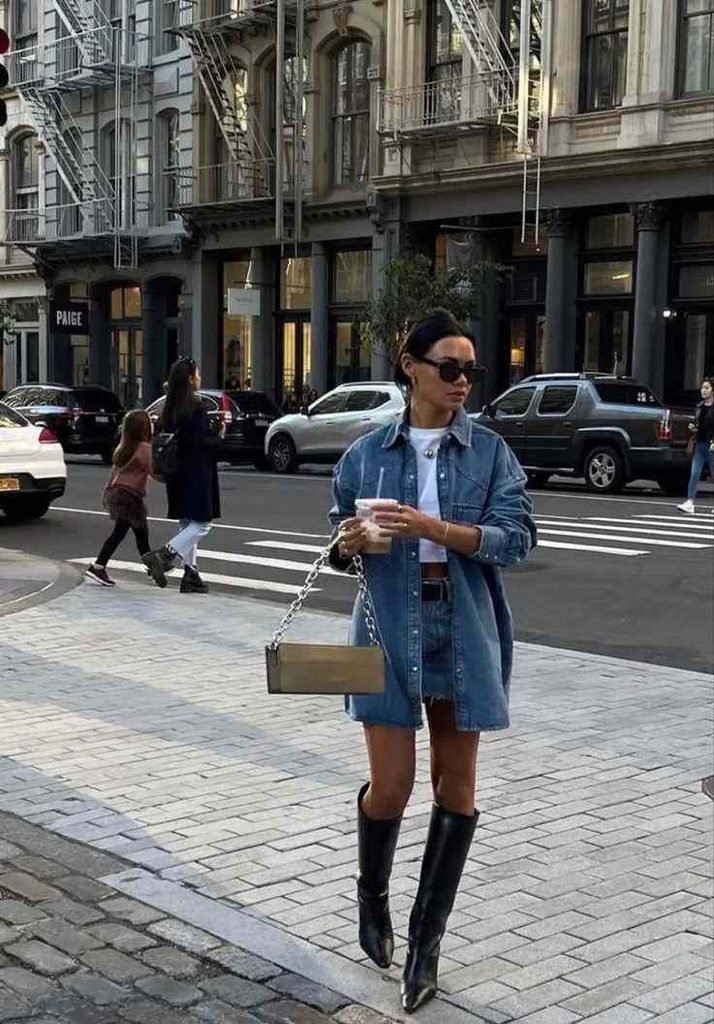
The beauty of a shirt dress is that you can change its proportions without changing the dress. Belt it when you want a defined middle, leave it loose when you’re in the mood for something straighter.
If you go unbelted, I’d choose tall boots rather than ankle boots, the uninterrupted length below the hem makes the relaxed shape feel deliberate.
13. Cropped Sweater + Pleated Trousers
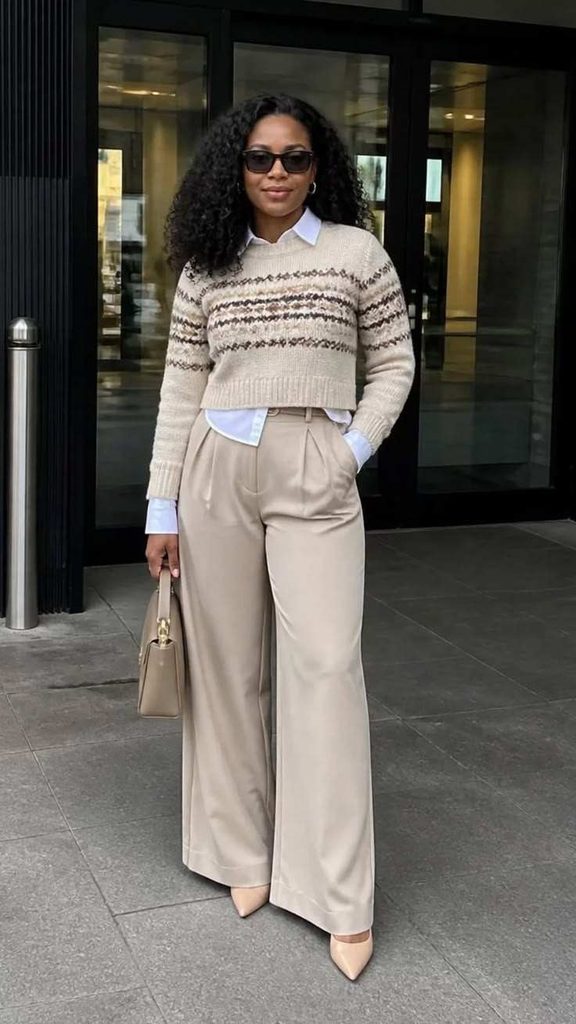
Pleated trousers bring volume around the waist and upper leg, so I’d pair them with a sweater that finishes above the widest part of the trousers. The resulting proportions are cleaner than wearing an oversized sweater over equally loose trousers.
Keep the shoes relatively streamlined so the pleats remain the focus.
14. Boat-Neck Top + Full-Length Jeans
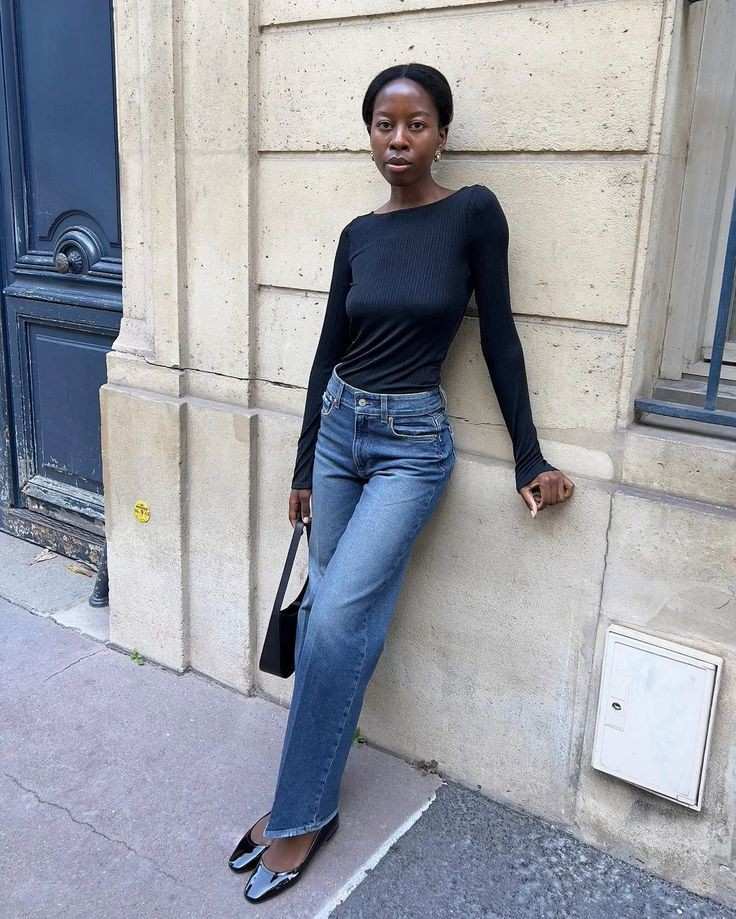
Sometimes the most useful change happens above the waist. A boat neckline draws the eye horizontally across the shoulders, while full-length jeans create a long line below without asking the waist to do all the work.
I’d keep the top tucked only at the center rather than pulling it tightly around the entire waist.
15. Head-to-Toe Color
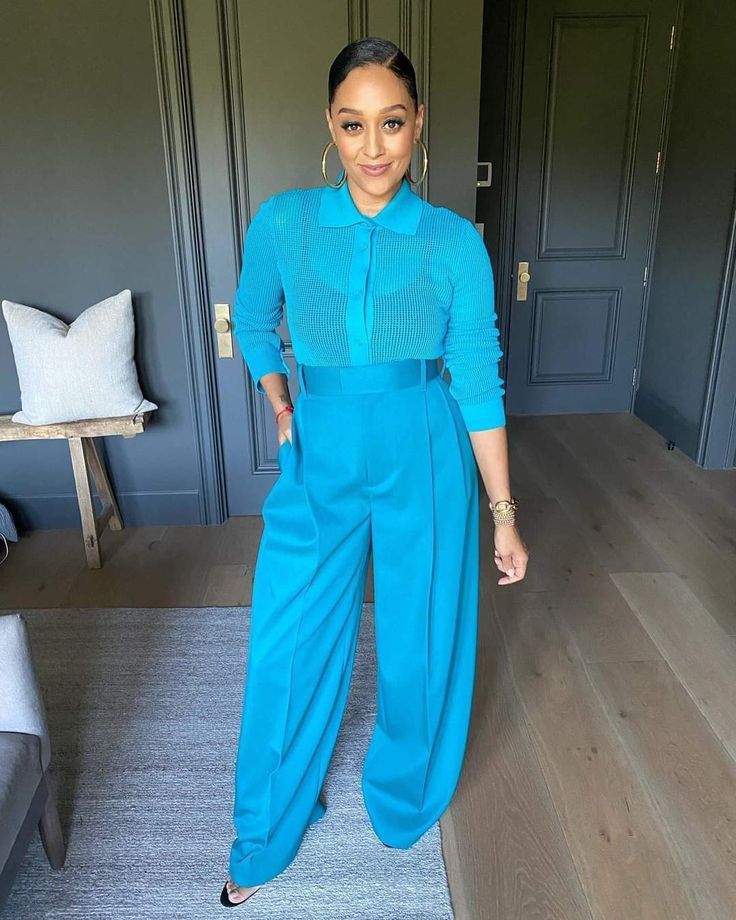
Try wearing one color from neckline to hem instead of breaking the body into obvious sections. It creates continuity, and you can still introduce dimension through different fabrics, think a smooth knit with denim, or wool with leather.
This is especially good when you want the outfit to feel cohesive without relying on a particular body-shaping formula.
16. Printed Skirt + Solid Top
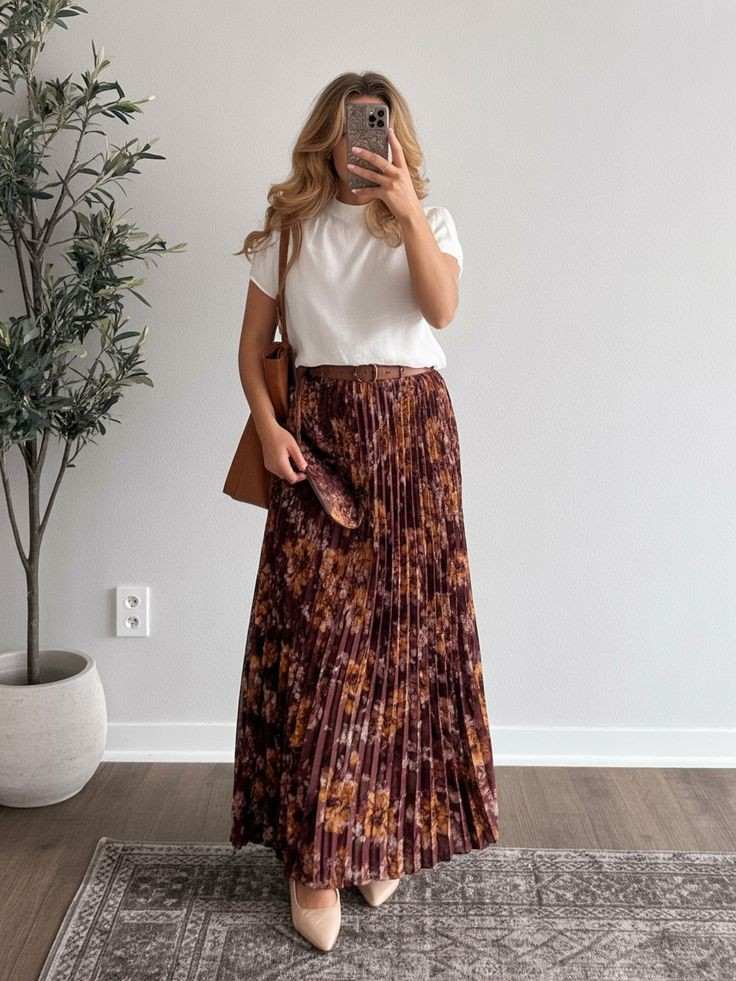
A print can be a styling tool, not just decoration. Put the pattern on the skirt and keep the top quiet, then choose one color from the print for your shoes or bag.
I’d go for a medium-scale pattern rather than an extremely tiny print; it tends to read more clearly from a distance.
17. Asymmetric Dress
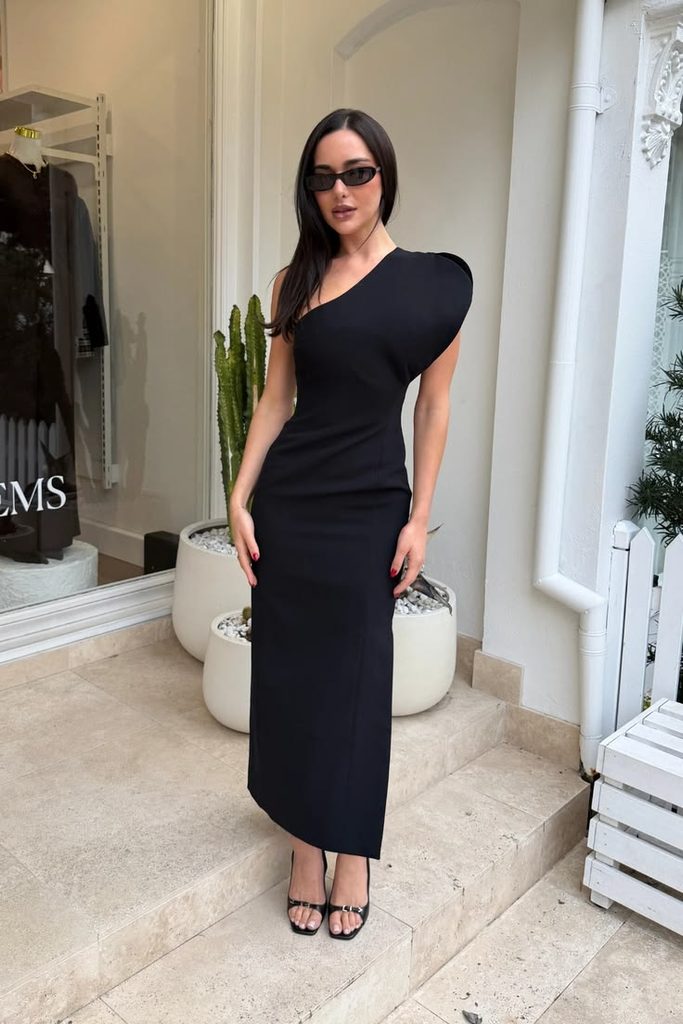
If every outfit you’ve tried lately feels too symmetrical, change the line entirely. An asymmetric neckline, hem, or drape creates movement across the body and gives the eye something to follow.
This is one of those occasions where I wouldn’t add a belt, the irregularity is what makes the silhouette work.
18. Bias-Cut Dress + Flat Shoes
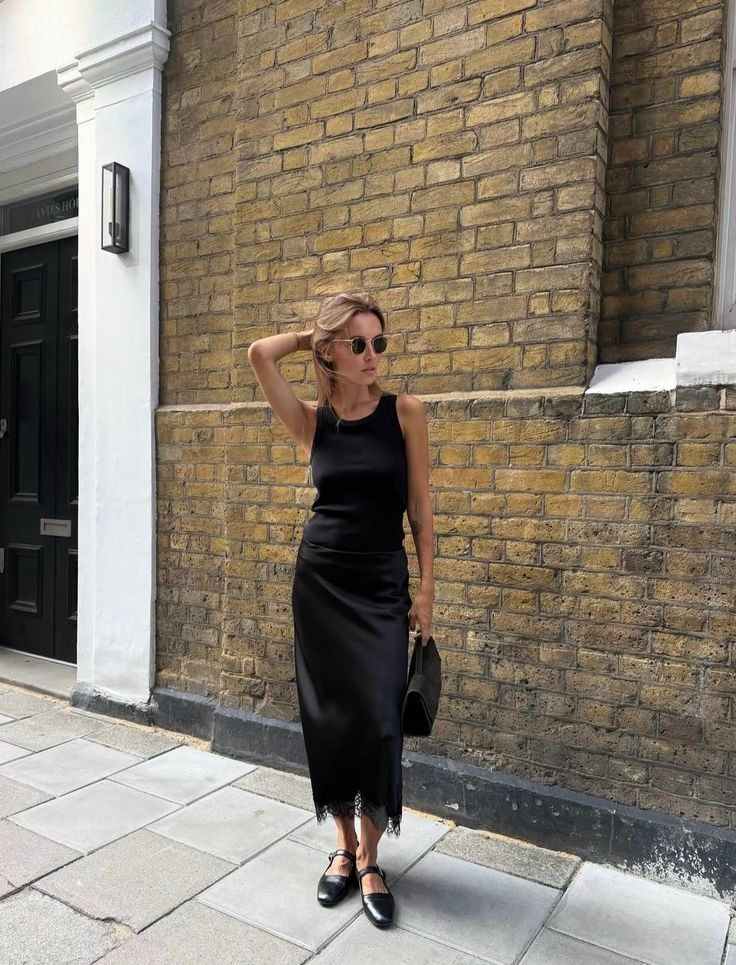
Don’t underestimate a dress that simply follows the body. A bias cut has enough movement to keep a straight silhouette from looking rigid, and there is something particularly good about pairing that softness with a flat shoe.
If the dress is long, choose a shoe that shows at least a little at the hem, otherwise the lower half can disappear.
19. Leather Jacket + Midi Skirt
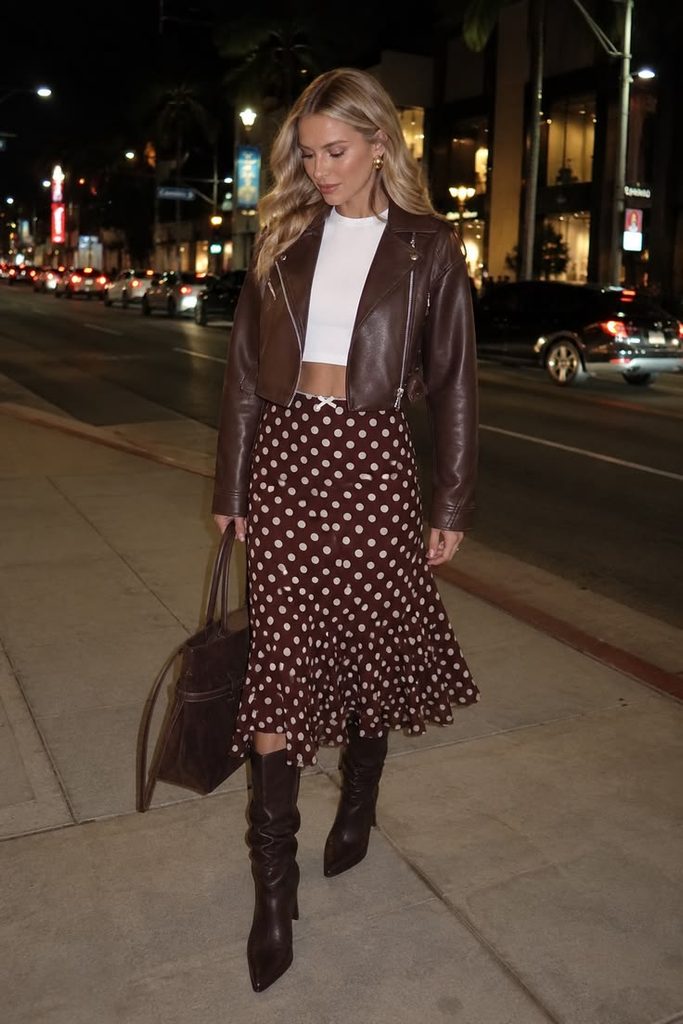
This combination works because the two pieces don’t try to do the same thing. The leather jacket gives the upper half structure and a defined endpoint, while the midi skirt takes over with length and movement.
I’d keep the top underneath almost invisible, a simple fitted tee or tank is enough. and let the jacket-and-skirt contrast carry the outfit.
20. Denim-on-Denim
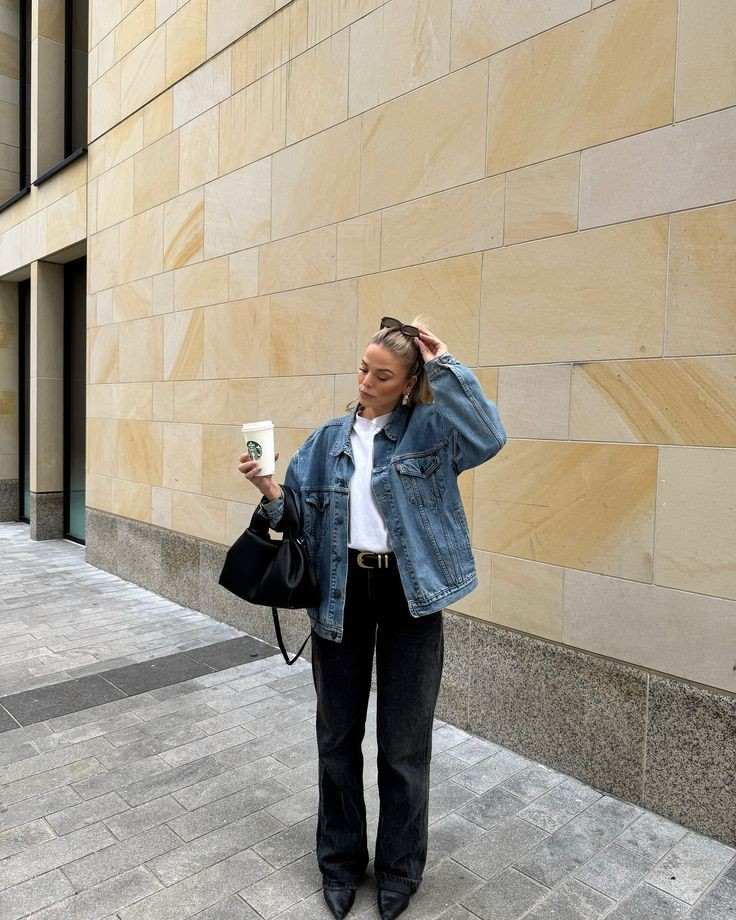
Don’t dismiss double denim as too much of the same thing. The easiest way to make it work is to separate the textures or shades: a darker jean with a lighter denim shirt, for example, rather than trying to match them exactly.
Leave the shirt partly open and let a contrasting layer underneath break up the denim.
21. Square-Neck Top + Full Skirt
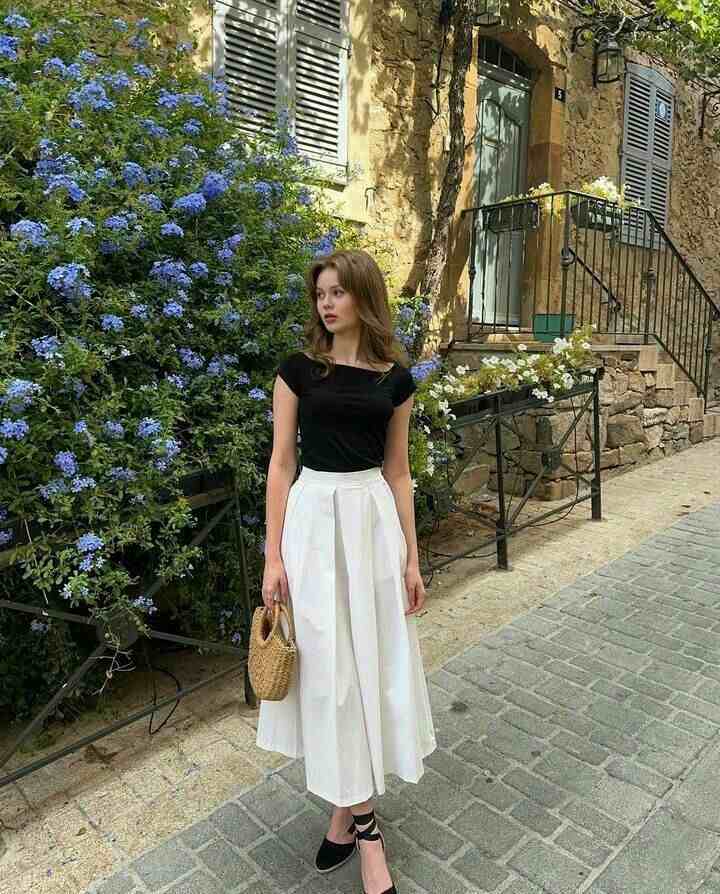
A square neckline gives the upper half a strong frame, which is particularly useful when the skirt has plenty of volume.
‘d keep the top fitted and let the skirt flare from there rather than adding another layer over the neckline.
The styling move I like most: wear the skirt slightly higher and keep the top just long enough to meet it cleanly.
22. Long Coat + Cropped Trousers
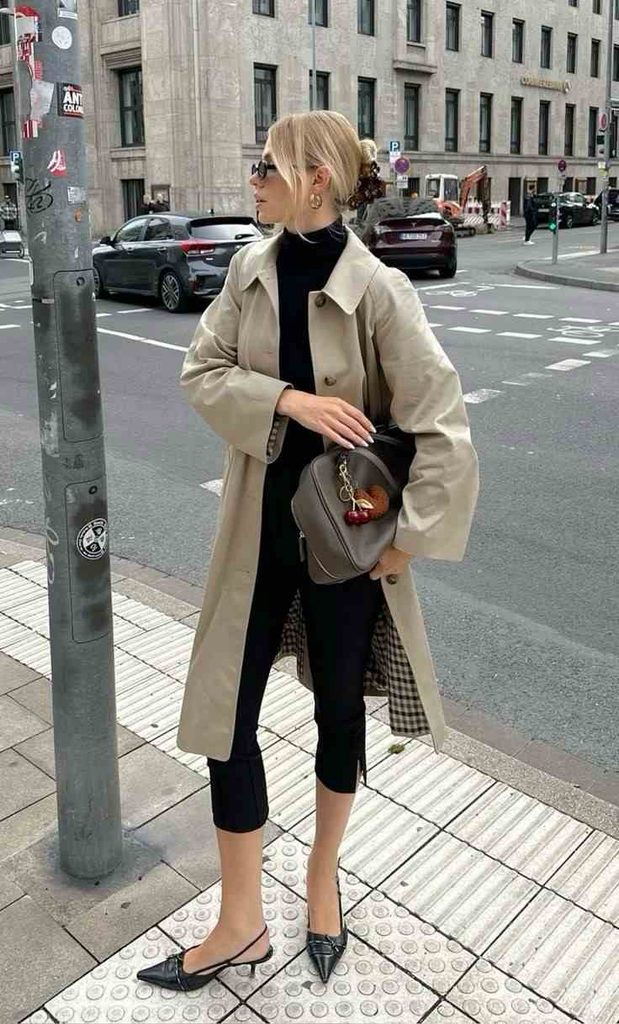
This is deliberately generous with fabric, and that’s the point. A long vest creates a strong outer line while wide trousers continue the volume below, giving the outfit an almost architectural quality.